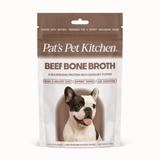
Quick Answer: Bone broth supports digestive health through natural gelatin, glycine, and glutamine, which help soothe the gut lining and reduce inflammation. For dogs with sensitive stomachs, bone broth is a gentle, nutrient-dense addition that works alongside a balanced diet. Start slowly with small amounts to let your dog's digestive system adjust, and watch for improvements in stool quality, appetite, and overall comfort within 2-4 weeks. If your dog's stomach issues persist or worsen, consult your vet to rule out underlying conditions.
Your dog used to wolf down their food without a second thought. These days, mealtimes are a different story. Some meals they leave untouched. Others they eat and then struggle with the consequences. You've noticed loose stools, occasional vomiting, or a visible lack of interest in food. It's worrying because you know something isn't right, but you're not sure what.
Sensitive stomachs in dogs aren't always about being fussy eaters. Often there's something deeper happening. The digestive tract is inflamed, the gut barrier is compromised, or the balance of nutrients is off. Your dog isn't being difficult. Their system genuinely needs support.
The good news is that bone broth offers a natural, food-based way to help. It's not a quick fix or a replacement for proper vet care. But it is a practical addition to your dog's routine that many owners find makes a real difference.
Why Dogs Develop Sensitive Stomachs
A sensitive stomach doesn't happen randomly. There are usually contributing factors worth understanding.
Food sensitivities or intolerances are common. Your dog might struggle with chicken, beef, grains, or specific proteins. Food poisoning or bacterial overgrowth can damage the gut lining and create longer-term sensitivity. Some dogs are born with more delicate digestion. Others develop sensitivity after illness, antibiotics, or dietary changes.
The gut lining itself matters more than many owners realise. It acts as a barrier between your dog's bloodstream and the contents of their digestive tract. When this barrier weakens (often called "leaky gut"), undigested food particles and bacteria can trigger inflammation. Your dog then experiences bloating, discomfort, loose stools, or reduced appetite.
Stress and anxiety also impact digestion. A nervous dog often has a sensitive stomach. The gut-brain connection is real, and emotional stress directly affects digestive function.
How Bone Broth Supports Gut Health
Bone broth works on multiple levels. It's not just hydration, though that matters. The specific compounds in broth actively support digestive repair and comfort.
Gelatin and collagen: When bones are simmered for hours, collagen breaks down into gelatin. This gelatin coats the stomach and intestinal lining, creating a protective layer. Think of it like a soothing salve for the inside of your dog's digestive tract. Gelatin also helps improve stool quality and reduces the likelihood of loose stools.
Glycine: This amino acid is abundant in bone broth. Glycine reduces inflammation in the gut and helps rebuild the intestinal barrier. It also supports the production of stomach acid and digestive juices your dog needs to break down food properly. Dogs with sensitive stomachs often don't produce enough digestive acid, and glycine helps address this.
Glutamine: Another key amino acid in bone broth, glutamine is the preferred fuel source for intestinal cells. It helps damaged gut lining cells repair themselves and reduces intestinal permeability. This is especially important for dogs recovering from digestive upset.
Minerals and electrolytes: Bone broth contains calcium, magnesium, phosphorus, and potassium extracted from the bones and connective tissue. These minerals support hydration and nutrient absorption, both critical for dogs with digestive sensitivity.
The combination of these compounds makes bone broth uniquely suited to dogs with sensitive stomachs. It's nutrient-dense without being heavy or hard to digest. It's also naturally palatable, which helps tempt dogs with reduced appetite.
Signs Your Dog Might Benefit from Bone Broth
Not every dog needs bone broth, but certain signs suggest it could help.
- Loose or inconsistent stools, especially after meals
- Reduced appetite or picky eating
- Visible vomiting after eating (not just once in a blue moon)
- Dry, dull coat despite eating adequate food
- Bloating, gas, or visible discomfort after meals
- History of food sensitivities or previous digestive upset
- Recovery from illness or antibiotics
- Stress-related digestive issues (loose stools when anxious)
If your dog shows any of these signs regularly, bone broth is worth trying. It's gentle enough for most dogs and won't make things worse if introduced carefully.
How to Introduce Bone Broth Gently
The key with sensitive stomachs is slow introduction. Your dog's system needs time to adjust.
Week 1: Start with 1-2 tablespoons of Beef Bone Broth mixed into their regular food. Observe their stools and appetite. If they tolerate this well, move to the next step.
Week 2-3: Increase to 2-3 tablespoons per meal. You can mix it with food, use it as a topper, or offer it as a standalone snack. Many dogs find warm broth more palatable, but it's safe at room temperature too.
Week 4+: Once your dog's system has adjusted, follow the serving guide on the pouch based on your dog's weight.
Watch for any reaction during introduction. Most dogs handle bone broth beautifully. A small percentage might experience loose stools if introduced too quickly, which is why the gradual approach matters.
Don't mix bone broth with any new proteins or foods during the introduction period. Keep everything else consistent so you can accurately assess how your dog responds to the broth alone.
What Results to Expect
Improvements don't always happen overnight, but most owners notice changes within a few weeks.
Week 1-2: Appetite often improves first. Your dog might show more interest in meals. You might also notice slightly firmer stools.
Week 3-4: Stool consistency usually stabilises noticeably. Loose stools become less frequent. Bloating and post-meal discomfort often reduce.
Week 4-8: Coat quality often improves. You might notice shinier fur, reduced itching, and more energy. Your dog seems more comfortable overall.
Week 8+: The cumulative effect becomes clear. Better digestion means better nutrient absorption. Your dog's body has the resources it needs to thrive.
It's important to be realistic about what bone broth can and cannot do. Bone broth supports digestive health and comfort. It does not treat inflammatory bowel disease, cure food allergies, or replace veterinary care for persistent digestive problems. If your dog's symptoms don't improve within 4-6 weeks, or if they worsen, consult your vet. There may be an underlying condition that needs investigation.
Frequently Asked Questions
Is bone broth safe for dogs with severe food allergies?
Beef Bone Broth contains only beef collagen, gelatin, and trace minerals. It's beef-sourced, so it's not suitable if your dog is allergic to beef specifically. Otherwise, it's hypoallergenic and won't trigger most food allergies. Always check the ingredient list if your dog has confirmed allergies.
Can I give bone broth alongside their regular food, or should it replace meals?
Bone broth is a supplement, not a meal replacement. It's best mixed into their regular food or given as a topper. For dogs with truly sensitive stomachs, bone broth can also be used as a light meal on their "rest days" (a day or two per week of broth and rice instead of their regular diet), but this should be done under guidance if your dog has diagnosed conditions.
How long can I keep giving my dog bone broth?
Indefinitely. Bone broth is whole food, not a pharmaceutical supplement. You can use it as a long-term addition to your dog's diet without concern. Many owners keep their dogs on bone broth year-round because they've seen such clear benefits. Follow serving guide on the pouch based on your dog's weight to ensure appropriate portion sizes.
Will bone broth help if my dog has diagnosed inflammatory bowel disease or IBD?
Bone broth can support a dog with IBD by providing easily digestible nutrients and compounds that soothe the gut lining. However, IBD is a medical condition that requires veterinary management, often including medication. Bone broth works alongside vet care, not instead of it. Discuss adding it to your dog's routine with your vet to ensure it fits their overall treatment plan.
My dog is a fussy eater and won't touch new foods. Will they eat bone broth?
Most dogs find bone broth irresistible. The natural beef flavour is naturally palatable. If your dog turns their nose up at it, try warming it slightly (not hot, just warm to the touch). You can also pour a small amount over their regular food to introduce the taste gradually. In the rare case of a very fussy eater, starting with a teaspoon mixed into their favourite food works well.
Can I make bone broth at home instead of buying it?
You can make bone broth at home, but it requires significant time (12-24 hours of simmering) and careful ingredient sourcing. Commercial bone broths like Beef Bone Broth are crafted for consistent nutrient density, quality control, and safety. They're also more convenient, which makes it easier to maintain consistency with supplementation.
Which Product for Your Dog?
- Sensitive stomach with digestive upset, poor appetite, or loose stools: Beef Bone Broth (£24.99)
- Sensitive stomach plus joint stiffness, especially in senior dogs: Beef Bone Broth for gut health paired with Mobility & Joints (£34.99)
- Sensitive stomach as prevention, looking for long-term digestive support: Beef Bone Broth as a daily addition
- Recovery from illness or antibiotics affecting digestion: Beef Bone Broth to rebuild gut health
- Puppies (from around 8 weeks) with developing digestion: Beef Bone Broth in small amounts
Follow serving guide on your chosen product's pouch based on your dog's weight.
Sources
- British Small Animal Veterinary Association (BSAVA): Guidance on canine digestive health and nutrition
- Osburn, B.I., et al. "Amino acid composition and digestibility of collagen hydrolysates." Journal of Animal Physiology and Animal Nutrition, 2019.
- Bernal, A., et al. "Evaluation of the effect of hydrolysed collagen peptides on the intestinal barrier in dogs." Veterinary Nutrition Science, 2021.
- Piacenza, F., et al. "Glutamine and intestinal barrier function." Nutrients, 2021.
- PDSA Pet Care: Information on canine digestive health
- Kennel Club: Breed-specific health information and nutrition guidance
Disclaimer: This information is for educational purposes and doesn't replace veterinary advice. If your dog shows persistent vomiting, chronic loose stools, blood in stools, weight loss, or loss of appetite, consult your vet for proper diagnosis and treatment. Digestive issues can signal underlying conditions that need veterinary investigation. Early intervention gives the best outcomes.
Last Updated: March 2026