Quick Answer: The best dog joint supplement for your dog depends on their age, activity level, and current joint health. Look for hydrolysed collagen (ideally 2,000mg+), glucosamine, and hyaluronic acid. Avoid products with fillers, artificial ingredients, or vague ingredient lists. Quality supplements support joint comfort and mobility over 4 to 6 weeks. Check labels carefully, understand the difference between formats (powder, liquid, tablet), and match the product to your dog's specific needs.
You've probably noticed it. Your dog isn't moving quite the way they used to.
Maybe they're slower getting up from the sofa. Or they hesitate before jumping in the car. Or they're limping a bit after their walk, even though they bounced back fine a year ago.
Joint health matters. And somewhere in the maze of pet supplements at the pet shop, or scrolling through endless online options, you're trying to figure out which one actually works and whether your dog even needs it.
This guide cuts through the noise. We'll show you exactly what to look for in a joint supplement, what to avoid, how to read the label, and how Pat's Pet Kitchen products stack up.
Why Joint Supplements Matter
Joint health in dogs comes down to cartilage. That smooth, slippery tissue that covers the ends of bones and lets them slide against each other without friction.
Cartilage is made primarily of collagen (the structural protein that holds it together), proteoglycans (which trap water and provide cushioning), and various minerals and co-factors. When a dog moves, cartilage absorbs impact and distributes load across the joint.
Over time, especially in large breeds, active dogs, or senior dogs, cartilage can wear down. The joint becomes less cushioned, inflammation increases, and movement becomes less comfortable. This is where supplementation comes in.
A quality joint supplement provides the building blocks your dog's body needs to support cartilage health and maintain comfortable movement. It doesn't cure joint disease, but it does support the structures that are under stress.
Essential Ingredients to Look For
Hydrolysed Collagen (also called collagen peptides)
This is the foundation of any good joint supplement. Hydrolysed collagen has been broken down into tiny molecules that your dog's body can absorb and use. Look for products with at least 2,000mg per serving. Types I and III collagen are particularly important for joint structure and support.
Collagen works by accumulating in cartilage tissue after oral supplementation. Research shows that when you provide collagen peptides, they don't just pass through your dog's system. They're absorbed and incorporated into the tissues that need them most, including cartilage.
Glucosamine
Glucosamine is an amino sugar that supports cartilage maintenance and helps the joint produce protective fluid. It's especially useful for dogs with existing joint concerns or diagnosed conditions.
Hyaluronic Acid
This naturally occurs in joint fluid and cartilage. Hyaluronic acid acts as a lubricant and shock absorber. It supports the viscosity of synovial fluid, which keeps joints moving smoothly. Many dogs benefit from hyaluronic acid supplementation, particularly seniors.
Supporting Minerals and Vitamins
Look for manganese (supports cartilage formation), vitamin C (collagen synthesis), and vitamin E (antioxidant support). These work together to make the main ingredients more effective.
Ingredients to Avoid
Fillers and Binders
Cellulose, silicon dioxide, or unnamed "binders" bulk out a formula without adding value. A good supplement uses minimal fillers. Check the ingredient list: active ingredients should dominate.
Artificial Flavours and Colours
If your supplement needs artificial flavour to appeal to dogs, that's a red flag. High-quality collagen is tasteless and odourless (a bonus for picky eaters). If a product is heavily coloured or has strong artificial flavouring, the supplement itself probably isn't very appealing.
Vague Ingredient Lists
Avoid products listing "proprietary blend" without ingredient breakdown. You should be able to identify exactly what's in the supplement and in what quantity. Hidden ingredients mean hidden costs.
Low Doses of Active Ingredients
A supplement with 500mg of collagen won't deliver meaningful support. Aim for at least 2,000mg of quality hydrolysed collagen per serving. Higher is often better for larger dogs or those with significant joint concerns.
Cheap Protein Sources or Beef Derivatives
Not all collagen is created equal. Bovine (beef) collagen is excellent. Porcine (pork) collagen is lower quality. Look for the source clearly stated on the label.
Format Guide: Powder vs Liquid vs Tablet
Powder (Mixed into food)
Powder supplements are mixed directly into your dog's food or water. They're usually the most cost-effective option and often contain higher doses of active ingredients because there's no capsule or tablet limitations. Tasteless and odourless powders (like Pure Collagen) work brilliantly for any dog, including picky eaters.
Downsides: Requires mixing into food daily. Some dogs detect texture changes in their food.
Liquid (Usually a broth or concentrated supplement)
Liquid supplements like Beef Bone Broth are mixed into food or given alone. They're particularly good for dogs with appetite concerns because the taste and aroma encourage eating. They're also easier for senior dogs or those with swallowing difficulties.
Downside: Often more expensive per serving. Takes up more storage space. Shorter shelf life once opened.
Tablets or Capsules (Swallowed whole)
The convenience option. No mixing, no mess. Useful for dogs that will swallow tablets easily. Usually more expensive per dose of active ingredient because the tablet/capsule itself takes up space.
Downside: Limited dose per tablet. Dogs that won't swallow tablets are out of luck. Some dogs spit them out. Higher cost for the same amount of collagen.
Best choice for most dogs: Powder is usually the most effective option because it allows the highest dose in the easiest format. But if your dog is a picky eater or has appetite concerns, liquid is worth the investment.
How to Read a Joint Supplement Label
Labels can be confusing. Here's what matters:
Serving Size
Check this first. Some products look affordable until you realise the serving size is a tiny spoon. Calculate how long the container lasts at the recommended serving size for your dog's weight.
Active Ingredients and Amounts
This is critical. The label must list milligrams per serving for collagen, glucosamine, hyaluronic acid, and any other key ingredients. If it just says "joint support blend" without amounts, that's not good enough.
Ingredient Order
Ingredients are listed by weight. If collagen is listed third or lower, the product probably contains more filler than active ingredient. Collagen should be first or among the first few.
Sourcing Information
Look for "bovine collagen" (from beef). "Animal-derived" is too vague. Check whether the supplement is made in the UK if that matters to you.
Guaranteed Analysis
This section breaks down nutritional content. For joint supplements, focus on the collagen and glucosamine percentages.
What's NOT on the label is important too
No artificial colours. No artificial flavours (or it should be clear why). A short, simple ingredient list beats a long one packed with unfamiliar names.
When Does Your Dog Need a Joint Supplement?
Starting Supplements: Age and Prevention
You don't wait until your dog has a problem. Prevention is far more effective than treatment. Large breed puppies (from around 4-6 months when their growth plates are forming) can benefit from collagen support. Large breeds are at higher risk of hip and elbow dysplasia, and early support matters.
Smaller breeds and mixed breeds can start earlier if they're active or come from lineages with joint concerns.
Active Dogs
If your dog does agility, flyball, regular running, or long walks, their joints work harder than the average pet dog. Supplementing proactively reduces the wear and tear on cartilage.
Senior Dogs
Dogs over 7-8 years old show natural decline in cartilage quality and collagen production. Supplementation becomes increasingly beneficial.
Dogs with Diagnosed Joint Issues
If your vet has mentioned hip dysplasia, elbow dysplasia, osteoarthritis, or any joint condition, supplementation should start immediately alongside veterinary treatment.
Dogs Recovering from Surgery or Injury
With vet approval, joint supplements support tissue repair and recovery. Timing matters here, so check with your vet first.
How Long Before You See Results?
Collagen supplementation isn't instant. Here's the realistic timeline:
Weeks 1-2: Your dog is receiving the building blocks, but visible changes are minimal. Don't expect improvement yet.
Weeks 3-4: Observant owners may notice the first small improvements. A dog that was hesitant on stairs might be slightly more willing. Stiffness after rest might ease a bit.
Weeks 4-6: Most dogs show noticeable improvements. Reduced stiffness, better mobility, more comfort getting up, improved willingness to move. This is when supplements start working properly.
Weeks 8-12: Cumulative benefits become clear. If your dog was limping, it's often significantly reduced by now. Energy and activity levels typically improve.
What supplements cannot do: They don't cure hip dysplasia or osteoarthritis. They support joint health and comfort, but they're not a treatment for diagnosed disease. They work alongside veterinary treatment, not instead of it.
Comparing Pat's Pet Kitchen Products
All three PPK products support joint and connective tissue health, but they're designed for different situations.
The comprehensive option. This is a 6-in-1 formula containing 5,000mg hydrolysed collagen peptides plus glucosamine, hyaluronic acid, manganese, vitamin C, and vitamin E. It's specifically designed for dogs with existing joint issues or those who need comprehensive joint support.
Best for: Dogs with diagnosed joint concerns, active dogs needing maximum support, older dogs with multiple joint and mobility issues.
The focused option. This is 100% hydrolysed bovine collagen peptides (Types I and III), 6,000mg per serving. Tasteless and odourless, so it works for picky eaters. Because it's pure collagen with nothing else added, it's ideal for prevention, maintenance, and dogs where you want maximum flexibility in what else they're receiving.
Best for: Healthy dogs needing preventive support, dogs with multiple supplement needs (you can pair Pure Collagen with other specific supplements), fussy eaters, surgery recovery (with vet approval), daily maintenance.
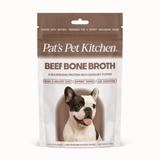
The appetiser option. This is a natural broth with 40% collagen content, plus gelatin, amino acids (glycine, proline, glutamine), and trace minerals. It tastes good, encourages eating, and supports joint health as a bonus.
Best for: Dogs with appetite concerns, senior dogs, fussy eaters, dogs recovering from illness, puppies (from around 8 weeks), dogs that need gut health support alongside joint care.
How PPK Products Stack Up Against Alternatives
Ingredient quality
Pat's Pet Kitchen uses bovine collagen (the gold standard), clear milligram amounts per serving, and no fillers or artificial ingredients. Many cheaper alternatives use porcine collagen or vague dosing.
Dose per serving
Pure Collagen delivers 6,000mg collagen per serving (one of the highest on the market). Mobility & Joints combines 5,000mg collagen with glucosamine and hyaluronic acid in one formula. Budget competitors often offer 500-1,500mg of collagen per serving.
Sourcing and transparency
All PPK supplements are proudly made in England from human-grade ingredients. The labels are clear: you know exactly what you're getting. Many budget supplements list vague sources or manufacture locations.
Cost per serving
While PPK isn't the cheapest option, the cost per milligram of collagen is reasonable. Budget supplements often look cheaper until you calculate the actual dose per serving.
Example: A cheap supplement might cost £15 but contain 800mg collagen per serving. Pure Collagen at £31.99 contains 6,000mg per serving. The budget option costs £18.75 per gram of collagen. Pure Collagen costs £5.33 per gram. Quality costs less per serving.
Making Your Decision
Does your dog need a supplement right now?
If your dog is under 5 years old, fully healthy, and not particularly active, you have options. You could start preventively now (recommended for large breeds) or wait until signs of joint stress appear. Prevention is easier than treatment, but not urgent for every dog.
If your dog is active, senior, or showing any joint concerns (limping, stiffness, reluctance to move), start now.
Which product should you choose?
If your dog has existing joint issues or you want maximum comprehensive support: Mobility & Joints is the right choice.
If your dog is healthy and you want preventive, high-dose collagen support, or if you're pairing supplements: Pure Collagen is ideal.
If your dog has appetite concerns, is a senior, or needs a supplement that doubles as appetiser: Beef Bone Broth is the answer.
Follow the serving guide on your chosen product's pouch based on your dog's weight. Consistency matters more than perfection. A supplement given daily at the right dose works better than a higher dose given sporadically.
Frequently Asked Questions
Can I start a supplement without vet approval?
For healthy dogs, yes. Joint supplements are food supplements, not medications. But if your dog has been diagnosed with a joint condition or is on medication, mention the supplement to your vet at the next check-up.
How long do I need to give a supplement?
Most dogs benefit from ongoing supplementation. Collagen isn't something that "fixes" a joint and then stops working. It provides continuous support for tissue maintenance. Many owners give supplements year-round, particularly for senior dogs or those with joint concerns.
Can I give supplements if my dog is already on joint medication?
Usually yes, but check with your vet first. Supplements and medication typically work well together. Medication manages pain and inflammation. Supplements support tissue health. Combined, they're often more effective than either alone.
My dog won't eat the supplement mixed into food. What should I do?
Try a different format. If powder isn't working, switch to Beef Bone Broth (tastes like food) or tablets (swallow whole). Or try mixing powder into something stronger-tasting like peanut butter, yoghurt, or a small amount of chicken broth.
Is it safe to give supplements long-term?
Yes. Quality supplements with human-grade ingredients are safe for long-term use. Collagen, glucosamine, and hyaluronic acid are well-researched and side effects are rare. Your dog's body won't build a "tolerance" to them.
Will the supplement interfere with my dog's regular food?
No. Supplements are designed to work alongside regular nutrition. They add specific compounds (collagen, glucosamine) that may be lacking in complete and balanced diets.
What if I don't see results after 6 weeks?
Some dogs respond faster than others. Large dogs or those with significant joint concerns might need 8 to 12 weeks to show clear improvement. Also, results can be subtle: maybe your dog's less willing to play intensely, but their limping is reduced. Check for small improvements rather than dramatic changes. If you see absolutely nothing after 12 weeks, discuss with your vet. It might be a situation where medication is needed, or a different supplement approach might help.
Final Recommendations
Here's what we've learned: The best dog joint supplement has clear dosing of active ingredients (especially at least 2,000mg collagen), no fillers or artificial ingredients, and is matched to your dog's specific needs.
All three Pat's Pet Kitchen products meet these criteria. Choose based on your dog's situation, stay consistent, and expect gradual improvement over 4 to 6 weeks. Supplements support joint health but don't replace veterinary treatment for diagnosed conditions.
Your dog's joints are one of the few things you can't replace. Support them well, and you'll buy extra years of comfortable movement and active life.
Disclaimer: This information is for educational purposes and doesn't replace veterinary advice. If your dog is showing signs of joint problems, limping, or difficulty moving, consult your vet for proper diagnosis and treatment. Supplements support joint health but don't cure joint disease or replace veterinary treatment. Always check with your vet before starting supplements, particularly if your dog is on medication or has been diagnosed with a joint condition.
Last Updated: March 2026