Your Boxer is slowing down.
They're not bouncing around like they used to. They're stiff after rest. They hesitate before jumping on the sofa.
Boxers are balls of energy. When movement becomes painful, their whole personality changes.
Here's how to protect their joints and keep your Boxer being... well, a Boxer.
Why Boxers Need Joint Support
Boxers face specific challenges:
1. Hip dysplasia risk
UK breed median hip score: 13 (BVA/KC data)
Slightly above average risk. Not as bad as German Shepherds (14) or Rottweilers (20), but still a concern.
Prevalence: Hip dysplasia does occur in the breed, which is why the BVA/KC hip scheme matters when choosing a puppy.
2. High energy + heavy build = joint stress
Adult Boxer weight: 25-32kg (females), 30-38kg (males)
That's a lot of muscle mass bouncing, jumping, and playing with abandon.
Boxers don't have an "off switch." They'll play until they hurt themselves.
3. Early-onset arthritis
Even with decent hip scores, Boxers often develop osteoarthritis by age 7-8 due to:
-
Years of high-impact activity
-
Natural collagen decline
-
Cumulative wear and tear
4. Short lifespan = need to maximise quality years
Average Boxer lifespan: 10-12 years
Why short:
-
Heart problems (cardiomyopathy)
-
Cancer (high incidence)
-
Bloat
Joint health directly impacts quality of life in those 10-12 years.
Every year you can keep them comfortable and mobile matters.
The 8 Signs Your Boxer Has Joint Problems
Watch for these:
1. Reduced play drive
Boxers LOVE to play. If they're playing less or stopping sooner, something's wrong.
2. Hesitation before jumping
Used to leap on furniture without thinking. Now they pause or need encouragement.
3. Stiffness after rest
Takes 5-10 minutes to "warm up" after lying down. Especially noticeable first thing in the morning.
4. The "Boxer sit"
Sitting with one leg out to the side (trying to take pressure off hip).
5. Less bouncing
The classic Boxer bounce (jumping straight up when excited) becomes less enthusiastic or stops.
6. Reluctance to run
Doesn't chase as much. Tires more quickly on walks.
7. Weight shifting
Constantly shifting weight from leg to leg when standing.
8. Behavioural changes
Less tolerant of rough play with other dogs. Grumpy when touched.
If your Boxer shows 3+ signs, their joints need support.
Start intervention now. Boxers deserve to bounce through life.
What Actually Works: The Evidence
1. Hydrolysed Collagen Peptides (Essential)
Why Boxers need it:
High activity = rapid collagen breakdown
Every jump, every play session, every zoomie session breaks down collagen in:
-
Cartilage (joint cushioning)
-
Tendons (attach muscle to bone)
-
Ligaments (stabilise joints)
Collagen provides the building blocks to repair this damage.
The science:
Studies show collagen peptides:
-
Are absorbed intact
-
Accumulate specifically in joint tissue
-
Stimulate cells to produce more collagen
-
Reduce joint pain and improve mobility
Dosing for Boxers: Follow the feeding guide on the product for your dog's weight.
Results timeline:
-
Week 4: Slight improvement in stiffness
-
Week 6-8: Noticeable improvement in play and mobility
-
Week 12: Maximum benefit
2. Glucosamine
What it does:
-
Provides building blocks for cartilage
-
Slows breakdown of existing cartilage
-
Reduces joint inflammation
The evidence:
Evidence for glucosamine in dogs is mixed, so it is best thought of as one part of a complete approach:
-
Supports joint function
-
Most effective when combined with collagen
3. Omega-3 Fatty Acids
Critical for Boxers:
Why: High-energy dogs create more inflammation.
Omega-3s:
-
Powerful anti-inflammatory
-
Reduce inflammatory cytokines
-
Decrease joint pain
-
Support cardiovascular health (important for breed)
Study results:
Dogs given omega-3 showed:
-
Significant improvement in mobility
-
Better quality of life scores
Must be fish oil (EPA/DHA), not plant-based.
4. Hyaluronic Acid
What it does: Lubricates joints. Reduces friction during movement.
Particularly important for: High-activity dogs who put joints through repetitive motion.
Worth knowing: Hyaluronic acid is a supporting ingredient rather than a standalone fix. It does its job inside a complete formula, working alongside collagen and glucosamine.
5. Antioxidants (Vitamin E)
Boxers have higher cancer risk.
Vitamin E:
-
Antioxidant protection
-
Reduces oxidative stress in joints
-
Supports immune function
Dose: Follow the guidance on the product you use.
The Best Supplements for Boxers
For Prevention (Boxers under 6, no issues)
What's in it:
-
6,000mg hydrolysed collagen peptides (Types I & III) per serving
-
From grass-fed cattle
-
Nothing else
-
Tasteless and odourless
Best for:
-
Young, active Boxers
-
Prevention before problems start
-
Daily foundational support
Why we recommend it:
Maximum collagen content. Supports joints, skin, coat, and overall connective tissue health.
Start at age 2-3 for prevention, especially if parents had hip dysplasia.
For Early Signs (Occasional stiffness, reduced play)
What's in it (per 6g serving):
-
5,000mg hydrolysed collagen peptides
-
250mg glucosamine hydrochloride
-
1.5mg hyaluronic acid
-
3mg manganese
-
12mg vitamin C
-
0.5mg vitamin E
Why this formula works for Boxers:
Collagen rebuilds joint structure
Glucosamine protects cartilage
Hyaluronic acid reduces friction
Vitamins C & E support collagen production and antioxidant protection
Manganese enhances collagen synthesis
Best for:
-
Boxers showing early signs of stiffness
-
Ages 6+ (senior support)
-
Dogs with diagnosed hip dysplasia
-
Post-injury recovery
For Picky Eaters or Boxer Puppies
What's in it:
-
40% collagen content
-
Natural gelatin
-
Essential minerals
-
Glucosamine from bone matrix
Best for:
-
Boxers who refuse powder supplements
-
Puppies during growth phase (6-18 months)
-
Post-exercise recovery drink
-
Adding flavour to meals
How to use:
Mix with warm water to create beef-flavored gravy. Most Boxers love it.
The Complete Boxer Joint Protection Protocol
Daily:
1. Joint supplement
-
Pure Collagen (prevention) OR
-
Mobility & Joints (early signs/senior)
-
With breakfast
2. Omega-3 fish oil with dinner
-
Follow the dosing guidance for your dog's size
3. Controlled exercise
-
Two 30-45 minute walks daily
-
Structured playtime (not just wild zoomies)
-
Swimming if possible (zero impact on joints)
4. Weight management (CRITICAL)
-
Boxers love food
-
Keep lean (you should see ribs)
-
Target weight:
-
Females: 25-32kg
-
Males: 30-38kg
-
Extra weight puts more load through their joints
5. Mental stimulation
-
Boxers need mental work, not just physical
-
Training, puzzle toys, scent work
-
Tires them without stressing joints
Weekly:
1. Weight check
-
Weigh every week
-
Adjust food immediately if gaining
-
Use measuring cup, don't free-feed
2. Rest day
-
1 day per week with gentle walk only
-
No rough play, no zoomies
-
Recovery is when joints repair
3. Mobility assessment
-
Any new stiffness?
-
Play drive changing?
-
Any reluctance to move?
Monthly:
1. Review exercise routine
-
Are they overdoing it?
-
Need to reduce impact activities?
2. Check home modifications
-
Non-slip mats still in place?
-
Ramps working well?
Every 6 months:
1. Vet check-up
-
Physical exam
-
Joint palpation
-
Weight assessment
2. Blood work
-
Especially important for Boxers (heart monitoring)
-
Check if on NSAIDs
Managing the Boxer Personality
The challenge: Boxers don't know when to stop.
Problem:
Your Boxer will play through pain. They'll injure themselves because they're having too much fun.
You need to manage their activity, not let them decide.
How to protect them from themselves:
1. Structured play sessions
Don't: Let them play until they collapse
Do: Set timer for 15-20 minutes, then enforce rest
Even if they want to keep going, stop.
2. No rough play with larger dogs
Boxers love to wrestle. But:
-
Risk of joint injury
-
Cumulative stress on hips
-
One wrong twist can cause damage
Play with similarly-sized dogs only.
3. Controlled fetch
Don't: Throw ball 50 times in a row
Do: 10-15 retrieves, then done
Don't: Throw frisbee with sudden jumps and twists
Do: Roll ball on ground (same mental stimulation, less impact)
4. No running on hard surfaces
Bad: Concrete, asphalt, rocky trails
Good: Grass, sand, soft dirt
Boxer paws + hard surfaces + high speed = joint stress
5. No stairs after intense play
After a play session:
-
Carry them up stairs
-
Use ramp to car
-
Give joints 30-60 minutes to calm down
Hot joints + stairs = risk of injury
Boxer Puppies: Growth Phase Care
If you have a Boxer puppy (0-18 months):
1. Limit exercise during growth
The rule: 5 minutes per month of age, twice daily
-
4 months: Two 20-minute sessions max
-
8 months: Two 40-minute sessions max
-
12 months: Two 60-minute sessions max
Don't let them overdo it just because they want to.
2. No jumping
Under 12 months:
-
No jumping on/off furniture
-
Lift them in/out of car
-
Block stairs or carry them
-
No agility training
Growth plates close at 12-14 months. Until then, jumping risks damage.
3. Weight management from day one
Feed large breed puppy food (slower growth)
Keep slightly lean:
-
Visible ribs (last 2)
-
Clear waist
-
Slightly underweight better than overweight
Overfeeding during growth increases the risk of hip dysplasia.
4. Start supplements at 6 months
-
6g daily starting at 6 months
-
Increase to 12g by 12 months
-
Supports developing joints during rapid growth
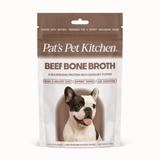
Or Beef Bone Broth:
-
6g daily
-
Easier for puppies to accept
-
Whole-food nutrition during growth
5. Swimming is perfect
From 4-6 months (once confident):
-
Zero impact on joints
-
Builds muscle
-
Cardiovascular fitness
-
Mental stimulation
Best exercise for growing Boxers.
Home Modifications for Boxer Joints
Make life easier:
1. Ramps
-
Car ramp (£50-80)
-
Sofa ramp if they jump up (£30-50)
2. Non-slip mats
-
On hard floors (£20-30)
-
Boxers slip on tile/hardwood
-
Prevents sudden jarring movements
3. Orthopaedic bed
-
Memory foam support (£60-100)
-
Reduces pressure on joints during rest
4. Raised food bowls
-
Reduces neck strain (£15-25)
-
Especially for large males
Total investment: £145-285
ROI: Prevents injuries, reduces joint stress, extends comfortable years.
When Surgery is Needed
Despite best care, some Boxers need surgery:
Hip Dysplasia:
Total hip replacement (THR):
-
Cost: £5,000-8,000 per hip
-
Recovery: 8-12 weeks
-
Best for younger dogs (under 8)
Femoral head ostectomy (FHO):
-
Cost: £1,500-3,000
-
Less ideal for Boxers (too heavy)
-
Better for dogs under 25kg
Cruciate Ligament:
TPLO or TTA surgery:
-
Cost: £3,000-5,000
-
Recovery: 8-12 weeks
Post-surgery:
Continue supplementation lifelong. Surgery fixes mechanical problem but doesn't prevent arthritis.
Source: British Veterinary Orthopaedic Association
Your Boxer Can Bounce for Years
Joint problems don't have to steal your Boxer's joy.
With proper care:
-
Most Boxers remain comfortable and playful well into senior years
-
Even with hip dysplasia, quality of life can be excellent
-
Prevention and early intervention make all the difference
Start protecting their joints today:
-
Assess current mobility (use 8 signs checklist)
-
Start appropriate supplement
-
Manage their weight strictly
-
Control their exercise (even when they protest)
-
Make home modifications
Your Boxer's personality depends on pain-free movement.
Give them the support they need to keep being the joyful, bouncing, play-obsessed dog they were born to be.
Sources & Further Reading
-
British Veterinary Association Hip Scheme Statistics: https://www.bva.co.uk/canine-health-schemes/hip-scheme/hip-scheme-statistics/
-
Oesser S, et al. "Oral administration of gelatin hydrolysate." Journal of Nutrition, 1999
-
Roush JK, et al. "Effects of omega-3 fatty acids." JAVMA, 2010
-
Kealy RD, et al. "Effects of limited food consumption on hip dysplasia." JAVMA, 1992
-
British Veterinary Orthopaedic Association: https://www.bvoa.org.uk/
Important: This information is for educational purposes and doesn't replace veterinary advice. If your dog is showing signs of joint problems, pain, or mobility issues, consult your vet for proper diagnosis and treatment. The guidance in this article is based on current research and best practices, but every dog is different.
Last Updated: July 2026