Quick Answer: Pugs are prone to joint issues due to their compact build and weight distribution. Mobility & Joints combines collagen, glucosamine, and hyaluronic acid for comprehensive support. A pug sits in the 1 to 10kg band, so the daily serving is 1 teaspoon (3g). Start supplements between ages 4 and 6, or sooner if your pug shows stiffness or limping. Supplements support joint health but don't replace veterinary treatment.
Pugs are one of the UK's most popular breeds. They're funny, affectionate, and endlessly entertaining.
They're also one of the breeds most likely to develop joint problems.
Their compact frame, shortened legs, and tendency toward weight gain create the perfect storm for joint stress. If you own a pug, understanding their joint health isn't optional. It's essential.
Here's what you need to know about keeping your pug comfortable and mobile.
Why Pugs Are Prone to Joint Issues
Pugs aren't built like other dogs. Their compact frame carries disproportionate weight on short, sturdy legs. Every step, jump, and play session puts extra pressure on their knees, hips, and spine.
Add their love of food and tendency toward weight gain, and joint stress multiplies quickly. A pug carrying even a kilo or two of extra weight puts significantly more load on joints that are already under strain.
Breed history matters too. Selective breeding for those distinctive flat faces and compact bodies hasn't left much room for optimal skeletal alignment. This isn't a fault in individual dogs. It's simply the reality of pug genetics, and something owners need to understand and support.
Common Joint Conditions in Pugs
Pugs develop specific joint problems more frequently than other breeds. Knowing these helps you spot early signs and act fast with your vet.
Patellar Luxation (Slipping Kneecap)
This is the most common pug joint issue. The kneecap slides out of its groove, usually when the dog puts weight on the back leg. You might notice your pug occasionally hopping on one back leg, then resuming normal walking. In mild cases, the kneecap pops back into place automatically.
The Kennel Club lists pugs among breeds commonly affected by patellar luxation, and the condition is graded from 1 (mild) to 4 (severe). Grades 3 and 4 typically require surgical correction.
Hip Dysplasia
The hip joint develops abnormally, causing grinding and discomfort over time. You'll see reluctance to jump, slower stair climbing, or a bunny hopping gait when running. The BVA/KC Hip Dysplasia Scheme monitors this condition across breeds.
Intervertebral Disc Disease (IVDD)
Pug spines are particularly vulnerable. The discs between vertebrae can degenerate, potentially pressing on the spinal cord. Signs include back pain, reluctance to jump, or in severe cases, hind leg weakness. This is serious and requires immediate veterinary attention if suspected.
Legg-Calve-Perthes Disease
This condition affects the femoral head (the ball of the hip joint), where blood supply is disrupted, causing the bone to deteriorate. It's more common in small breeds and typically appears in younger dogs between 4 and 12 months of age.
What to Look For in a Joint Supplement
Not all joint supplements are equal. For pugs specifically, you want ingredients that address their particular vulnerabilities.
Collagen peptides: The primary structural protein in cartilage, tendons, and ligaments. Hydrolysed collagen is broken down for better absorption. This is the foundation of any good joint supplement.
Glucosamine: Supports cartilage production and helps maintain the cushioning between joints. Particularly important for breeds prone to patellar luxation.
Hyaluronic acid: Keeps joint fluid viscous and lubricating. Think of it as the oil that keeps the joint moving smoothly.
Vitamin C and vitamin E: Support collagen synthesis and provide antioxidant protection for joint tissue.
Manganese: Essential for cartilage formation and bone health.
Look for supplements that combine these ingredients rather than relying on a single compound. A multi-ingredient approach addresses joint health from several angles.
How Collagen Supports Your Pug's Joints
Collagen is the scaffolding that holds joints together. It makes up a significant portion of cartilage, tendons, and ligaments. As dogs age, their bodies produce less collagen, and existing collagen degrades faster than it's replaced.
Hydrolysed collagen peptides are broken down into small amino acids that your pug's body can absorb and use efficiently. These peptides support cartilage structure and help maintain the integrity of connective tissue throughout the body.
Mobility & Joints combines collagen peptides with glucosamine, hyaluronic acid, manganese, vitamin C, and vitamin E. This 6-in-1 formula covers multiple mechanisms of joint health in one serving, making it our top recommendation for pug joint care. A pug weighs 6kg to 8kg as a rule, which puts them in the 1 to 10kg band and a 1 teaspoon daily serving.
The serving guide, which is the same for both Mobility & Joints and Pure Collagen:
| Dog weight | Daily serving | Pure Collagen delivered |
|---|---|---|
| 1 to 10kg | 1 teaspoon (3g) | 3,000mg |
| 11 to 20kg | 2 teaspoons (6g) | 6,000mg |
| 21 to 30kg | 3 teaspoons (9g) | 9,000mg |
| 31kg and over | 4 teaspoons (12g) | 12,000mg |
Almost every pug sits in the top row. That is 1 teaspoon a day, whichever of the two products you choose. Weigh your dog rather than guessing, and do not scale a bigger dog's serving down in your head.
Supplements support joint health but don't replace veterinary treatment. If your pug has a diagnosed condition like grade 3 or 4 patellar luxation, surgery may be necessary. Supplements work alongside veterinary care, not instead of it.
When to Start Joint Supplements
Don't wait until your pug limps. The best time to support joints is before serious damage occurs.
Most vets recommend starting joint supplements between ages 4 and 6, when collagen production naturally begins declining. Start earlier if your pug shows any of these signs: stiffness after rest, reluctance to jump or climb stairs, occasional limping, or difficulty getting up in the morning.
If your pug already has a diagnosed condition, joint supplements become even more important. Work with your vet on the overall management plan, and use supplementation as part of that plan. Early intervention often prevents minor issues from becoming major problems.
Activity Management for Pug Joint Health
Supplements work best alongside smart activity choices. Pugs shouldn't be couch potatoes, but they also shouldn't be running marathons. The goal is consistent, low-impact movement.
Best activities for pug joints:
- Short daily walks (20 to 30 minutes in cooler weather)
- Swimming or hydrotherapy (excellent for joint support with no impact)
- Gentle play in the house or garden
- Controlled indoor fetch games on carpeted surfaces
Activities to limit or avoid:
- Repetitive jumping on and off furniture
- Long walks in hot weather (heat plus exertion equals joint stress for pugs)
- Rough play with larger dogs
- Running on hard surfaces like concrete or tiled floors
Weight management is equally crucial. Keep your pug at a healthy weight by monitoring portions and choosing quality food. Every extra kilogram puts unnecessary stress on already vulnerable joints.
What Results to Expect
Joint supplements work gradually, not overnight. Most owners notice improvements between 4 and 8 weeks of consistent use, though some dogs respond faster.
You might see your pug more willing to play, quicker to get up in the morning, or less guarded when moving. Some owners report noticeable improvement in limping or stiffness. Others find supplements maintain current mobility and prevent further decline.
Results vary because every pug's situation differs. A young pug starting supplements preventively will have a different experience than an older pug managing diagnosed arthritis. The key is sustained, daily use.
What collagen cannot do: It cannot fix structural problems like severe patellar luxation or reverse advanced arthritis. It provides building blocks for cartilage support, not a surgical solution. Be realistic about expectations, and always work with your vet on the complete picture.
Frequently Asked Questions
How much should I give my pug?
A pug of 1 to 10kg takes 1 teaspoon (3g) a day, which covers almost every pug. With Pure Collagen, which is 100 per cent hydrolysed collagen peptides, that works out at 3,000mg of collagen. The larger servings on the guide are for heavier dogs, so do not borrow those figures for a pug.
Are joint supplements safe for pugs long-term?
Yes. Quality supplements contain natural ingredients already present in your dog's body or diet. There are no serious side effects from prolonged collagen or glucosamine use at recommended levels.
Can supplements replace surgery for patellar luxation?
No. If your vet recommends surgery for grade 3 or 4 patellar luxation, surgery is necessary. Supplements support joint health before and after surgery, but they won't realign a dislocated kneecap. Always follow your vet's surgical recommendations.
My pug is only 2 years old. Is it too early for supplements?
For most healthy young pugs, supplements aren't yet necessary. However, if your pug has already been diagnosed with a joint condition or shows early signs of stiffness, discuss starting supplements with your vet. For prevention, ages 4 to 6 is typically the right time to begin.
Can I give my pug multiple joint supplements at once?
You can combine different types (like bone broth plus a joint formula), but avoid doubling up on the same ingredient. Discuss multi-supplement plans with your vet to avoid excessive amounts of any single nutrient.
How do I give supplements to a fussy pug?
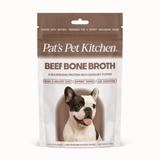
Most pugs aren't fussy about food. Beef Bone Broth mixed into meals is often the easiest option for difficult eaters. Powder supplements can also be stirred into wet food without changing the taste or texture.
Do pugs need different supplements than larger dogs?
The ingredients are the same, but the serving differs. A pug takes 1 teaspoon (3g) a day. A 30kg dog takes 3 teaspoons (9g). Use the serving guide above based on your dog's weight to ensure the right amount for your pug's size.
Which Product for Your Pug?
- Early stiffness, diagnosed joint conditions, or breeds at high risk: Mobility & Joints, collagen peptides plus glucosamine, hyaluronic acid, manganese and vitamins C and E, in a 1 teaspoon daily serving for a pug.
- Prevention, daily collagen maintenance, or post-surgery support: Pure Collagen, hydrolysed bovine collagen peptides and nothing else. At 1 teaspoon (3g) a day that is 3,000mg of collagen peptides.
- Fussy eaters, gut health support, or puppies from approximately 8 weeks: Beef Bone Broth
Follow the serving guide above based on your dog's weight.
Sources
- The Kennel Club. Pug breed health information. thekennelclub.org.uk
- BVA/KC Hip Dysplasia Scheme and Patella Testing Scheme. bva.co.uk
- PDSA. "Joint Problems in Dogs." pdsa.org.uk
- Canine Arthritis Management UK. caninearthritis.co.uk
- American College of Veterinary Surgeons. "Patellar Luxations." acvs.org
Disclaimer: This article is for educational purposes and doesn't replace veterinary advice. If your pug shows signs of joint problems, consult your vet for proper diagnosis and treatment. Supplements support joint health but don't treat or cure joint conditions. Early intervention gives the best outcomes.
Last Updated: August 2026