Quick Answer: Shih Tzus need joint supplements from age 4-5 due to their long backs (IVDD risk) and 24% hip dysplasia rate. Hydrolysed collagen peptides support spinal disc health and strengthen hip ligaments.
---
Your Shih Tzu is struggling with the stairs.
They used to bounce up without thinking. Now there's hesitation. Maybe a yelp when you pick them up.
This isn't just "getting older." Shih Tzus are structurally prone to back and hip problems.
Here's how to protect them.
---
Why Shih Tzus Are Prone to Joint Problems
Long back relative to leg length
Like Dachshunds and Corgis, Shih Tzus have a longer back relative to their height. This creates more stress on the spinal discs between vertebrae, increasing the risk of disc problems.
Compact, heavy build
Shih Tzus are surprisingly solid for their size. This weight on relatively small joints creates more wear over time.
Genetic predisposition
Hip dysplasia affects approximately 24% of Shih Tzus according to orthopaedic screening data. This is higher than many people expect for a small breed.
---
Common Joint Problems in Shih Tzus
Intervertebral disc disease (IVDD)
-
What it is: Spinal discs bulge or rupture, pressing on the spinal cord
-
Why Shih Tzus get it: Long back creates more stress on discs, genetic predisposition to disc degeneration
-
Signs: Back pain (arched back, reluctance to move), crying out when picked up, weakness in back legs, in severe cases paralysis
Hip dysplasia
-
Prevalence: Approximately 24% of Shih Tzus (OFA/BVA data)
-
What it is: Hip socket too shallow, ball of femur doesn't fit properly
-
Signs: Bunny hopping gait, difficulty rising, reluctance to climb stairs, stiffness after rest
Patellar luxation
-
What it is: Kneecap slips out of position
-
Common in: Small breeds including Shih Tzus
-
Signs: Skipping on back leg, occasional lameness, kicking leg out to pop kneecap back
---
How Collagen Supports Shih Tzu Joints
Collagen is particularly relevant for Shih Tzus because it supports both spinal health and joint structure:
Spinal disc support
Intervertebral discs contain collagen in their structure. The outer ring of each disc (annulus fibrosus) is primarily collagen. Supporting overall collagen levels helps maintain disc integrity.
Ligament and tendon strength
The ligaments supporting the hip joint and spine are made of collagen. Stronger ligaments provide better joint stability, which is crucial for dogs with hip dysplasia tendencies.
Cartilage maintenance
Collagen provides the framework for cartilage. Maintaining cartilage health is essential for dogs prone to multiple joint issues.
---
When to Start Joint Supplements for Shih Tzus
For prevention (no current issues)
Given their predisposition to back and hip problems, preventive supplementation makes sense from age 4-5.
Product recommendation: Pure Collagen. Follow serving guide on pouch for your dog's weight.
For existing issues
If your Shih Tzu is already showing signs of joint stiffness, back sensitivity, or has been diagnosed with a joint condition, start immediately.
Product recommendation: Mobility & Joints. The 6-in-1 formula combines collagen with glucosamine and other joint-supporting ingredients. Follow serving guide on pouch.
After IVDD diagnosis
If your Shih Tzu has had an IVDD episode (even if managed without surgery), ongoing collagen support is particularly important. Always consult your vet about timing if surgery was involved.
---
Protecting Your Shih Tzu's Back
Supplements are one part of the picture. For Shih Tzus, back protection is crucial:
Prevent jumping
-
Use pet stairs or ramps for furniture and beds
-
Never let them jump down from heights
-
Block access to high furniture if they won't use stairs
Support when lifting
-
Always support both front and back end when picking up
-
Never let their back sag unsupported
-
Teach children the correct way to hold them
Maintain healthy weight
-
Target weight: 4-7kg depending on size
-
Extra weight puts more stress on spine and joints
-
You should be able to feel ribs without pressing
---
What Results to Expect
Typical timeline
-
Week 2-3: Coat may look shinier (often the first visible sign)
-
Week 4-6: Improved mobility, less stiffness after rest
-
Week 6-8: More willingness to walk and play, easier getting up
What collagen can and cannot do
-
Can: Support disc and joint health, improve comfort, slow progression
-
Cannot: Reverse existing structural damage, replace surgery for severe IVDD
---
Frequently Asked Questions
My Shih Tzu is only 3 years old. Is it too early for joint supplements?
Not necessarily. Given the breed's predisposition to back problems, starting preventive supplementation at 3-4 years is reasonable, especially if they're active or overweight. Consult your vet for breed-specific advice.
Can supplements prevent IVDD?
Supplements cannot guarantee prevention as IVDD has genetic and structural components. However, supporting disc health through collagen, combined with weight management and preventing jumping, gives your Shih Tzu the best chance.
My Shih Tzu had IVDD surgery. Should I give collagen now?
Collagen can support ongoing spinal health after recovery. Discuss timing with your vet, as there may be a waiting period after surgery. Long-term supplementation is often recommended to support remaining discs.
My Shih Tzu won't eat the supplement. What should I do?
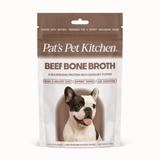
Pure Collagen is tasteless and odourless. Mix thoroughly into wet food. If they still refuse, try Beef Bone Broth which has an irresistible beef flavour and contains 40% collagen.
---
Which Product for Your Shih Tzu?
-
Healthy Shih Tzu, prevention focus: Pure Collagen
-
Existing joint or back issues: Mobility & Joints
-
Fussy eater: Beef Bone Broth (creates irresistible gravy)
Follow serving guide on your chosen product's pouch based on your Shih Tzu's weight.
---
Sources
-
Orthopedic Foundation for Animals (OFA) breed statistics
-
British Veterinary Association/Kennel Club Hip Dysplasia Scheme
-
Brisson BA. Intervertebral disc disease in dogs. Veterinary Clinics of North America: Small Animal Practice, 2010
-
British Small Animal Veterinary Association
---
Important: This information is for educational purposes and doesn't replace veterinary advice. If your dog is showing signs of joint problems, pain, or mobility issues, consult your vet for proper diagnosis and treatment. The guidance in this article is based on current veterinary research and best practices, but every dog is different.
Last Updated: February 2026