Quick Answer: Yorkshire Terriers benefit from hydrolysed collagen peptides in powder form for accurate tiny-dog serving sizes. Patellar luxation affects approximately 26% of Yorkies, and Legg-Calve-Perthes disease is common in the breed. Prevention from age 2-3 is ideal. A typical 2 to 3kg Yorkie sits in the 1 to 10kg band: 1 teaspoon (3g) daily. Always follow the serving guide printed on the pack.
---
Your Yorkshire Terrier suddenly lifts their back leg.
They hop along for a few steps, shake the leg, and then walk normally again.
This characteristic "skip" is often the first sign of patellar luxation, and it affects more than a quarter of all Yorkies.
Here's how to protect your Yorkie's joints.
---
Why Yorkshire Terriers Are Prone to Joint Problems
Extremely small size
Weighing just 2-3kg on average, Yorkshire Terriers have some of the smallest joints of any dog breed. These tiny structures are surprisingly vulnerable to developmental issues and wear.
Genetic predisposition
Selective breeding for small size has concentrated certain skeletal issues. The groove where the kneecap sits is often too shallow, and the head of the femur can be prone to poor blood supply.
Active temperament
Despite their size, Yorkies are terriers at heart. They're active, feisty, and often jump from furniture or play vigorously, putting stress on their small joints.
---
Common Joint Problems in Yorkshire Terriers
Patellar luxation
-
Prevalence: Affects approximately 26% of Yorkshire Terriers (one of the highest rates of any breed)
-
What it is: The kneecap (patella) slips out of its normal groove
-
Signs: Skipping gait, holding leg up momentarily, kicking leg to pop kneecap back
-
Grading: Grade 1 (occasional, mild) to Grade 4 (permanent displacement, requires surgery)
Legg-Calve-Perthes disease
-
What it is: The head of the femur (thigh bone) deteriorates due to insufficient blood supply
-
When it appears: Usually between 4-11 months of age
-
Signs: Progressive lameness in one rear leg, muscle wasting in affected leg, pain when hip is moved
-
Common in: Small breeds including Yorkies, with genetic component
Early-onset arthritis
Yorkies with untreated patellar luxation or Legg-Calve-Perthes often develop secondary arthritis. Even after surgical correction, the affected joints remain vulnerable to arthritic changes.
---
What Yorkshire Terriers Need in a Joint Supplement
Precise serving sizes for very small dogs
This is critical for Yorkies. At 2-3kg, they need tiny amounts. Most chewable supplements are designed for medium to large dogs, making accurate serving sizes nearly impossible.
Powder supplements allow you to measure exact amounts appropriate for your Yorkie's weight.
Daily serving guide by weight:
| Dog weight | Daily serving | Pure Collagen delivered |
|---|---|---|
| 1 to 10kg | 1 teaspoon (3g) | 3,000mg |
| 11 to 20kg | 2 teaspoons (6g) | 6,000mg |
| 21 to 30kg | 3 teaspoons (9g) | 9,000mg |
| 31kg and over | 4 teaspoons (12g) | 12,000mg |
The same serving guide applies to Mobility & Joints. Always follow the serving guide printed on the pack.
A typical 2 to 3kg Yorkshire Terrier sits in the 1 to 10kg band, which is 1 teaspoon (3g) daily.
Hydrolysed collagen peptides
Standard collagen molecules are too large to absorb effectively. Hydrolysed peptides are broken down small enough to actually reach the joints and provide benefit.
Clean formula
Yorkies have sensitive digestive systems. Avoid supplements with lots of fillers, artificial ingredients, or unnecessary additives. The simpler the formula, the better.
Palatability
Yorkies can be notoriously fussy eaters. A tasteless, odourless powder that disappears into food is often more successful than chews they might spit out.
---
When to Start Joint Supplements for Yorkshire Terriers
For prevention (no current issues)
Given the high rate of joint problems in the breed, preventive supplementation makes sense from around age 2-3.
Product recommendation: Pure Collagen. Follow the serving guide on the pack for your dog's weight.
For existing issues
If your Yorkie is already showing signs of joint problems (skipping, lameness, stiffness), start immediately.
Product recommendation: Mobility & Joints. The 6-in-1 formula provides collagen plus glucosamine and other joint-supporting ingredients. Follow the serving guide on the pack.
After Legg-Calve-Perthes diagnosis
If your Yorkie has been diagnosed with Legg-Calve-Perthes disease (or has had surgery for it), ongoing joint support is particularly important. Consult your vet about timing, especially post-surgery.
---
Additional Joint Protection for Yorkshire Terriers
Supplements work best as part of a comprehensive joint care approach:
Prevent jumping
-
Use pet stairs or ramps for furniture (sofas and beds are high for a Yorkie)
-
Never let them jump down from heights
-
Consider blocking access to high furniture if they won't use stairs
Maintain healthy weight
-
Target weight: typically 2-3.2kg (check breed standard for your Yorkie's size)
-
Even 200-300g extra is significant on such a small frame
-
You should easily feel ribs without pressing
Appropriate exercise
-
Short, frequent walks rather than long hikes
-
Avoid slippery floors (put down rugs)
-
Gentle play that doesn't involve jumping or sudden twisting
Use a harness
-
Yorkies are prone to collapsed trachea, so collars can cause problems
-
A well-fitted harness distributes pressure safely and protects their delicate neck
---
What Results to Expect
Typical timeline
-
Week 2-3: Coat may look shinier (often the first visible sign)
-
Week 4-6: Reduced frequency of skipping (if patellar luxation present)
-
Week 6-8: Improved mobility, more willingness to walk and play
What collagen can and cannot do
-
Can: Support joint health, improve comfort, may reduce luxation episodes, slow progression
-
Cannot: Reverse structural problems like severe luxation or Legg-Calve-Perthes damage
For severe joint issues, surgery may still be necessary. Supplements support ongoing joint health.
---
Frequently Asked Questions
My Yorkie weighs only 2kg. How much do I give?
A 2kg Yorkie sits in the 1 to 10kg band, which is 1 teaspoon (3g) daily. That applies to both our Pure Collagen and Mobility & Joints. Powder allows precise measurement for very small dogs. Always follow the serving guide printed on the pack.
Will supplements prevent patellar luxation?
Supplements cannot change bone structure. Patellar luxation has genetic and structural components. However, supporting joint and ligament health may help reduce severity and slow progression of existing issues.
My Yorkie had Legg-Calve-Perthes surgery. Should I give collagen?
Collagen can support ongoing joint health after surgery. The affected hip will always be vulnerable, so long-term support makes sense. Discuss timing with your vet, as there may be a waiting period post-surgery.
My Yorkie is extremely fussy. How do I get them to take it?
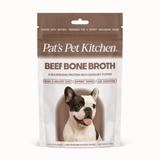
Pure Collagen is tasteless and odourless. Mix thoroughly into wet food. If they still refuse, try Beef Bone Broth which has an irresistible beef flavour and contains 40% collagen. Most fussy dogs love it.
Is my Yorkie too young for joint supplements?
For healthy Yorkies, prevention typically starts around age 2-3. However, if your Yorkie shows early signs of joint issues or has been diagnosed with a condition like Legg-Calve-Perthes (which appears between 4-11 months), consult your vet about earlier supplementation.
---
Which Product for Your Yorkshire Terrier?
-
Healthy Yorkie, prevention focus: Pure Collagen
-
Existing joint issues or diagnosed condition: Mobility & Joints
-
Extremely fussy eater: Beef Bone Broth (creates irresistible gravy)
Follow the serving guide printed on your chosen product's pack based on your Yorkie's weight.
---
Sources
-
LaFond E, et al. Breed susceptibility for developmental orthopedic diseases in dogs. Journal of the American Animal Hospital Association, 2002
-
Harasen G. Patellar luxation. The Canadian Veterinary Journal, 2006
-
Demko JL, McLaughlin RM. Developmental orthopedic disease. Veterinary Clinics: Small Animal Practice, 2005
---
Important: This information is for educational purposes and doesn't replace veterinary advice. If your dog is showing signs of joint problems, pain, or mobility issues, consult your vet for proper diagnosis and treatment. The guidance in this article is based on current veterinary research and best practices, but every dog is different.
Last Updated: August 2026