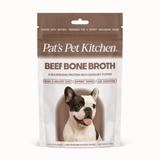
Quick Answer: Bone broth works brilliantly as a food topper because its rich aroma stimulates appetite and the liquid adds moisture and flavour to kibble or wet food. Mix a small amount of powdered bone broth with your dog's meal, or use the liquid form poured over food. Start with a teaspoon and adjust based on your dog's response. Beyond appetite, bone broth provides hydration, supports gut health, and delivers collagen for joint support.
Your dog stares at their bowl. They used to devour meals in seconds. Now they turn away, sniff once, and walk off. Food toppers are designed exactly for this moment: something that transforms a "meh" meal into something worth eating.
The good news is that bone broth is one of the most effective toppers you can use. It works on multiple levels. The scent alone pulls a dog's attention. The moisture transforms dry kibble from crunchy-and-boring to aromatic-and-interesting. And the taste? Most dogs find it genuinely appealing.
Even dogs who eat happily can benefit. A topper isn't just appetite rescue. It's a way to boost nutrition, hydration, and digestive health in a form your dog actually wants to eat.
Why Food Toppers Work for Dogs
Dogs rely heavily on scent. Their sense of smell drives eating behaviour more than taste does. A plain kibble bowl releases minimal aroma. A bowl with a richly-scented topper? That's impossible to ignore.
Toppers also change texture. Dry kibble stays dry. Add a liquid topper and suddenly the food softens, becomes easier to chew, and releases flavour as your dog eats. This matters for older dogs with dental sensitivity and for dogs that simply lose interest in monotony.
The third reason is psychological. Your dog sees you adding something. The ritual of preparation makes food feel more valuable.
Why Bone Broth Specifically Works as a Topper
Bone broth is a food topper built to do its job. The natural gelatin and collagen create aroma that draws dogs in immediately. The amino acids (glycine, proline, glutamine) give the broth a savoury depth that most commercial toppers chase but rarely achieve.
Liquid bone broth clings to kibble differently than watery broths or gravies. It coats without soaking through the bowl. The result is balanced: food stays textured enough to satisfy the chewing instinct, but moist enough to taste interesting.
And unlike some toppers, bone broth isn't just flavour. The 40% collagen content means every serving delivers actual nutritional value: hydration, amino acids for gut lining repair, and collagen for joint support.
How to Mix Bone Broth With Kibble
Start small. One teaspoon mixed into your dog's regular meal is enough to transform a bowl. You can increase to one tablespoon if your dog consistently finishes their food and shows enthusiasm for more.
Pour it over, don't stir. The aroma matters. When bone broth sits on top of kibble rather than fully mixed in, your dog smells it first. The curiosity pulls them to eat. Mix it in if your dog needs an extra nudge, but let the topmost layer stay visible and aromatic.
Use room temperature broth. Warm broth releases more aroma and smells appealing. Cold broth works too, but warm tends to get better response. Let it cool for a minute or two if it's too hot to serve immediately.
Mix with dry kibble as your starting point. Bone broth and kibble is the classic combination. The liquid soaks into the edges of the kibble, softening it slightly whilst keeping the centre crunchy. This texture contrast keeps dogs engaged.
If your dog eats wet food, add bone broth on top as a final finishing layer. The broth adds moisture and flavour without over-saturating the food. Start with a teaspoon.
For raw diets, bone broth works beautifully as a pouring sauce. It helps bind raw food together, adds hydration, and boosts palatability. Use about a tablespoon per meal, adjusted for portion size.
Temperature and Consistency Tips
Bone broth powder is more convenient for mixing than liquid broth. Powder rehydrates instantly and stays shelf-stable. Liquid broth has stronger aroma and mixes without needing extra steps.
If using powder: stir it into a little warm water first to dissolve any clumps, then pour over food. This takes 30 seconds and prevents grainy texture.
If using liquid broth: pour directly. No mixing required. Warmed liquid (not boiling) releases more scent and appeals to picky eaters more than room temperature.
The consistency should be pourable, never gelatinous globs. If your bone broth has gelled (from natural collagen), warm it gently to liquefy before serving. Your dog wants to taste and smell it, not chew it like jelly.
How Much to Add
The serving size depends on your dog's overall diet plan. As a topper (not a replacement for food), use the amounts from the Beef Bone Broth pouch based on your dog's weight. Follow the serving guide on the pack: it's designed to give your dog the collagen and amino acid benefit without over-feeding.
If you're just trying to entice your dog to eat more of their existing meal, start with a teaspoon. Most dogs respond to very little. Too much topper can make the meal too sloppy and actually deter some dogs.
Watch your dog's weight. If you're adding broth daily, factor it into their calorie count so you don't accidentally increase their daily intake too much.
Benefits Beyond Taste
Hydration. Dogs don't drink enough water. Adding liquid to their food increases daily fluid intake without effort. This is especially useful for dogs prone to urinary issues or those eating primarily dry kibble.
Gut health. The amino acids in bone broth (particularly glycine and glutamine) support the gut lining. They're gentle on digestion and useful for dogs recovering from stomach upset or eating sensitive diets.
Joint support. The collagen in bone broth provides the same building blocks as a collagen supplement: the structural proteins that support cartilage and connective tissue. You're adding nutritional value with every topper.
Coat condition. Regular bone broth means more collagen and amino acids. Over weeks and months, many owners notice coat texture improves, becoming shinier and fuller.
Meal satisfaction. A dog that eats a boring bowl of kibble and feels done in two minutes is more likely to beg for scraps or develop food anxiety. A topper that makes the meal feel more substantial and interesting? That builds confidence around eating.
Creative Ways to Use Bone Broth as a Topper
Frozen lick mats. Spread bone broth liquid onto a silicone lick mat and freeze. Serves the same purpose as a frozen yoghurt lick mat but with actual nutritional value. Good for keeping a dog occupied and mentally stimulated.
Kong stuffing. Mix bone broth powder with a small amount of wet food, stuff into a Kong, and freeze. When your dog licks it out, they're getting topical richness and collagen.
Training treat liquid. A small amount of bone broth in a shallow bowl can be a reward between training sessions. Dogs remember tasty rewards better than bland ones.
Recovery meal addition. After a vet visit or illness, bone broth topped meals feel gentler and more appealing than plain food. It encourages eating when appetite is low and supports healing with natural amino acids.
When a Food Topper Isn't Enough
If your dog consistently refuses food even with a topper, that's worth investigating. Appetite loss that lasts more than a day usually signals something worth a vet visit. It could be pain, nausea, dental issues, or an underlying condition.
A food topper makes an uninteresting bowl more interesting. It doesn't cure loss of appetite caused by illness. Think of it as a tool to boost nutrition when picky eating is behavioural, not a solution for medical loss of appetite.
The same applies to dogs eating less due to age or dental discomfort. A topper helps, but addressing the root cause (dental cleaning, texture adjustment to softer food, meal timing changes) is what actually solves the problem.
Frequently Asked Questions
Can I use bone broth every day? Yes. If you're using it as a topper within the recommended serving size, bone broth is safe for daily use. Follow the serving guide on the pouch based on your dog's weight. Many owners use it daily as part of regular meals.
Will bone broth upset my dog's stomach? Bone broth is gentle and supports digestive health. Some dogs may have loose stools if you introduce too much too quickly. Start with a small amount and increase gradually over a week. If your dog has a sensitive stomach, begin with a teaspoon and monitor.
Is bone broth safe for puppies? Bone broth is safe for puppies from around 8 weeks old. Use very small amounts (quarter to half teaspoon) to start. Puppies have developing digestive systems and benefit from the gentle amino acids in broth, but introduce it slowly.
Can I mix bone broth powder with dry kibble and store it? It's not ideal to mix in advance. The powder will hydrate and the kibble will soften over time, making the mix gritty and less appealing. Mix just before serving for the best result and strongest aroma.
How long does bone broth stay fresh once opened? Follow the storage instructions on your product pouch. Most liquid broths keep in the fridge for several days once opened. Powder stays shelf-stable if kept dry and sealed. When in doubt, check the pouch.
Will bone broth help my senior dog eat more? Very likely. The aroma and flavour boost helps senior dogs who've lost interest in their regular food. The added hydration and joint-supporting collagen are also particularly useful for older dogs.
Can I use human bone broth? Human-grade bone broth isn't formulated for dogs and may contain salt, garlic, or onion (which are toxic to dogs). Use a bone broth made specifically for dogs to be safe.
Which Product for Your Dog?
- You want a convenient daily topper that adds flavour and nutrition: Beef Bone Broth
- Your dog has existing joint concerns and needs ongoing support: Mobility & Joints
- Your dog is healthy and you're focused on prevention and maintenance: Pure Collagen
Follow the serving guide on your chosen product's pouch based on your dog's weight.
Sources
British Small Animal Veterinary Association (BSAVA) Nutrition Guidelines for companion animals.
Canine Arthritis Management UK: "Collagen and the Supporting Role of Amino Acids in Joint Health."
PDSA Pet Health Information: "Appetite Loss in Dogs: When to Worry and What to Do."
Skin, Coat & Digestive Health research on collagen peptides in companion animal nutrition.
Disclaimer: This information is for educational purposes and doesn't replace veterinary advice. If your dog shows persistent loss of appetite or refuses food for more than 24 hours, consult your vet for proper diagnosis and treatment. Early intervention gives the best outcomes.
Last Updated: March 2026