Quick Answer: Collagen is the structural protein that keeps your dog's skin supple and coat shiny. It makes up about 70% of skin and breaks down with age, poor nutrition, and stress. Hydrolysed collagen peptides are easily absorbed and provide amino acids that support skin elasticity, coat quality, and overall skin health. Most dogs see visible coat improvement within 4-6 weeks of consistent supplementation.
You run your hand down your dog's coat and it feels thin. Brittle. Not the soft, glossy fur you remember. Their skin looks dry, flaky, maybe even itchy. They're scratching more. Shedding more. And the coat just doesn't have that lustre it used to.
It might be seasonal. But it might be something more. Their body isn't maintaining skin and coat the way it should. You can't fix it with the right brush or a nicer bed. This is happening from the inside.
Collagen supplementation addresses this at source. It provides the structural building blocks your dog's skin needs to stay healthy, elastic, and strong. This guide explains what's happening and how collagen works to restore coat quality and skin health.
Why Skin and Coat Matter
Healthy skin is a barrier. It protects your dog's internal organs, regulates temperature, and prevents bacteria and parasites from entering. A healthy coat insulates, protects skin from UV damage, and signals overall wellbeing. When coat quality declines, it's often a sign something needs attention.
Your dog's skin is living tissue that constantly renews itself. Old skin cells are shed, new ones form. This cycle relies on collagen for structure. Without adequate collagen, new skin cells form on a weakened foundation. The result is dry, flaky, easily irritated skin and a dull, thin coat.
Common signs of collagen depletion include dry patches, flaking or dandruff-like debris, persistent itching, dull or thin coat, slower wound healing, and reduced skin elasticity. These aren't rare problems. They're remarkably common in middle-aged and senior dogs.
What Causes Collagen Decline
Age is the primary factor. Collagen production peaks in young dogs and declines steadily from around age 3-5 onwards. By the time your dog reaches senior years, they're producing significantly less collagen than they did as adults. This is natural but addressable through supplementation.
Diet matters enormously. Collagen is made from amino acids, particularly glycine, proline, and hydroxyproline. If your dog's diet lacks quality protein or the specific amino acids needed for collagen synthesis, skin and coat suffer. Commercial kibble varies widely in protein quality. Some dogs simply don't get enough of the right building blocks.
Stress and illness reduce collagen production. Chronic stress, illness, poor gut health, or recent surgery all deplete collagen reserves. Recovery requires more collagen than the dog is producing. Supplementation bridges this gap.
Environmental factors accelerate breakdown. Sun exposure, chlorine, allergens, poor grooming habits, and harsh weather all stress skin. Dogs with allergies or skin sensitivity lose collagen faster than dogs with robust skin barriers.
Often it's a combination. An older dog with moderate allergies and a diet lacking amino acid diversity will have noticeably worse skin and coat than a young dog eating premium food. Addressing this requires both dietary improvement and direct collagen supplementation.
What Is Collagen and Why It Matters
Collagen is the most abundant protein in your dog's body. It makes up roughly 70% of skin, 90% of cartilage, significant amounts of bone, and components of tendons, ligaments, and blood vessels. Without collagen, your dog literally falls apart.
Collagen exists in different types. Type I collagen is what you need for skin and coat. It provides strength and elasticity. Type III collagen works alongside Type I to support skin structure. Both decline with age.
Raw collagen is difficult to absorb. The molecules are too large for your dog's digestive system to process efficiently. Hydrolysed collagen, however, is broken down into small peptides and free amino acids. This process makes it bioavailable. Your dog's body can absorb it and direct it to where it's needed.
When hydrolysed collagen enters the digestive system, the amino acids are absorbed into the bloodstream. Some accumulate in skin tissue, supporting elasticity and hydration. Others support joint health, gut lining integrity, and connective tissue throughout the body. This is why collagen supplementation can benefit skin while also improving coat, joints, and even digestion.
How Collagen Supports Skin and Coat Health
Hydrolysed collagen works through several mechanisms. First, it provides amino acids that your dog's skin cells use directly to rebuild collagen networks. Second, it increases skin hydration by improving the skin barrier's ability to retain moisture. Third, it reduces inflammation in irritated skin. The result is visibly healthier skin and a noticeably improved coat.
Research on collagen supplementation in human skin shows improvements in elasticity, hydration, and dermal thickness. Similar mechanisms apply in dogs. The collagen peptides accumulate in skin tissue over several weeks, strengthening the dermal matrix and supporting the epidermis above it.
Pure Collagen delivers exactly what you need for skin and coat support. Each serving provides 6,000mg of hydrolysed bovine collagen peptides (Types I and III), completely tasteless and odourless. You add it to your dog's food, and they'll never notice it's there. Unlike joint-focused formulas, Pure Collagen is pure collagen, allowing maximum absorption and direct support for skin structures.
Follow the serving guide on the pouch based on your dog's weight. Most dogs show visible coat improvements around week 4, with continued improvement through weeks 6-12. Skin texture changes take slightly longer to become obvious, usually 6-8 weeks, but many owners report improved skin flexibility and reduced itching much sooner.
Supplements support skin health but work best alongside a quality diet. Premium protein sources, healthy fats (omega-3 and omega-6), and adequate micronutrients all matter. Collagen supplementation amplifies what a good diet is already providing.
Practical Support Beyond Supplementation
Diet quality makes a genuine difference. Look for foods with named meat sources (chicken, beef, fish) as primary ingredients, not generic "meat meal" or "animal by-products". Added omega-3 fatty acids from fish oil or flax support skin health. If switching food, do it gradually over 7-10 days to avoid digestive upset.
Grooming prevents damage and reveals problems. Regular brushing removes dead hair, stimulates blood flow to skin, and helps you spot early signs of irritation or infection. Use appropriate grooming tools for your dog's coat type. Over-bathing dries skin out. Most dogs need bathing every 4-6 weeks unless they're visibly dirty. Use lukewarm water and a mild dog shampoo.
Manage allergens and triggers. If your dog has known allergies, minimise exposure. Dust, pollen, certain foods, and environmental irritants can trigger skin inflammation that increases collagen breakdown. Work with your vet to identify and manage specific triggers.
Hydration matters for skin health. Ensure your dog has constant access to fresh water. Proper hydration supports skin elasticity and coat quality. Some dogs prefer running water from a water fountain. If your dog is a reluctant drinker, you can add low-sodium broth to their water to encourage drinking.
Protect from environmental stress. Excessive sun exposure, chlorine from swimming pools, and harsh weather all damage coat and stress skin. While moderate sun exposure is beneficial, prolonged UV exposure ages skin faster. A lightweight dog coat for winter or a sun-protective shirt for summer can help.
What Results to Expect
Collagen supplementation produces visible results, but on a timeline. Most dogs show coat improvement before skin texture changes, because the outer coat responds faster than deeper skin layers.
Week 2-3: Some dogs show very early signs of improved coat shine. This isn't the peak effect, but attentive owners notice the difference. Shedding may appear unchanged or even slightly increased as old, damaged hair is replaced with healthier growth.
Week 4-6: This is when most owners notice obvious improvement. Coat becomes visibly shinier, smoother, and fuller. Dogs that were shedding excessively often show reduced shedding. New hair growth is stronger and more resilient. Skin appearance starts to improve, with less visible flaking or dryness.
Week 6-12: Continued improvement in coat quality and skin texture. If your dog had persistent itching, you may notice significantly reduced scratching. Dry patches heal. Skin elasticity improves. The improvement becomes more dramatic the longer you maintain consistent supplementation.
Results vary by dog. An older dog with poor baseline nutrition will see more dramatic improvement than a young dog already eating premium food. Dogs with allergies may see improvement in coat quality while still experiencing allergy-driven itching, because collagen supports the skin barrier but doesn't treat the underlying allergy.
What collagen cannot do: It won't cure allergies or autoimmune skin conditions. It won't treat bacterial or fungal infections. It won't eliminate persistent itching caused by underlying medical problems. For those issues, veterinary treatment is essential. Collagen supports healthy skin, but it's not a treatment for disease.
Frequently Asked Questions
Is collagen good for all dogs? Collagen supplementation is safe and beneficial for nearly all dogs over 8 weeks old. It's particularly valuable for older dogs, dogs with declining coat quality, and dogs recovering from illness or surgery. If your dog has specific health conditions, mention supplementation to your vet to ensure it aligns with their care plan.
How long does a pouch last? That depends on your dog's size and weight. A pouch serves multiple dogs at different dosing levels based on weight. Check the serving guide on the pouch to calculate how long it will last for your dog specifically. Most medium-sized dogs find a pouch lasts 4-6 weeks.
Can I give collagen if my dog has allergies? Pure Collagen is a single, simple ingredient. Bovine collagen rarely triggers allergies. If your dog has a known beef allergy, you'd want to avoid it. Otherwise, it's typically safe. However, skin allergies require veterinary diagnosis and treatment. Collagen supports the skin barrier but won't resolve allergic reactions. Work with your vet on the primary issue.
Does it work better if mixed with food or given separately? Mix it with food. It dissolves better in wet food or broth, making it easier to ensure your dog consumes the full dose. If your dog eats only dry kibble, mix the collagen with a small amount of wet food or broth alongside their regular meal.
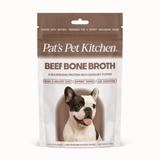
My dog is a fussy eater. Will they eat collagen? Pure Collagen is completely tasteless and odourless, so it won't change the flavour of their food. Most fussy eaters won't notice it at all. If your dog refuses collagen mixed into their normal food, you could try an alternative like Beef Bone Broth, which many fussy eaters find palatable.
How do I know if my dog needs collagen? If you notice declining coat quality, increased shedding, dry or flaky skin, reduced skin elasticity, or slow wound healing, your dog would benefit from collagen supplementation. Older dogs almost always benefit. Prevention through early supplementation is easier than trying to reverse significant coat decline later.
Can I combine collagen with other supplements? Yes. Pure Collagen stacks well with omega-3 supplements, probiotics, and other general health supplements. In fact, omega-3 and collagen work synergistically to support skin health. If your dog is on prescribed medications, mention supplementation to your vet to confirm there are no interactions.
Which Product for Your Dog?
- Dog with declining coat quality or dry skin, primary goal is skin and coat improvement: Pure Collagen (£31.99) provides maximum collagen support for skin and coat repair.
- Senior dog with joint stiffness AND coat concerns: Mobility & Joints (£34.99) combines collagen with joint-supporting nutrients, addressing multiple age-related concerns simultaneously.
- Fussy eater struggling with coat quality, needs palatability: Beef Bone Broth (£24.99) contains 40% collagen and is far more appealing to selective eaters than powder.
Follow the serving guide on your chosen product's pouch based on your dog's weight. Consistency matters more than perfection. Daily supplementation produces better results than sporadic use.
Sources
- British Small Animal Veterinary Association. Dermatology and skin health guidelines.
- Canine Arthritis Management UK. Supporting evidence on collagen and joint health in dogs.
- PDSA Pet Health Information. Canine coat and skin conditions.
- Vaya, J. and Mahmood, S. (2006). Flavonoid content in leaf extracts of carob (Ceratonia siliqua), carob fruits and their association with antioxidative blood parameters in adult rats. Journal of Agricultural and Food Chemistry, 54(23), 8715-8721.
- Bolke, L., Schlippe, G., Gerss, J., and Voss, W. (2019). A collagen supplement improves skin hydration, elasticity, roughness, and dermal collagen density: Results of a randomised, placebo-controlled, blind study. Nutrients, 8(12), 763.
Disclaimer: This information is for educational purposes only and doesn't replace veterinary advice. If your dog has persistent skin problems, hair loss, or severe itching, consult your vet for proper diagnosis. Skin conditions can indicate allergies, infections, or underlying health issues that require veterinary treatment. Supplements support skin health alongside proper veterinary care but don't treat, cure, or replace professional diagnosis and treatment.
Last Updated: March 2026