Quick Answer: Homemade bone broth for dogs is easy to make using beef or chicken bones simmered for 12-24 hours. Strain out all bones and cool completely before serving. It's rich in collagen, gelatin, and amino acids that support joint health, digestion, and coat condition. Most dogs benefit from a splash added to their regular meals, but bone broth works best alongside a balanced diet, not as a meal replacement.
The Scene
Your dog's appetite isn't what it used to be. Maybe they're recovering from illness, or they're just a fussy eater who turns their nose up at regular kibble. You've tried different brands, different textures. Nothing sticks.
Then you hear about bone broth. Other dog owners swear by it. You find yourself scrolling through recipes at 10 p.m., wondering if it's worth the effort. Is it just hype? Will your dog actually drink it?
The good news: it's neither complicated nor overhyped. Bone broth is genuinely nourishing, and most dogs find it irresistible.
Why Bone Broth Is Beneficial for Dogs
Bone broth is essentially stock made from slow-simmered bones. When you cook bones for hours, you extract collagen, gelatin, amino acids (particularly glycine, proline, and glutamine), and trace minerals like calcium and phosphorus.
These aren't exotic components. They're the building blocks your dog's body uses daily. Collagen is the structural protein in cartilage, tendons, and skin. Gelatin supports gut lining integrity. Amino acids fuel muscle repair and immune function.
Regular bone broth won't cure joint problems or heal a damaged gut on its own. But it provides nutritional support that works alongside a balanced diet and, where needed, veterinary care. For more context on how collagen specifically supports joint health, see our guide on collagen for dogs.
Basic Beef Bone Broth Recipe
This is the most forgiving recipe. Beef bones yield a richer broth than chicken and take well to long, slow cooking.
What you'll need:
- 2-3 kg beef bones (knuckles, marrow bones, or a mix) from your butcher
- Water (filtered or tap, enough to cover bones by 2-3 inches)
- Optional: 1-2 tablespoons apple cider vinegar (helps extract minerals)
Step-by-step:
- Place bones in a large pot or slow cooker. Cover with water.
- If using a pot: bring to a boil, then immediately lower to a gentle simmer. Skim any grey scum from the surface. If using a slow cooker: set to low.
- Add apple cider vinegar if using it. This helps draw out minerals from the bones.
- Simmer uncovered for 12-24 hours. The longer the cook, the more minerals extract. Even 12 hours yields good results.
- You'll notice the broth will become slightly gelatinous as collagen breaks down. This is what you want.
- Remove from heat and cool completely (at least 2-3 hours). This lets any impurities settle to the bottom.
- Strain through a fine sieve or cheesecloth. Discard all bones and sediment. The bones have now been cooked, so they must go in the bin, never to your dog.
- Skim off any fat that has solidified on top (optional, but some owners remove it to reduce calorie content).
- Store in the fridge (lasts 5 days) or freeze in portions for later use.
Yield: A 2-3 kg batch typically makes 1-1.5 litres of finished broth.
Chicken Bone Broth Recipe
Lighter and faster than beef broth. Chicken bones are more delicate, so the cook time is shorter.
What you'll need:
- 1.5-2 kg chicken bones (backs, necks, carcasses) from a butcher or save them from roasted birds
- Water (filtered or tap, enough to cover bones by 2-3 inches)
- Optional: 1 tablespoon apple cider vinegar
Step-by-step:
- Place chicken bones in a large pot or slow cooker. Cover with water.
- Bring to a boil (on stovetop) or set to low (slow cooker). Skim any foam from the surface.
- Add apple cider vinegar if using.
- Simmer gently for 8-12 hours. Chicken collagen breaks down faster than beef, so you need less time.
- The broth will be lighter in colour than beef broth. This is normal.
- Remove from heat and cool completely.
- Strain through a fine sieve. Discard all bones and sediment. Chicken bones are soft after cooking. Make sure no fragments remain, and never pass a cooked bone to your dog.
- Optional: skim fat from the surface.
- Store in the fridge (lasts 5 days) or freeze in portions.
Yield: A 1.5-2 kg batch typically makes 750 ml to 1 litre of finished broth.
Slow Cooker Method (Hands-Off Approach)
If you want to set it and forget it, a slow cooker is your friend. It uses less energy than a stovetop and is harder to overcook.
Basic steps:
- Add bones and water to the slow cooker (same bone-to-water ratio as above).
- Set to low and cover.
- Leave for 24 hours. You don't need to check it or skim anything.
- Some owners add apple cider vinegar at the start; others skip it.
- After 24 hours, let it cool, then strain through cheesecloth or a fine sieve.
- Cool completely before storing or freezing.
The slow cooker method is gentler and the broth often comes out clearer. It's ideal if you're busy or want to brew broth overnight.
What NOT to Include: Toxic Ingredients
Bone broth is simple. Most mistakes happen when people add things that shouldn't be there.
Never add:
- Onions or garlic (both are toxic to dogs)
- Seasoning blends or stock cubes (many contain onion or garlic powder)
- Cooked chicken skin or fat trimmings (too rich, can cause pancreatitis)
- Mushrooms (many varieties are toxic)
- Alcohol or wine (even cooked, traces remain)
Plain bones and water. That's it. The broth gets its flavour naturally from the bones themselves, and that's exactly what your dog finds so appealing.
Bone safety, and this one matters most: The bones are an ingredient, not a treat. Strain every bone out before serving, and put them straight in the bin. Never give your dog a cooked bone to chew. Cooking makes bone brittle, so it splinters into sharp fragments that can damage the mouth, throat, or gut. The only thing your dog should ever consume from this process is the strained liquid.
Storage and Freezing Tips
In the fridge: Bone broth keeps for 5 days in an airtight container. Store it at the back of the fridge where it's coldest.
Freezing: This is where homemade broth shines. Portion it into ice cube trays (each cube is roughly 30 ml), freeze solid, then transfer to freezer bags. Each cube can be thawed for a quick meal topper. Frozen broth lasts up to 3 months.
Thawing: Thaw in the fridge overnight or gently warm in a saucepan. Don't microwave, as it can damage some of the heat-sensitive nutrients.
Serving temperature: Serve at room temperature or slightly warmed. Most dogs prefer it warm (like the natural temperature of a meal), and the aroma is stronger, making it more enticing.
How Much Homemade Broth to Feed
Bone broth isn't a complete meal. It's a supplement to your dog's existing diet.
These amounts are for the homemade broth in this guide, and they use the same four weight bands we use across the site.
- 1 to 10 kg: 30-60 ml per day, mixed into kibble or served separately
- 11 to 20 kg: 60-100 ml per day
- 21 to 30 kg: 100-140 ml per day
- 31 kg and over: 140-180 ml per day
Start with a smaller amount and gradually increase over a week. Some dogs have sensitive digestion, and introducing broth slowly prevents upset.
You can serve it daily, a few times a week, or as an occasional treat. There's no harm in regular use, but consistency matters more than quantity when it comes to supporting joint health and digestion.
If you are using a shop-bought product rather than homemade broth, ignore these millilitre figures and follow the serving guide printed on that pack instead.
Homemade vs. Shop-Bought: An Honest Comparison
There's no one right answer here. Both have merit, and which suits you depends on your priorities and lifestyle.
Homemade bone broth:
Pros: You control the quality of bones (source from your butcher). It's cheaper per litre than most shop-bought products. You know exactly what's in it: bones and water, nothing else. The ritual of making it appeals to some owners.
Cons: Time-intensive (12-24 hours of cooking time). The collagen content is inconsistent. Different bones yield different nutrient profiles. Requires storage space (especially if freezing multiple batches). Risk of bacterial contamination if not handled properly (though this is rare if you cool and store correctly). Requires regular batch-making to maintain supply.
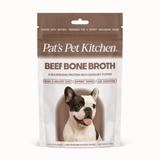
Shop-bought bone broth (like Beef Bone Broth):
Pros: Consistent collagen content (approximately 40% collagen in our formula). It comes as a powder, so you simply mix it with warm water. No cooking required. Shelf-stable until opened. Reliable portion control. No kitchen time or mess.
Cons: Higher cost per serving than homemade. Less personal connection to the product (some owners value the DIY aspect). Less flexibility in sourcing (you get the producer's choice of bones).
The honest take: Homemade broth is wonderful if you enjoy the process and have time. But it's not "better" than a quality shop-bought version simply because it's homemade. A commercially produced broth with a stated collagen content may deliver more consistent results than a homemade batch whose collagen content varies from brew to brew.
Many owners use both: homemade broth for daily feeding (cost-effective, enjoyable to make), and shop-bought broth as a convenient backup or when they're too busy to brew a batch.
Frequently Asked Questions
Can I use store-bought bones from the supermarket?
Yes, but butcher bones are often better. Supermarket packs are sometimes pre-cleaned and sterilised, which can reduce mineral content. Butchers often have fresher bones and can tell you their source. Either works, but quality varies.
Is the white layer that forms on top fat or mold?
Fat. When bone broth cools, the fat layer solidifies on top. It's safe to eat (fat contains fat-soluble vitamins), but some owners remove it to lower calorie content. The layer underneath is pure broth.
Can I reuse bones for a second batch?
Yes, though the second batch will be noticeably weaker, as most of what can be extracted comes out during the first long simmer. Some owners do a "double brew" (use the first batch as liquid for the second batch) to concentrate flavour and nutrients. Once you're finished with the bones, bin them. They stay off-limits to your dog.
Is bone broth safe for puppies?
Yes, from around 8 weeks old. In fact, puppies' growing bodies benefit from the collagen and amino acids. Start with small amounts (1-2 tablespoons per day) and increase gradually. Always make sure bones are completely removed before serving.
Can I use raw bones instead of cooked?
For broth-making, cook the bones. Raw bones carry a risk of bacterial contamination (E. coli, Salmonella), and a long simmer deals with that while extracting the collagen and minerals you're after.
The distinction that trips people up is this. Cooking bones is fine when they are an ingredient that gets simmered, strained out, and thrown away. It is never fine to hand a dog a cooked bone to chew. Cooked bone is brittle and splinters into sharp fragments. If you want to give your dog a bone to chew on, that is raw bones only, under supervision, and it comes with its own set of safety rules that sit outside the scope of this guide.
My dog has joint issues. Will homemade broth alone fix them?
No. Bone broth provides nutritional support, but it's not a treatment. If your dog has diagnosed joint problems, see your vet first. Once you know what you're dealing with, broth can support ongoing health alongside your vet's recommendations. Many owners combine broth with targeted collagen supplements (like Mobility & Joints) for more consistent results, giving each product its own serving guide.
How long does frozen broth last?
Up to 3 months in a standard freezer (0°C or below). After that, quality degrades slowly, but it remains safe. Clearly label your portions with the date so you use the oldest batches first.
Which Product for Your Dog?
Homemade bone broth is excellent. But depending on your situation, you might also benefit from a prepared product:
- You have time and enjoy cooking: Make homemade broth regularly. Keep it simple (bones and water). Freeze in ice cube trays for convenience.
- You want consistent collagen content and convenience: Beef Bone Broth (approximately 40% collagen). A powder you mix with warm water, no cooking required.
- Your dog has existing joint issues or stiffness: Consider pairing broth with Mobility & Joints (collagen peptides plus glucosamine, hyaluronic acid, and supporting vitamins). Broth adds hydration and gelatin; the supplement adds targeted joint support.
- You want maximum flexibility: Use homemade broth for daily feeding (cost-effective), and keep shop-bought broth on hand for busy weeks or holidays.
Follow serving guide on pouch based on your dog's weight (for any product you choose).
Sources
- British Veterinary Association (BVA): Nutritional guidance for dog diets and supplementation
- British Small Animal Veterinary Association (BSAVA): Guide to nutritional requirements in companion animals
- Canine Arthritis Management UK: Joint health and collagen supplementation in dogs
- PDSA Pet Health Information: Dog nutrition and dietary supplementation
- Oesser, S., et al. "Oral Administration of [C-14] Labelled Gelatine Hydroxyproline in Rats and Its Effect on Cartilage, Bone and Connective Tissue Collagen." Journal of the Science of Food and Agriculture. 1999.
Disclaimer: This information is for educational purposes and doesn't replace veterinary advice. If your dog shows signs of joint stiffness, appetite loss, or digestive upset, consult your vet for proper diagnosis and treatment. Early intervention gives the best outcomes.
Last Updated: August 2026