Quick Answer: Green lipped mussel (GLM) works primarily through anti-inflammatory action via omega-3 fatty acids and glycosaminoglycans, while collagen provides structural building blocks for cartilage and connective tissue. Both are long-established ingredients in canine joint supplements, and both take weeks rather than days before any change becomes noticeable. Neither replaces veterinary treatment, but some dogs benefit from combining both approaches.
You're scrolling through joint supplement reviews at midnight. Your dog is limping after walks. Every site recommends something different: green lipped mussel, collagen, glucosamine, hyaluronic acid. The comments sections contradict each other. One owner swears by GLM. Another says their vet recommended collagen. You're reading blog posts from people you've never met, trying to figure out which one actually knows what they're talking about.
The truth is both supplements have merit. But they work differently. And the difference matters when you're trying to help your dog move better.
What is Green Lipped Mussel?
Green lipped mussel (GLM) comes from New Zealand mussels and contains naturally occurring omega-3 fatty acids, glycosaminoglycans (GAGs), and proteins. It's been used in pet supplements for decades, primarily in powder or capsule form.
The mechanism is straightforward: the omega-3s and GAGs work to reduce inflammatory responses in the joints. It's an anti-inflammatory first. The serving varies by supplement, but you'll usually find GLM as the primary or secondary ingredient in joint blends.
What is Collagen?
Collagen is a structural protein that makes up cartilage, tendons, ligaments, and skin. When you give a dog collagen supplement, you're providing amino acids (particularly glycine and proline) that support the body's own collagen production.
Hydrolysed collagen peptides break down the protein into smaller molecules. This improves absorption through the digestive system. Bovine (beef) collagen is most common and usually combines Types I and III, which target cartilage and skin health.
The evidence suggests oral collagen supplementation accumulates in joint cartilage tissue. This is a structural approach: you're supplying raw materials for repair.
Mechanism: How They Differ
Green Lipped Mussel: Anti-inflammatory and modulating. It signals the body to calm immune responses in the joints. This can reduce pain and swelling. It doesn't build new cartilage but helps your dog feel more comfortable.
Collagen: Structural support. It provides amino acids that form the matrix of cartilage and connective tissue. It supports the cartilage and connective tissue that wears down in ageing joints.
In simple terms: GLM reduces inflammation. Collagen supplies building blocks. These are complementary rather than competing mechanisms.
Research Evidence
Green Lipped Mussel: GLM has been used in canine joint supplements for decades and is generally described as having moderate research backing. Any change tends to be gradual rather than sudden, typically taking 4-6 weeks before it becomes noticeable.
Collagen: Canine-specific research on hydrolysed collagen peptides is less extensive, though the evidence base is growing. Collagen is best understood as a way of supplying the raw materials your dog's body uses to maintain cartilage and connective tissue.
The gap between them is narrowing. Both have legitimate research backing, though GLM has longer historical use in veterinary practice.
Cost and Value Comparison
Green lipped mussel supplements typically cost between £15 and £30 per month depending on your dog's weight and product quality. Collagen supplements vary: PPK's Pure Collagen is £31.99 for a 180g pouch, and because it is 100% hydrolysed collagen peptides the grams convert straight across, so an 11 to 20kg dog on 2 teaspoons (6g) a day is getting 6,000mg. Meanwhile the Mobility & Joints formula at £34.99 combines collagen with glucosamine, hyaluronic acid, and supporting nutrients.
The real question is whether you prefer a single-action supplement or a multi-ingredient formula.
The Serving Guide by Weight
Whichever you choose, the serving is set by your dog's weight rather than by their age or breed.
| Dog weight | Daily serving | Pure Collagen delivered |
|---|---|---|
| 1 to 10kg | 1 teaspoon (3g) | 3,000mg |
| 11 to 20kg | 2 teaspoons (6g) | 6,000mg |
| 21 to 30kg | 3 teaspoons (9g) | 9,000mg |
| 31kg and over | 4 teaspoons (12g) | 12,000mg |
The same serving guide applies to Mobility & Joints. Always follow the serving guide printed on the pack.
Form and Palatability
Green Lipped Mussel: Usually supplied as a powder or capsule. The powder has a distinctive smell and taste that many dogs find appealing. Palatability is rarely an issue. Some supplements include GLM as one ingredient in a mixed powder, making it harder to serve independently.
Collagen: Hydrolysed collagen peptides are typically tasteless and odourless. They mix into food without changing the taste or texture. This is good if your dog is a picky eater, but some owners prefer a supplement their dog actively wants to eat.
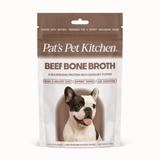
Beef Bone Broth offers a middle ground. It is a powder you make up with warm water, providing 40% collagen content with a naturally appealing flavour that most dogs enjoy.
Side Effects and Safety
Both supplements are well tolerated. Green lipped mussel is safe for most dogs, though those with shellfish allergies should avoid it. Collagen is derived from beef and is safe for dogs without beef sensitivities. Neither supplement causes significant side effects at normal servings.
The main consideration is that supplements support joint health but don't replace veterinary treatment. If your dog is lame, in pain, or showing sudden changes in mobility, get a vet evaluation first.
What Results Should You Expect?
Both supplements take time. You won't see results in days. Most dogs show noticeable improvement over 4-8 weeks. You might notice your dog climbing stairs more easily, jumping onto furniture again, or moving with less stiffness after rest.
Changes are usually gradual. One week your dog walks slightly better. By week six, you're realising they haven't limped in days. This is different from painkillers, which work in hours.
Not every dog responds the same way. Some dogs show dramatic improvement. Others show subtle but meaningful changes. A small percentage don't respond noticeably. Age, severity of joint damage, and overall health all influence the outcome.
Can You Use Both Together?
Yes. Some dogs benefit from combining both approaches. GLM handles the inflammatory aspect whilst collagen supplies structural support. You'd take collagen from one source and GLM from another, following the serving guide for each.
If you choose a combination product like Mobility & Joints, you're already getting collagen plus supporting nutrients. You could add a separate GLM supplement if you felt your dog needed that anti-inflammatory boost.
Talk to your vet if your dog has existing health conditions. They can advise whether combining supplements makes sense for your individual dog.
Comparison Table
| Factor | Green Lipped Mussel | Collagen |
| Primary mechanism | Anti-inflammatory | Structural support |
| Main active ingredients | Omega-3 fatty acids, GAGs | Amino acids (Types I & III) |
| Research support | Moderate (dog studies available) | Growing (accumulates in cartilage) |
| Time to effect | 4-6 weeks typical | 4-8 weeks typical |
| Taste/smell | Distinct flavour, most dogs like it | Tasteless, mixes easily |
| Typical cost | £15-30/month | £24-35/month |
| Best for | Dogs showing acute inflammation or swelling | Cartilage support, chronic joint wear |
Frequently Asked Questions
Is green lipped mussel better than collagen? Neither is objectively better. GLM addresses inflammation. Collagen provides structural support. Your dog's needs determine which makes more sense. Some dogs benefit from both.
How much collagen should I give my dog? It is set by weight: 1 teaspoon (3g) for 1 to 10kg, 2 teaspoons (6g) for 11 to 20kg, 3 teaspoons (9g) for 21 to 30kg, and 4 teaspoons (12g) for 31kg and over. Always follow the serving guide printed on the pack.
Can I give my dog collagen every day? Yes, collagen is safe for daily supplementation. Most people give it continuously rather than cycling it on and off. Consistency matters more than occasional servings.
Does green lipped mussel work for arthritis? Green lipped mussel supports joint health and can reduce inflammation. It's not a treatment but a supportive supplement. Vets often recommend it as part of a broader joint care plan including weight management, exercise, and possibly medication.
How long before collagen works? Most dogs show noticeable changes in 4-8 weeks. Some respond faster. Give it at least 6 weeks before deciding whether it's helping your dog.
Should I choose a single-ingredient collagen or a blend like Mobility & Joints? Single-ingredient collagen (like Pure Collagen) is ideal if your dog is already on other supplements or if you want to isolate collagen's effects. Blended products like Mobility & Joints provide a complete formula with glucosamine, hyaluronic acid, and vitamins, offering convenience if your dog isn't taking other supplements.
Which Product for Your Dog?
You want pure collagen at the best value: Pure Collagen (£31.99) is 100% hydrolysed bovine collagen peptides, so a 10kg dog on 1 teaspoon (3g) gets 3,000mg and an 11 to 20kg dog on 2 teaspoons (6g) gets 6,000mg. Tasteless and odourless, it mixes into any food.
You want everything in one supplement: Mobility & Joints (£34.99) combines collagen with glucosamine, hyaluronic acid, manganese, and vitamins C and E. One formula covers multiple aspects of joint health.
You want collagen with natural appeal: Beef Bone Broth (£24.99) is a powder you make up with warm water, providing 40% collagen content with a natural flavour most dogs actively want to eat. Great if palatability is a concern.
For green lipped mussel, you'll need to choose a trusted standalone GLM supplement or one that includes it in a joint blend. The PPK collagen products above are starting points for the structural support approach. Many owners find collagen alone sufficient. Others use a separate GLM product alongside it to address both mechanisms.
Sources
Green lipped mussel and hydrolysed collagen peptides are both long-established ingredients in canine joint supplements. This article explains how each one works rather than reporting the findings of any particular trial. If you want to review the evidence for a specific supplement, your vet is the best starting point.
Disclaimer: This information is for educational purposes and doesn't replace veterinary advice. If your dog is limping, in pain, or showing sudden changes in mobility, consult your vet for proper diagnosis and treatment. Early intervention gives the best outcomes.
Last Updated: August 2026