Quick Answer: Start your dog on half the recommended serving mixed into their regular food for 3-5 days, then increase to the full amount. Add bone broth or wet food if your dog refuses the supplement. Most dogs show noticeable improvements in movement and comfort within 8-12 weeks of consistent use.
Your dog used to bound up the stairs without pause. Now they hesitate at the bottom, looking back at you before attempting the climb. Or perhaps you've noticed they take a moment to stand after lying down, shaking out their legs before walking. These small changes worry you. You want to do something before the problem gets worse.
Joint supplements are one of the most practical steps you can take right now. But starting them isn't quite as simple as opening a pouch and pouring it into the bowl. Your dog's digestive system needs time to adjust, and some dogs are pickier than others about accepting new ingredients.
The good news: transitioning your dog to joint supplements is straightforward once you know what to expect and how to handle the common obstacles.
Why Start Slow With Joint Supplements
Joint supplements introduce new proteins and compounds to your dog's digestive system. Jumping straight to a full serving can upset their stomach, causing loose stools or mild digestive discomfort. Starting at half the recommended amount gives their system time to recognise and process the new ingredient without causing distress.
A gradual introduction also helps you spot any sensitivities early. If your dog reacts poorly to a supplement, you'll know immediately rather than waiting and wondering whether the new food or the supplement caused the problem.
The Three to Five Day Foundation
Day one through five is your transition window. Mix half the recommended daily serving into your dog's regular food. Most dogs don't notice the difference, especially if you mix it well into their kibble or wet food. The goal is normalisation: your dog should treat this as part of their ordinary meal, nothing unusual.
Watch their digestion during this period. Normal stools, no vomiting, and their usual energy levels are green lights. If you see loose stools, ease up and give their system a few extra days at the half serving before moving forward.
After 3-5 days of half servings with no issues, increase to the full recommended amount on day six. Again, mix it thoroughly into food rather than sprinkling it on top.
Mixing Supplements Into Food: The Practical Reality
Most dogs accept joint supplements without complaint once they're mixed into food. The key is thorough mixing. A powder that sits on top of kibble looks suspicious. A powder evenly distributed throughout looks like part of the meal.
Wet food works better than kibble for mixing, especially initially. The moisture helps the supplement integrate and masks any flavour differences. If you feed kibble, dampen it slightly with a bit of water or broth before adding the supplement.
For powdered supplements like Pure Collagen, mix it in during the final stage of food preparation so it doesn't sit exposed to air. Once you start with a food routine that works, stick with it.
Best Timing for Daily Supplements
Consistency matters more than perfect timing, but pairing the supplement with your dog's main meal creates automatic routine. If your dog eats dinner at 6 p.m., that becomes their supplement time. Their body expects it, you remember without effort, and it becomes genuinely effortless.
Some owners find feeding supplements with a meal that contains fat helps absorption. If your dog's regular diet is quite lean, feeding the supplement with their meal is ideal. If they skip breakfast or graze throughout the day, anchor the supplement to their largest meal.
When Your Dog Refuses the Supplement
Some dogs are genuinely fussy. You mix the supplement into food and they eat around it, leaving a pile of powder in the bowl. Or they refuse the meal entirely. Don't panic. You have several straightforward solutions.
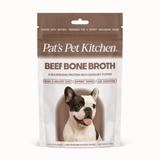
Beef bone broth is the most effective mask. A small amount of Beef Bone Broth mixed with the supplement creates a paste that's far more palatable. Most dogs will eat this willingly. Start with a teaspoon and increase as needed until your dog accepts it readily.
Wet food alternatives: Tinned pumpkin, plain cooked chicken, or a small amount of plain yoghurt also work. These have distinct flavours that can mask unfamiliar tastes. Mix the supplement in thoroughly.
Cream cheese or butter: A tiny amount (about the size of a pea) can stick to their nose. They'll lick it off, and you slip the supplement-coated treat in their mouth. This works for dogs who are food-motivated and willing to trust you.
Pill pockets or treat alternatives: If your supplement comes in capsule form, or if you've mixed powder into a small treat, some dogs will swallow these whole without inspection. Not every dog will, but it's worth trying.
Tips Specifically for Fussy Eaters
Fussy eaters often respond to novelty and consistency together. If a food works, keep using it. If you try four different masking methods in a week, your dog becomes uncertain about all of them. Pick one approach and give it at least a week before switching.
Feed supplements when your dog is genuinely hungry. A dog who's already sniffed at their bowl and walked away won't accept a supplement meal with any enthusiasm. Wait until they've skipped a meal and their appetite is sharp, then offer the supplement-containing food.
Some dogs respond better to feeding supplements separately from their main meal. A small dedicated supplement meal, offered at a different time, sometimes removes the "this is odd" reaction they have when you change their regular food.
Temperature can matter. Cold food fresh from the fridge is less aromatic than food at room temperature. Warming food slightly (not hot) releases flavours and sometimes helps resistant eaters.
How Long Before You'll See Results
Joint supplements don't work overnight. Most dogs require a minimum trial period of 8-12 weeks before you can accurately assess whether a supplement is supporting their movement and comfort.
This is a genuinely important timeframe. Supplements work by providing building blocks for joint tissue repair and lubrication. That process takes time. If you give a supplement for three weeks and see no change, you haven't given it enough time. If you give it for twelve weeks and genuinely see no improvement, then it might not be the right choice for your individual dog.
Keep notes. Write down your dog's mobility now. Does she hesitate on stairs? How long does she take to stand after rest? Is she stiff in the mornings? In 8-12 weeks, you'll be able to compare these observations accurately.
Signs That a Supplement Is Working
Improvements often appear gradually, and they're subtle. Your dog bounds up the stairs with more fluidity. The morning stiffness that used to require a full walk to disappear now vanishes in minutes. They're willing to jump into the car again without hesitation.
Some signs are obvious. Your dog plays longer before tiring. They're more willing to go on walks. They position themselves on furniture differently because lying down and standing up hurt less.
Other improvements are quieter but real. Your dog's general mood improves when they're in less discomfort. They're more patient, more playful, more themselves. Once you see these changes, you've found something that's supporting their joint health.
Adjusting or Changing Supplements Over Time
After 8-12 weeks, you have enough information to decide whether your current supplement is working well. If you see genuine improvement, continue at the current dose. Consistency is key. Changing products or doses frequently disrupts the progress your dog has made.
If you see minimal improvement after 12 weeks, you might try a different supplement. Some dogs respond better to different formulations. A supplement with added glucosamine and hyaluronic acid, like Mobility and Joints, addresses joint health from multiple angles. If your dog hasn't responded to collagen alone, this might be worth a trial.
Never stop a supplement abruptly. If you're switching, overlap the old and new for 3-5 days so your dog's system adjusts smoothly.
Building a Sustainable Routine
The best supplement is the one you'll actually give consistently. Build your routine around your existing life, not the other way around. If you feed your dog at breakfast and dinner, add the supplement to one of those meals. If you go on a morning walk before breakfast, set up the supplement routine for evening food instead.
Set a phone reminder for the first month if you're prone to forgetting. Once you've done it daily for 30 days, it becomes automatic. Your brain will prompt you without the reminder.
Keep the supplement pouch in the same place every day. Consistency in location makes the routine frictionless. You reach for the supplement as naturally as you reach for your dog's food bowl.
When to Consult Your Vet
If your dog shows signs of severe joint problems, pain, or sudden mobility loss, talk to your vet before starting supplements. Joint issues can have underlying causes that supplements alone won't address.
If your dog reacts badly to a supplement even after the transition period, stop and ask your vet for guidance. Some dogs have sensitivities to specific ingredients, and your vet can help identify alternatives.
If your dog is on other medications, mention the supplement to your vet. Most supplements are safe alongside standard medications, but your vet will confirm there are no interactions with your dog's specific health situation.
Frequently Asked Questions
Can I give a supplement without food? Most collagen supplements are palatable enough to mix with water or give directly, but they're far more likely to be accepted when mixed with food. There's no practical benefit to giving them separately, and it creates an unnecessary barrier.
What if my dog has a sensitive stomach? Start at a quarter serving for the first week if your dog has a history of digestive upset. Increase slowly to half serving, then full serving over 2-3 weeks rather than 3-5 days. This gentler pace helps sensitive systems adjust.
How long can I keep a supplement pouch open? Check your supplement's packaging for shelf life guidance once opened. Most powdered supplements stay effective for 2-3 months if kept in a cool, dry place. Store them away from direct sunlight.
Do I need to cycle supplements on and off? No. If a supplement is supporting your dog's joint health, ongoing use is the goal. Joint support is most effective with consistent, long-term use.
Can I combine multiple supplements? Talk to your vet before combining supplements. Some ingredients can overlap, and you might inadvertently exceed recommended amounts. A single comprehensive supplement is usually simpler and safer.
What's the difference between collagen and glucosamine supplements? Collagen provides the primary structural building blocks for joints. Glucosamine supports lubrication and cartilage health. Many dogs benefit from both, which is why some formulations include both ingredients.
Will supplements help my young dog prevent joint problems? Joint supplements are primarily used to support dogs with existing joint concerns. If your young dog shows no signs of joint issues, focus on maintaining healthy weight and moderate exercise. Talk to your vet about whether preventative supplementation makes sense for your dog's breed and family history.
Which Product for Your Dog?
Choose Pure Collagen (£31.99) if: Your dog needs straightforward joint support and you prefer a single-ingredient supplement. It contains 6,000mg hydrolysed bovine collagen peptides with Types I and III collagen, and it's tasteless and odourless, making it blend seamlessly into any food.
Choose Mobility and Joints (£34.99) if: Your dog hasn't responded to collagen alone or you want a multi-targeted approach. This formula combines 5,000mg collagen peptides with glucosamine, hyaluronic acid, manganese, vitamin C, and vitamin E to address joint health from multiple angles.
Add Beef Bone Broth (£24.99) to any supplement routine if: Your dog is reluctant to accept supplements or you want to enhance their routine with additional joint support. With 40% collagen content, it masks the flavour of powdered supplements while providing its own joint benefits.
Follow the serving guide on the pouch based on your dog's weight. Consistency matters far more than exact dosing, so measure roughly and don't stress over precision.
Sources
Pet Nutrition Institute. Canine Joint Health and Nutritional Support. petnutritioninstitute.org
American Veterinary Medical Association. Joint Support in Aging Dogs. avma.org
Disclaimer: This information is for educational purposes and doesn't replace veterinary advice. If your dog shows signs of joint problems, pain, or reduced mobility, consult your vet for proper diagnosis and treatment. Early intervention gives the best outcomes.
Last Updated: July 2026