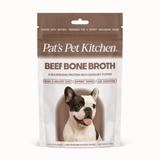
Quick Answer: Yes, bone broth is good for dogs. It contains collagen, gelatin, and amino acids (particularly glycine, proline, and glutamine) that support joint health, gut health, and overall wellbeing. Dogs can start bone broth from around 8 weeks of age. The key is choosing a quality product without added salt or onions, and following the serving guide on the pouch based on your dog's weight. Results typically appear within 4 to 6 weeks of consistent use.
You've been doing your research. Perhaps your dog is getting older and you've noticed they're a bit stiffer in the mornings. Or maybe your younger dog is a fussy eater and you're looking for something to tempt their appetite. Either way, you keep coming across bone broth on dog forums and product shelves. Everyone seems to be using it. But is it actually beneficial, or just the latest wellness trend?
The answer is straightforward: bone broth is genuinely good for dogs, backed by real nutritional science. It's not a cure-all, and it won't replace proper veterinary care for serious conditions. But it does deliver real building blocks your dog's body needs for healthy joints, a happy gut, and sustained energy.
Let's break down what bone broth actually is, what the science shows, and how to use it properly.
What Is Bone Broth?
Bone broth is made by simmering animal bones (usually beef or chicken) with water for 12 to 48 hours. During this slow cooking process, collagen and gelatin leach from the bones into the liquid. What you end up with is a nutrient-dense broth loaded with collagen, amino acids, and minerals.
Unlike the decorative bone broth you might drink yourself, dog-grade bone broth is formulated specifically for canine nutrition. Quality products contain no added salt, no onions or garlic (which are toxic to dogs), and no artificial flavours. The Beef Bone Broth from Pat's Pet Kitchen, for example, contains 40 percent collagen by content along with naturally occurring gelatin and amino acids.
The beauty of bone broth is that dogs find it palatable. It's not a supplement they tolerate. Many fussy eaters will happily lap up bone broth, making it an easy way to deliver nutrients without a struggle.
The Key Nutrients in Bone Broth
Bone broth contains several compounds that your dog's body uses for repair and maintenance:
Collagen and Gelatin: These are the structural proteins that form the foundation of cartilage, tendons, and ligaments. When you feed bone broth, you're providing the raw materials your dog's body needs to maintain these tissues. Collagen is particularly important because it doesn't fully break down in the digestive tract. Research shows that hydrolysed collagen peptides can accumulate in cartilage tissue, providing targeted support where it's needed most.
Glycine, Proline, and Glutamine: These amino acids have specific roles in your dog's body. Glycine supports collagen synthesis and helps with connective tissue repair. Glutamine is crucial for gut health, helping to maintain the integrity of the intestinal lining. Proline works alongside glycine to form collagen. Together, they work as a team.
Minerals: Bone broth naturally contains trace minerals including magnesium, calcium, and phosphorus, all of which support bone density and metabolic function.
The combination of these nutrients is why bone broth works where a simple protein supplement might not. You're not just adding protein, you're adding the specific building blocks that joints and digestive health depend on.
How Bone Broth Supports Joint Health
One of the most talked-about benefits of bone broth is its effect on joint comfort and mobility. Here's the mechanism: cartilage is made largely of collagen (particularly Type II collagen, which gives cartilage its structure). As dogs age or experience stress on their joints, this collagen gradually breaks down. The joint becomes less fluid, movement becomes stiffer, and discomfort increases.
When you supplement with bone broth, you're providing a concentrated source of collagen and gelatin that your dog's body can use to maintain and repair cartilage tissue. Studies on hydrolysed collagen peptides in both humans and dogs show that these peptides are absorbed and accumulate in cartilage, supporting its structural integrity.
This is particularly valuable for breeds prone to joint issues (Labradors, German Shepherds, large breeds), senior dogs, and active dogs that place high demands on their joints. It's also useful post-surgery, with veterinary approval, as your dog's body works to rebuild connective tissues.
What bone broth cannot do is reverse severe structural damage like hip dysplasia or osteoarthritis. Supplements support joint health but don't replace veterinary treatment for diagnosed conditions. If your dog has been diagnosed with a joint condition, bone broth is part of an ongoing management plan alongside your vet's recommendations, not a replacement for them.
Bone Broth and Gut Health
A healthy gut is foundational to a healthy dog. The intestinal lining acts as a barrier, controlling what gets absorbed and what stays out. When this barrier is compromised, problems follow.
The glutamine in bone broth is a primary fuel source for the cells that line the intestine. By providing this amino acid, bone broth helps strengthen and maintain that barrier. This is why it's particularly useful for dogs with sensitive digestion or those recovering from gastric upset.
Gelatin also supports gut health by promoting the production of stomach acid and digestive juices. This improved digestive environment helps your dog absorb nutrients more effectively from their regular food. Over time, you might notice your dog's coat becomes shinier, their energy more stable, and their digestion more predictable. These are signs the gut barrier is functioning properly.
For puppies starting at around 8 weeks of age, bone broth can be introduced as a gentle way to support developing digestive health. For older dogs, it can help reverse some of the digestive decline that comes with age.
Other Benefits of Bone Broth
Beyond joints and digestion, bone broth delivers broader support:
Hydration: The liquid base of bone broth encourages additional water intake. For dogs that don't drink enough water naturally, incorporating bone broth into their diet is a practical way to increase hydration. This is particularly useful in older dogs or those prone to urinary issues.
Appetite Stimulation: The rich aroma and flavour of bone broth makes it an effective appetite stimulant for picky eaters or dogs recovering from illness. Adding bone broth to kibble can make an unappetising meal suddenly appealing.
Coat and Skin Health: The collagen and amino acids in bone broth support skin elasticity and coat quality. You'll often see improvements in coat shine and texture within a few weeks of consistent supplementation.
Immune Support: The amino acids in bone broth, particularly glutamine, support immune function and help maintain the integrity of the mucosal barriers that are your dog's first line of defence against pathogens.
What the Science Says
Bone broth itself hasn't been extensively studied in dogs as a standalone product, but the individual components have been well researched. Here's what the evidence shows:
Collagen and Joint Health: Multiple studies have examined hydrolysed collagen peptides (the form in bone broth) and their effects on joint health. Research published in veterinary and nutritional journals shows that hydrolysed collagen peptides are absorbed intact by the digestive system and accumulate preferentially in cartilage tissue. This suggests a targeted effect on the tissues most in need of support. The body doesn't just break collagen down into generic amino acids; it recognises and utilises these peptides specifically for connective tissue repair.
Glutamine and Gut Health: Glutamine is one of the most studied amino acids in sports science and veterinary nutrition. Research consistently shows that glutamine is essential for intestinal barrier function and is a preferred fuel source for enterocytes (the cells lining the intestine). Dogs with compromised gut health benefit from glutamine supplementation because it directly supports barrier repair.
Gelatin and Digestion: Gelatin has been used in both human and veterinary nutrition for decades. It promotes the secretion of stomach acid and supports normal digestive function. Dogs fed gelatin-rich diets show improved digestion and nutrient absorption.
The takeaway: bone broth works because of solid nutritional science, not marketing hype. The compounds it contains are well-documented as essential for joint, gut, and overall health. The science doesn't show bone broth as a miracle cure, but it does show it as a legitimate, evidence-supported supplement.
How to Choose a Quality Bone Broth
Not all bone broths are created equal. Some products are little more than salt water with minimal nutritional value. Here's what to look for:
Collagen Content: Check the product label for collagen percentage or total collagen amount. Quality bone broth should contain a meaningful amount of collagen per serving. The Beef Bone Broth contains 40 percent collagen, which is substantial.
No Added Salt: Excessive sodium has no place in a dog supplement. Quality products contain little to no added salt. What salts are naturally present (from minerals in the bones) are minimal and nutritionally sound.
No Toxic Ingredients: Check that the product contains no onion, garlic, or xylitol. These are toxic to dogs. Reputable manufacturers will never include them.
Source of the Bones: Beef bones produce a collagen-rich broth. Chicken bones produce a lighter broth with lower collagen content. For joint and gut support, beef bone broth delivers more benefit.
Preparation Method: Products made by slow-simmering the bones for 12 to 48 hours will have higher nutrient density than quick-boiled versions. Look for companies that list their preparation process.
Third-Party Testing: The best companies have their products tested for heavy metals and contaminants. This isn't always advertised, but it's worth asking if you're uncertain.
How to Feed Bone Broth to Your Dog
Feeding bone broth is straightforward:
Serving Size: Follow the serving guide on the pouch based on your dog's weight. The amount varies by product formulation and your dog's size. Never guess or free-feed. The pouch contains the exact guidance for your situation.
How to Introduce It: Start with a small amount mixed into your dog's regular food. If your dog has a sensitive stomach, introduce it gradually over 7 to 10 days. Most dogs tolerate it immediately, but a gentle introduction is safer.
Frequency: Bone broth can be fed daily as part of your dog's regular nutrition. Consistency matters. You'll see better results from daily use over 12 weeks than from sporadic use. Think of it as an ongoing supplement, not an occasional treat.
Mixing Options: You can mix powdered bone broth into kibble, wet food, or water to create a light broth. You can also serve it on its own as a treat or meal topper. Dogs generally find it highly palatable.
Storage: Follow the storage instructions on your product. Powdered bone broth typically has a long shelf life and requires no refrigeration. Once mixed with water, use within the timeframe specified on the package.
When You'll See Results
Bone broth works gradually, not overnight. Here's a realistic timeline:
Week 2 to 3: You might notice improved coat shine and slightly better appetite. Some dogs show subtle improvements in digestion during this window.
Week 4 to 6: This is when most owners notice meaningful changes. Joint stiffness often reduces noticeably, particularly in the mornings or after rest. Dogs move with more ease. Appetite stabilises for picky eaters.
Week 6 to 12: Full benefits become apparent. Joint comfort improves further, mobility increases, and dogs show noticeably more willingness to engage in play and exercise. Coat quality continues to improve. Energy levels often become more stable.
What Bone Broth Cannot Do: Supplements support joint health but don't cure joint disease. Bone broth improves comfort and mobility but won't reverse hip dysplasia, reverse osteoarthritis, or replace veterinary treatment for diagnosed conditions. It's a support tool, not a replacement for proper care.
Frequently Asked Questions
Is bone broth safe for puppies? Yes. Bone broth can be introduced to puppies from around 8 weeks of age. The gelatin and amino acids in bone broth support healthy development of bones, joints, and digestive health. Start with small amounts and follow the serving guide on the pouch.
Can I give bone broth alongside other supplements? Generally yes, but it depends on what you're combining it with. Bone broth works well with other joint supplements (like Mobility & Joints, which contains collagen plus glucosamine and hyaluronic acid). However, you're adding more collagen to the diet, so ensure total collagen intake stays within reasonable bounds. If you're unsure, discuss combinations with your vet.
How long should my dog stay on bone broth? Bone broth is designed for long-term use. Most owners use it continuously as part of their dog's ongoing nutrition. Think of it as similar to feeding vegetables or a quality protein source. There's no "stop date." Your dog can benefit from bone broth for life.
Will bone broth help my senior dog's stiffness? Very likely. Senior dogs benefit significantly from the collagen, gelatin, and amino acids in bone broth. Many owners of older dogs report noticeable improvements in morning stiffness and overall mobility within 4 to 6 weeks of consistent use. It won't reverse age-related wear, but it does provide meaningful support.
My dog is a picky eater. Will they eat bone broth? Most dogs find bone broth highly palatable. The rich aroma and flavour are naturally appealing. However, some dogs have developed strong aversions to certain foods. If your dog rejects plain bone broth, try mixing it with a food they do eat. Many fussy eaters will accept bone broth mixed into their regular kibble or wet food.
Can bone broth cause allergies? Allergic reactions to bone broth are rare. Bone broth is a whole-food ingredient with minimal processing. However, if your dog has a beef allergy, beef bone broth isn't appropriate (though chicken bone broth might be). Always check the source of the bones and choose accordingly. If your dog has never had bone broth before and has a history of food sensitivities, introduce it gradually to monitor for any reaction.
Is bone broth better than other collagen supplements? Bone broth is valuable because it contains collagen alongside gelatin and amino acids in their natural ratios. Other products like Pure Collagen offer a higher concentration of pure collagen peptides (6,000mg per serving versus the collagen in a serving of bone broth). Neither is objectively "better." Pure Collagen is more concentrated and better for dogs needing high-dose collagen support. Bone broth is more palatable and offers a broader nutrient profile including gelatin. Choose based on your dog's specific needs.
Which Product for Your Dog?
- Beef Bone Broth (£24.99): Best for dogs that are picky eaters, dogs needing appetite stimulation, dogs recovering from illness or gastric upset, puppies from around 8 weeks of age, or any dog where you want a naturally palatable whole-food option. The 40 percent collagen content combined with gelatin and amino acids makes it ideal for broader nutritional support. Beef Bone Broth
- Mobility & Joints (£34.99): Best for dogs with diagnosed joint conditions, senior dogs with stiffness, dogs requiring high-dose collagen support, or dogs where joint health is the primary concern. This formula combines 5,000mg collagen peptides with glucosamine, hyaluronic acid, manganese, vitamin C, and vitamin E for comprehensive joint support. Mobility & Joints
- Pure Collagen (£31.99): Best for dogs needing targeted collagen support, dogs with a preference for a tasteless and odourless option, dogs recovering from surgery (with vet approval), or dogs where maintenance and prevention are the priority. This product delivers 6,000mg of hydrolysed bovine collagen peptides (Types I and III) with nothing else added. Pure Collagen
Follow the serving guide on your chosen product's pouch based on your dog's weight.
Sources
- Dobenecker B, et al. The oral intake of specific bioactive collagen peptides improves gait and quality of life in canine osteoarthritis. PLOS One. 2024
- Eckert T, et al. Efficacy of chondroprotective food supplements based on collagen hydrolysate and compounds isolated from marine organisms. National Institutes of Health, PMC8541357. 2021
- Biome4Pets and Aberystwyth University. Bone broth supplementation study: gut microbiome diversity in dogs. 2023
- British Small Animal Veterinary Association (BSAVA). Nutritional guidance for dogs. bsava.com
- PDSA. Pet health information and supplements guidance. pdsa.org.uk
- The Kennel Club. Health information and screening schemes. thekennelclub.org.uk
Disclaimer: This article is for informational purposes only and doesn't replace veterinary advice. Bone broth supplements support gut and joint health alongside veterinary care but don't treat, cure, or replace professional treatment. Always consult your vet before making significant changes to your dog's diet, especially if they have existing health conditions.
Last Updated: March 2026