Quick Answer: Joint health depends on four factors: genetics (you can't change), weight (keep them lean), exercise (appropriate type and amount), and nutrition (including supplements when appropriate). Most joint problems are manageable, not curable. Early intervention and consistent management dramatically improve quality of life. This guide covers everything from how joints work to how to support them at every life stage.
Your dog's mobility defines their quality of life.
Running, playing, climbing stairs, jumping into the car, getting comfortable on the sofa. Every joyful moment depends on joints that work properly.
When joint health declines, everything changes.
This guide gives you everything you need to understand, protect, and support your dog's joints.
Part 1: How Dog Joints Work
The basics
A joint is where two bones meet. The ends of bones are covered in cartilage, a smooth, slippery tissue that allows frictionless movement.
Key joint components:
- Cartilage: Cushioning surface that protects bone ends
- Synovial fluid: Lubricating fluid inside the joint
- Joint capsule: Protective covering around the joint
- Ligaments: Connect bone to bone, provide stability
- Tendons: Connect muscle to bone, enable movement
- Muscles: Power movement and support the joint
What holds it all together:
Collagen. This protein makes up approximately 30% of your dog's total protein and forms the structural foundation of cartilage, ligaments, tendons, and the joint capsule.
What goes wrong:
When cartilage breaks down faster than the body rebuilds it, bones start to contact each other. This causes pain, inflammation, and further breakdown. The cycle accelerates without intervention.
Part 2: Common Joint Problems
Arthritis (osteoarthritis)
The most common joint problem. Cartilage wears down over time.
- Who gets it: Older dogs, overweight dogs, dogs with previous injuries
- Signs: Stiffness, reluctance to exercise, difficulty rising
- Management: Weight control, appropriate exercise, supplements, pain medication when needed
Hip dysplasia
Malformed hip sockets. Genetic but influenced by environment.
- Who gets it: Large breeds primarily (German Shepherds, Labradors, Retrievers)
- Signs: Bunny hopping gait, reluctance to jump, stiffness
- Management: Weight control, exercise modification, supplements, surgery in severe cases
Elbow dysplasia
Developmental abnormalities in the elbow joint.
- Who gets it: Large breeds (Labradors, Rottweilers, German Shepherds)
- Signs: Front leg lameness, often worse after rest
- Management: Similar to hip dysplasia
Patellar luxation
Kneecap slips out of place.
- Who gets it: Small breeds primarily (Chihuahuas, Yorkshire Terriers, Poodles)
- Signs: Skipping gait, holding leg up, kicking leg out
- Management: Weight control, supplements, surgery for severe cases
Cruciate ligament disease
Ligament in the knee tears partially or completely.
- Who gets it: Any breed, often active dogs
- Signs: Sudden lameness, instability in knee
- Management: Often requires surgery, followed by rehabilitation
Part 3: Risk Factors You Can't Control
Genetics
Some dogs are predisposed to joint problems.
- Breed matters significantly
- Family history matters
- You can't change genetics, but you can influence how they're expressed
Previous injuries
Joints that have been injured are more likely to develop arthritis later.
Age
Joint wear accumulates over time. Older dogs are more likely to have problems.
What this means:
If your dog has genetic predisposition or previous injuries, proactive management is even more important.
Part 4: Risk Factors You CAN Control
Weight (most important)
The single most controllable factor affecting joint health.
- Every extra kilogram puts 4x stress on joints during movement
- Overweight dogs develop arthritis earlier
- Weight loss often produces dramatic improvement
How to assess: Feel ribs easily, visible waist from above, belly tucks up from side.
Exercise
The right type and amount protects joints. The wrong approach damages them.
- Good: Regular, moderate, low-impact exercise
- Bad: Weekend warrior pattern, high-impact activities, excessive exercise during growth
Nutrition
What your dog eats affects joint health.
- Balanced diet appropriate for life stage
- Joint-supporting supplements when appropriate
- Adequate omega-3 fatty acids
Environment
Your dog's living situation matters.
- Slippery floors increase injury risk
- Jumping on and off furniture stresses joints
- Cold, damp conditions can worsen arthritis
Part 5: Joint Support by Life Stage
Puppies (under 12-18 months depending on size)
Focus: Proper development
- Feed appropriate puppy food (large breed formula for big dogs)
- Control exercise (avoid excessive high-impact activity)
- Maintain healthy weight (not too fat, not growing too fast)
- Supplements usually unnecessary (puppies produce plenty of collagen)
Young adults (1-5 years)
Focus: Prevention
- Maintain healthy weight
- Appropriate exercise
- Consider starting supplements for high-risk breeds (age 2-4 depending on risk)
- Watch for early signs of problems
Pure Collagen for prevention. Follow serving guide on pouch.
Middle age (5-8 years)
Focus: Early intervention
- Most dogs benefit from joint supplementation now
- Monitor for subtle changes (stiffness, slowing down)
- Address any issues promptly
- Maintain weight and exercise
Pure Collagen for dogs without issues. Mobility & Joints if signs appear.
Seniors (8+ years)
Focus: Quality of life
- Joint support essential for most seniors
- Adjust exercise to their capabilities
- Environmental modifications (ramps, rugs, orthopaedic beds)
- Work with vet on pain management if needed
Mobility & Joints for comprehensive support. Follow serving guide on pouch.
Part 6: How Collagen Supplements Work
What collagen does in the body
Collagen is the structural protein forming cartilage, tendons, ligaments, and connective tissue. It provides the framework that holds joints together.
Why supplementation helps
As dogs age, collagen production slows while breakdown continues. Supplementation provides building blocks for repair and maintenance.
Why hydrolysed peptides matter
Standard collagen molecules are too large to absorb. Hydrolysed collagen peptides are broken down small enough to pass through the gut and reach target tissues.
Research shows hydrolysed collagen peptides are absorbed, travel through the bloodstream, and accumulate in cartilage and other connective tissues.
What to expect
- Results typically visible around week 4-6
- Improvements include reduced stiffness, better mobility
- Ongoing supplementation maintains benefits
- Supplements support but don't cure joint problems
Part 7: Choosing the Right Supplement
What to look for:
- ✓ Hydrolysed collagen peptides (ensures absorption)
- ✓ Types I and III collagen (most abundant, supports whole joint)
- ✓ Clean formula (no unnecessary fillers)
- ✓ Appropriate dosing guidance
- ✓ Powder form (easy to dose, mixes into food)
What to avoid:
- ✗ Non-hydrolysed collagen (won't absorb properly)
- ✗ Vague labelling (doesn't specify type or processing)
- ✗ Excessive additives
- ✗ Chews with fillers (often rejected by dogs anyway)
Our range:
Pure Collagen: 100% hydrolysed collagen peptides. For prevention and general support.
Mobility & Joints: Collagen plus glucosamine, hyaluronic acid, vitamins C and E. For dogs with existing issues or higher needs.
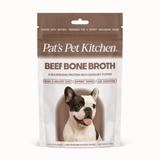
Beef Bone Broth: 40% collagen plus natural gelatin and minerals. For fussy eaters and gut support.
Part 8: Beyond Supplements
Weight management
Cannot be emphasised enough. A lean dog with no supplements will often have better joints than an overweight dog with the best supplements.
Appropriate exercise
Regular, gentle, consistent activity maintains muscle strength and joint mobility. Swimming is excellent for dogs with joint issues.
Environmental modifications
- Ramps for car and furniture
- Rugs on slippery floors
- Orthopaedic beds
- Raised food and water bowls
Veterinary care
- Regular check-ups catch problems early
- Pain medication when needed improves quality of life
- Physiotherapy can significantly help
- Surgery is appropriate for some conditions
Complementary therapies
Some dogs benefit from:
- Hydrotherapy
- Physiotherapy
- Massage
- Acupuncture
Always use qualified practitioners and inform your vet.
Part 9: When to See a Vet
See your vet if:
- Limping or lameness (any duration)
- Reluctance to exercise, jump, or climb stairs
- Stiffness that doesn't resolve quickly after rest
- Difficulty rising or lying down
- Yelping or crying when moving
- Visible swelling around joints
- Changes in gait (bunny hopping, skipping)
- Any sudden change in mobility
Don't delay. Early intervention gives better outcomes.
Part 10: Living with Joint Problems
Arthritis and most joint conditions are manageable, not curable.
The goal is quality of life:
- Comfortable daily living
- Appropriate activity levels
- Good mental wellbeing
- Minimal pain
With proper management, dogs with joint problems can live happy, fulfilling lives for many years.
This requires:
- Consistent daily management
- Realistic expectations
- Partnership with your vet
- Attention to your individual dog's needs
Frequently Asked Questions
Can joint problems be cured?
Most cannot be cured but can be managed effectively. The exception is some conditions that respond to surgery (like cruciate repair).
When should I start worrying about my dog's joints?
Prevention is better than worry. Start thinking about joint health when your dog is young. Act when you see any signs of problems, regardless of age.
Are supplements enough on their own?
Rarely. Supplements are part of a comprehensive approach including weight management, appropriate exercise, and veterinary care.
How do I know if supplements are working?
Look for: reduced stiffness, improved mobility, more willingness to exercise, easier mornings. Changes typically appear around week 4-6.
My dog is already on pain medication. Can I add supplements?
Usually yes. Collagen supplements generally don't interact with medications. But always inform your vet of any supplements you're using.
Quick Reference: Which Product When
| Situation | Recommended Product |
|---|---|
| Prevention (healthy dog) | Pure Collagen |
| Early signs of stiffness | Mobility & Joints |
| Diagnosed arthritis | Mobility & Joints |
| Post-surgery recovery | Mobility & Joints (with vet approval) |
| Senior dog maintenance | Mobility & Joints |
| Fussy eater | Beef Bone Broth |
| Gut issues alongside joints | Beef Bone Broth |
Follow serving guide on your chosen product's pouch based on your dog's weight.
Sources
- Canine Arthritis Management UK
- British Small Animal Veterinary Association
- Aragon CL, et al. Systematic review of clinical trials of treatments for osteoarthritis in dogs. JAVMA, 2007
- Oesser S, Seifert J. Stimulation of type II collagen biosynthesis. Cell and Tissue Research, 2003
- Kealy RD, et al. Effects of diet restriction on life span and age-related changes in dogs. JAVMA, 2002
Important: This information is for educational purposes and doesn't replace veterinary advice. If your dog has joint problems, work with your vet to develop an appropriate management plan.
Last Updated: March 2026