Your dog's joints are built from what you feed them.
Every meal provides the raw materials their body uses to maintain cartilage, repair ligaments, and produce synovial fluid.
Feed them the wrong things, and their joints break down faster than they can rebuild.
Feed them the right things, and you give their joints every chance to stay healthy.
Here's exactly what your dog's joints need from their diet.
Why Diet Matters for Joint Health
Joint tissue is living, dynamic structure.
It's constantly breaking down and rebuilding. This process requires specific nutrients.
What's happening every day:
-
Cartilage cells (chondrocytes) die and are replaced
-
Collagen fibres in ligaments and tendons are repaired
-
Synovial fluid is produced and renewed
-
Inflammatory responses are triggered and resolved
All of this requires nutrients.
No nutrients = no repair. Wrong nutrients = poor quality repair. Right nutrients = optimal repair and maintenance.
The Single Most Important Dietary Factor: Weight Management
Before we discuss what to feed, let's address how much to feed.
Weight is the number one dietary factor affecting joint health.
The Mathematics of Joint Stress
Every extra kilogramme your dog carries puts 4kg of additional pressure on their joints with every step.
Example:
-
15kg dog at healthy weight: Joints handle 15kg load
-
17kg dog (2kg overweight): Joints handle 23kg load
-
That's 53% more stress on joints
Over the lifetime of a 2kg overweight dog:
-
10,000 steps per day
-
80,000kg of additional cumulative load per day
-
29,200,000kg per year
-
For a dog living 12 years: 350 million kg of extra stress
This is why weight management is non-negotiable.
What Healthy Weight Looks Like
The rib test: You should be able to feel your dog's ribs with light pressure (fingers flat, not digging in). Ribs shouldn't be visible, but easily palpable.
The waist test: When viewed from above, your dog should have a visible waist behind the ribs. Not extreme, but present.
The tuck test: When viewed from the side, your dog should have an abdominal tuck (belly slopes up from chest to hind legs). Not extreme, but present.
If you can't feel ribs without pressing hard, or there's no waist, your dog is overweight.
How to Achieve Healthy Weight
-
Measure food precisely Use a proper measuring cup or scales. Eyeballing portions leads to overfeeding.
-
Follow feeding guidelines They're on the bag for a reason. If your dog is overweight, reduce by 10-15%.
-
Account for treats Treats are calories. If your dog gets treats daily, reduce meal portions accordingly.
-
No table scraps Human food is calorie-dense. A small piece of cheese is 10% of a small dog's daily calories.
-
Use vegetables as treats Carrots, green beans, cucumber. Low calorie, high volume.
-
Measure progress Weigh your dog monthly. Adjust portions if weight isn't shifting.
Target weight loss: 1-2% of body weight per week. Slow and steady wins.
The 7 Nutrients Your Dog's Joints Need
Now that weight is addressed, let's look at what nutrients matter.
1. Protein (The Foundation)
Why it matters: Joints are made of protein. Cartilage, ligaments, tendons, synovial membrane, all protein structures.
How much: Dogs need 18-25% protein in their diet (maintenance). Active or working dogs need 25-30%.
Best sources:
-
Meat (chicken, beef, lamb, fish)
-
Eggs
-
Quality dog food with named meat as first ingredient
What to avoid: Generic "meat and animal derivatives" without specifying source.
Key amino acids for joints:
-
Glycine - Makes up 27% of collagen structure
-
Proline - Makes up 14% of collagen structure
-
Lysine - Essential for collagen cross-linking (gives strength)
These amino acids come from meat protein and hydrolysed collagen supplementation.
2. Omega-3 Fatty Acids (Anti-Inflammatory)
Why it matters: Reduces inflammatory response in joints. Protects cartilage from breakdown.
How much: 50-220mg combined EPA/DHA per 10kg body weight daily
Best sources:
-
Fish oil (salmon, sardine, mackerel)
-
Whole oily fish
-
Algae-based omega-3 (for dogs with fish allergies)
What to avoid: Generic "fish oil" without specifying EPA/DHA content.
Important: Omega-3s must be balanced with omega-6s. Most dog foods are already high in omega-6s (from chicken fat, vegetable oils). Don't over-supplement omega-6.
Target ratio: Omega-6 to omega-3 ratio of 5:1 or less is ideal. Most commercial dog foods are 10:1 or higher.
3. Vitamin C (Collagen Synthesis)
Why it matters: Required for collagen production. Without vitamin C, collagen fibres can't form properly.
How much: Dogs produce their own vitamin C (unlike humans), but supplemental vitamin C may help in dogs with joint issues.
Sources:
-
Most complete dog foods contain adequate vitamin C
-
Fresh vegetables (broccoli, Brussels sprouts, kale)
-
Our Mobility & Joints formula includes vitamin C
Note: Excessive vitamin C can cause digestive upset. More is not better.
4. Vitamin E (Antioxidant Protection)
Why it matters: Protects joint tissue from oxidative damage. Works synergistically with omega-3s.
How much: 50-400 IU per day depending on size
Sources:
-
Quality dog food (usually adequate)
-
Sunflower seeds, almonds (in small amounts)
-
Spinach, broccoli
Important: Natural vitamin E (d-alpha-tocopherol) is more bioavailable than synthetic (dl-alpha-tocopherol).
5. Manganese (Cartilage Formation)
Why it matters: Essential for formation of cartilage matrix. Required for glycosaminoglycan synthesis.
How much: 1.2mg per kg of diet (on dry matter basis)
Sources:
-
Most complete dog foods contain adequate manganese
-
Whole grains, brown rice, oats
-
Our Mobility & Joints formula includes manganese
Deficiency signs: Rare, but can cause skeletal abnormalities in growing puppies.
6. Glucosamine and Chondroitin (Cartilage Building Blocks)
Why it matters: Provides building blocks for cartilage matrix. May slow cartilage degradation.
How much:
-
Glucosamine: 20mg per kg body weight daily
-
Chondroitin: 15mg per kg body weight daily
Sources:
-
Cartilage, tendons, ligaments in raw meaty bones
-
Green-lipped mussel
-
Supplementation (most reliable way to get therapeutic doses)
Important: Food alone rarely provides therapeutic amounts. Supplementation is usually necessary for dogs with joint issues.
7. Hydrolysed Collagen Peptides (Direct Joint Support)
Why it matters: Provides specific peptides that accumulate in joint tissue and stimulate repair.
How much: Follow serving guide on product packaging based on weight
Sources:
-
Bone broth (contains some collagen, but not hydrolysed)
-
Hydrolysed collagen supplements (most effective)
Our Pure Collagen and Mobility & Joints provide therapeutic amounts of hydrolysed collagen peptides.
Food sources alone don't provide enough collagen in bioavailable form.
What Type of Diet is Best for Joint Health?
There's no single "best" diet. Quality matters more than type.
Commercial Dog Food
Pros:
-
Complete and balanced (meets all nutritional requirements)
-
Convenient
-
Consistent
-
Quality brands use research-backed formulations
Cons:
-
Lower quality brands use poor ingredients
-
Often high in omega-6, low in omega-3
-
Processed (some nutrient degradation)
For joint health:
-
Choose premium brands with named meat as first ingredient
-
Look for added glucosamine and omega-3s
-
Avoid foods with excessive grain fillers
-
Check protein content (should be 25%+ for adult dogs)
Good commercial foods for joint health:
-
Foods labelled "joint support" or "mobility"
-
Senior dog formulas (often include joint supplements)
-
Premium brands with fish as protein source (higher omega-3)
Raw Feeding (BARF Diet)
Pros:
-
High protein from whole meat sources
-
Includes raw meaty bones (natural glucosamine source)
-
High moisture content
-
No processing (nutrients intact)
Cons:
-
Requires careful planning to ensure nutritional balance
-
Risk of bacterial contamination if not handled properly
-
Expensive
-
Time-consuming
For joint health:
-
Provides excellent protein and amino acids
-
Raw meaty bones provide natural glucosamine
-
Include oily fish for omega-3s
-
Still requires collagen supplementation (food collagen isn't hydrolysed)
Important: If raw feeding, ensure diet is nutritionally complete. Consult canine nutritionist.
Home-Cooked Diet
Pros:
-
Control over ingredients
-
Can tailor to your dog's needs
-
Fresh, whole foods
-
No processing
Cons:
-
Easy to create nutritional imbalances
-
Time-consuming
-
Expensive
-
Requires expert guidance
For joint health:
-
Include variety of meat proteins
-
Add oily fish 2-3 times weekly
-
Include joint-supporting supplements
-
Ensure calcium/phosphorus balance (critical)
Important: Work with veterinary nutritionist to formulate balanced recipes.
Foods That Support Joint Health
Green-Lipped Mussel
Why: Natural source of glucosamine, chondroitin, and omega-3 fatty acids
How to use: Available as powder or in joint supplement formulas
Dose: 15mg per kg body weight daily
Oily Fish (Salmon, Mackerel, Sardines)
Why: High in omega-3 fatty acids (EPA and DHA)
How to use: Cooked (not raw, due to thiaminase). Tinned in water (not oil or brine).
Frequency: 2-3 times per week
Amount: Small dog: 1 sardine, medium dog: 2 sardines, large dog: 3 sardines
Bone Broth
Why: Contains collagen, glycine, proline, and minerals from bones
How to use: Add to meals as gravy, or use powdered bone broth
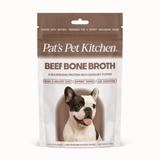
Our Beef Bone Broth provides 40% collagen content plus gelatin and minerals
Important: Home-made bone broth isn't concentrated enough to provide therapeutic collagen amounts. Supplementation still needed.
Colourful Vegetables
Why: Antioxidants protect joint tissue from oxidative damage
Best choices:
-
Leafy greens (spinach, kale)
-
Cruciferous vegetables (broccoli, Brussels sprouts)
-
Orange vegetables (carrots, sweet potato)
How to prepare: Lightly steamed or pureed (dogs can't digest raw vegetables well)
Amount: 10-15% of total diet
Turmeric (Curcumin)
Why: Natural anti-inflammatory. May reduce joint pain.
How to use: Add small amount to food (must be mixed with fat and black pepper for absorption)
Dose: 15-20mg per kg body weight daily
Important: Turmeric stains everything. Use carefully. Effects are mild compared to veterinary NSAIDs.
Foods That Harm Joint Health
Excessive Carbohydrates
Why: Promote inflammation. Contribute to weight gain.
Problem foods:
-
White rice, white bread, pasta
-
Corn, wheat, soy (common in low-quality dog food)
-
High-carb treats and biscuits
What to do: Choose dog foods with meat as first ingredient, not grains. Limit carbohydrate-heavy treats.
Omega-6 Dominant Oils
Why: Omega-6 fatty acids promote inflammation when not balanced with omega-3s.
Problem foods:
-
Foods high in corn oil, sunflower oil, safflower oil
-
Chicken fat (high omega-6, low omega-3)
-
Generic vegetable oils
What to do: Check dog food ingredients. If fat source is corn or sunflower oil, add omega-3 supplement to balance.
Excess Calcium (In Growing Puppies)
Why: Causes developmental bone problems in large breed puppies.
Problem: Over-supplementing calcium during growth phase.
What to do: Feed complete puppy food. Don't add calcium unless directed by vet. Applies to puppies only.
High-Purine Foods (For Dogs with Specific Conditions)
Why: Can worsen certain types of arthritis (rare)
Problem foods:
-
Organ meats (liver, kidney, heart)
-
Certain fish (anchovies, herring)
What to do: Only avoid if your vet diagnoses purine-sensitive arthritis. Not a concern for most dogs.
Processed Human Foods
Why: High in salt, sugar, and inflammatory ingredients. Contribute to obesity.
Problem foods:
-
Takeaway food, fast food
-
Processed meats (bacon, sausages)
-
Sweets, cakes, biscuits
What to do: Never feed human junk food to dogs. If you wouldn't eat it for health reasons, they shouldn't either.
Joint-Specific Diets: Do They Work?
Many premium dog food brands offer "joint support" formulas.
What They Typically Contain
-
Glucosamine (500-1,500mg per kg of food)
-
Chondroitin (200-800mg per kg)
-
Omega-3 fatty acids (higher than standard formulas)
-
Antioxidants (vitamin E, vitamin C)
-
Sometimes: Green-lipped mussel, hydrolysed collagen
Do They Actually Help?
Yes, but with caveats:
Pros:
-
Convenient (joint support built into daily food)
-
Consistent daily intake
-
Usually well-formulated
Cons:
-
Glucosamine content may not reach therapeutic levels
-
Collagen (if included) is rarely hydrolysed
-
Expensive (premium pricing)
-
May not be enough for dogs with existing joint issues
Our take: Joint-support diets are good for prevention. For dogs with diagnosed joint problems, supplementation on top of quality food is more effective.
Supplements vs Food: What's the Difference?
Can't I just feed the right foods and skip supplements?
For some nutrients, food is enough. For others, supplementation is necessary.
Nutrients You Can Get from Food Alone
-
Protein and amino acids (from meat)
-
Omega-3s (from oily fish, though supplementation is easier)
-
Vitamins and minerals (from complete dog food)
-
Antioxidants (from vegetables)
Nutrients That Require Supplementation
Glucosamine and chondroitin:
-
Therapeutic dose: 20mg glucosamine per kg body weight
-
15kg dog needs 300mg glucosamine daily
-
To get this from food, they'd need to eat large amounts of cartilage and connective tissue daily (Supplement with our Joints & Mobility)
-
Impractical and unbalanced
Hydrolysed collagen peptides:
-
Therapeutic dose: 500mg-1,000mg per 5kg body weight
-
Food collagen isn't hydrolysed (not absorbable)
-
Bone broth contains some collagen, but not in therapeutic, bioavailable amounts
-
Supplementation is only practical way (our Pure Collagen)
Hyaluronic acid:
-
Component of synovial fluid
-
Found in small amounts in animal tissues
-
Food sources don't provide enough for joint support
-
Supplementation necessary (our Joints & Mobility)
This is why joint supplements exist. Food alone can't provide therapeutic amounts of joint-specific nutrients in bioavailable forms.
Building a Joint-Healthy Diet
Here's how to put it all together.
Step 1: Choose a Quality Base Diet
Commercial: Premium brand with meat as first ingredient, 25%+ protein, added omega-3s
Raw: Balanced BARF diet with variety of proteins, including raw meaty bones and oily fish
Home-cooked: Nutritionist-formulated recipes with proper calcium/phosphorus balance
Step 2: Keep Your Dog Lean
Measure food. Adjust if needed. Weigh monthly.
Step 3: Add Joint Supplements
For prevention (healthy dogs age 4+): Pure Collagen - hydrolysed collagen peptides supporting entire joint structure
For existing joint issues: Mobility & Joints - comprehensive formula with collagen, glucosamine, hyaluronic acid, and anti-inflammatories
Serving size: Follow guide on pouch based on your dog's weight
Step 4: Include Omega-3s
If feeding commercial food: Add fish oil supplement (dose: 50-220mg EPA/DHA per 10kg body weight)
If feeding raw/home-cooked: Include oily fish 2-3 times weekly OR supplement
Step 5: Add Joint-Friendly Foods
Twice weekly: Oily fish (sardines, mackerel)
Daily: Small amount of colourful vegetables (lightly cooked)
Optional: Bone broth as gravy (our Beef Bone Broth provides 40% collagen plus minerals)
Step 6: Monitor and Adjust
Watch for signs of improvement:
-
Less stiffness after rest
-
More enthusiasm for walks
-
Easier getting up and down
-
More playful behaviour
If no improvement after 8 weeks: Consult vet. Diet alone may not be enough. Veterinary intervention needed.
Feeding for Life Stage
Joint health needs change as your dog ages.
Puppies (Birth to 12-18 Months)
Focus: Controlled growth, proper skeletal development
Diet:
-
Complete puppy food (correct calcium/phosphorus ratio)
-
Don't overfeed (slow growth protects joints)
-
Don't over-supplement calcium
-
No adult dog food (wrong mineral ratios)
Supplements: Generally not needed. Complete puppy food provides everything.
Adults (2-7 Years)
Focus: Maintenance, prevention
Diet:
-
Quality adult dog food, 25%+ protein
-
Maintain lean body weight
-
Add omega-3s if not in food
Supplements: Consider starting collagen at age 4-5 for high-risk breeds.
Seniors (7+ Years)
Focus: Support declining joint health, maintain muscle mass
Diet:
-
Senior dog food OR quality adult food (senior foods often lower protein, which isn't ideal)
-
Higher protein to maintain muscle (25-30%)
-
Lower calories to prevent weight gain
-
Enhanced omega-3s
Supplements: Collagen + glucosamine combination (Mobility & Joints formula)
Common Questions About Diet and Joint Health
"Can I reverse arthritis with diet alone?"
No. Diet supports joint health but can't reverse established arthritis.
What diet CAN do:
-
Slow progression
-
Reduce inflammation
-
Provide nutrients for repair
-
Help maintain comfort
What diet CAN'T do:
-
Regenerate lost cartilage
-
Repair structural damage
-
Replace veterinary treatment
"Is grain-free better for joints?"
Not necessarily.
Grain-free doesn't automatically mean better. What matters is:
-
Quality of protein source
-
Omega-3 content
-
Inclusion of joint-supporting nutrients
Some grain-free foods are excellent. Some are poor quality with just different fillers (potatoes instead of grains).
Judge food by ingredients and nutritional profile, not marketing terms.
"Should I feed raw bones for glucosamine?"
Raw meaty bones provide some glucosamine, but not therapeutic amounts.
Benefits of raw bones:
-
Dental health
-
Mental stimulation
-
Natural source of some joint-supporting nutrients
Limitations:
-
Can't provide enough glucosamine for joint support
-
Must be raw (cooked bones splinter)
-
Choking risk if not supervised
-
Not suitable for all dogs (gulpers, senior dogs with dental issues)
Use raw bones as part of balanced diet, not as primary joint support.
"Will weight loss really help my dog's joints?"
Yes. This is the single most effective dietary intervention.
Studies show: Dogs with hip arthritis who lost 11-18% of body weight had significant improvements in lameness and function.
Weight loss is more effective than many medications for joint comfort.
The Bottom Line on Diet and Joint Health
Your dog's joints are built from what you feed them.
The essentials:
-
Maintain healthy weight (most important factor)
-
Feed quality protein (provides amino acids for joint tissue)
-
Add omega-3s (reduces inflammation)
-
Supplement collagen and glucosamine (food alone isn't enough)
-
Include antioxidants (vegetables, fruits in moderation)
-
Avoid inflammatory foods (excessive carbs, omega-6 dominant oils)
Diet alone can't cure joint problems. But combined with appropriate supplements and veterinary care, it gives your dog's joints every chance to stay healthy.
Start today.
Sources & Further Reading
-
Kealy RD, et al. "Effects of diet restriction on life span and age-related changes in dogs." Journal of the American Veterinary Medical Association, 2002
-
Marshall WG, et al. "The effect of weight loss on lameness in obese dogs with osteoarthritis." Veterinary Research Communications, 2010
-
Roush JK, et al. "Evaluation of the effects of dietary supplementation with fish oil omega-3 fatty acids on weight bearing in dogs with osteoarthritis." Journal of the American Veterinary Medical Association, 2010
-
Bauer JE. "Therapeutic use of fish oils in companion animals." Journal of the American Veterinary Medical Association, 2011
-
Beale BS. "Use of nutraceuticals and chondroprotectants in osteoarthritic dogs and cats." Veterinary Clinics of North America: Small Animal Practice, 2004
-
Oesser S, Seifert J. "Stimulation of type II collagen biosynthesis and secretion in bovine chondrocytes cultured with degraded collagen." Cell and Tissue Research, 2003
-
National Research Council. "Nutrient Requirements of Dogs and Cats." The National Academies Press, 2006
-
German AJ. "The growing problem of obesity in dogs and cats." Journal of Nutrition, 2006
-
Laflamme DP. "Nutrition for aging cats and dogs and the importance of body condition." Veterinary Clinics of North America: Small Animal Practice, 2005
-
Beynen AC. "Dietary protein and canine health." Tijdschrift voor Diergeneeskunde, 2004
Important: This information is for educational purposes and doesn't replace veterinary advice. If your dog is showing signs of joint problems, pain, or mobility issues, consult your vet for proper diagnosis and treatment. The guidance in this article is based on current veterinary research and best practices, but every dog is different.
Last Updated: February 2026