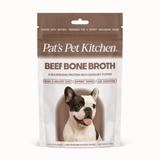
Quick Answer: Bone broth is nutrient-dense, easily digestible, and supports joint health, gut function, hydration, and appetite in senior dogs. With 40% collagen, amino acids like glycine and proline, and natural minerals, it addresses common concerns in older dogs. Introduce slowly and follow the serving guide on the pouch based on your dog's weight. Supplements support comfort but don't replace veterinary care.
Your senior dog is slower on walks than they used to be. They pick at their food. They seem stiff when they get up in the morning.
You're not imagining it. At 7, 8, 9 years and beyond, dogs change. Their joints work harder. Their digestion isn't what it was. They lose interest in meals they once loved.
Bone broth is simple, but it works. It's full of what ageing dogs need: collagen for joints, amino acids for recovery, minerals for bone strength, and enough flavour and warmth to make them want to eat again.
This guide explains what makes bone broth valuable for senior dogs and how to introduce it safely.
Why Senior Dogs Benefit from Bone Broth
Bone broth is collagen-rich. As dogs age, collagen production naturally declines. Their joints feel the loss first, but it affects ligaments, tendons, and connective tissue throughout the body.
Unlike a supplement powder, bone broth is food. It's warm, comforting, and easy for older dogs to digest. Many senior dogs find it palatable even when they turn their nose up at other additions to their diet.
Joint and cartilage support
Bone broth contains gelatin and collagen that break down into amino acids like glycine and proline. These are structural components of cartilage. For a senior dog with stiffness or joint discomfort, these amino acids provide the building blocks for ongoing tissue maintenance. This is especially valuable for larger breed dogs that carry more weight on their joints.
Gut health and digestion
The same amino acids that support joints also support the gut lining. Older dogs often have more sensitive digestion. Bone broth is easier to digest than whole proteins and provides minerals that support healthy digestion. Some senior dogs show improved appetite and stool quality within days of starting broth.
Hydration
Senior dogs don't always drink enough water. A warm broth naturally encourages them to consume more liquid, which is critical for ageing kidneys and overall body function. The minerals in bone broth (calcium, magnesium, phosphorus) add electrolyte value beyond plain water.
Appetite stimulation
A fussy eater is almost a trademark of senior dogs. Warm bone broth poured over regular food or offered on its own is aromatic and appetising. If your older dog has lost interest in meals, broth can reignite their appetite.
What Makes Bone Broth Nutritious
Collagen content
Beef Bone Broth is 40% collagen by weight. When heated in the brewing process, collagen breaks down into gelatin. When your dog consumes it, their digestive system further breaks it down into amino acids that the body can use directly in cartilage repair and connective tissue maintenance.
Amino acids
Bone broth is particularly rich in three amino acids that matter for ageing bodies:
- Glycine: Supports collagen structure and has anti-inflammatory properties
- Proline: A key component of collagen molecules, essential for joint and skin health
- Glutamine: Supports gut lining integrity and immune function
These amino acids aren't synthesised efficiently by older bodies. Dietary sources matter more as dogs age.
Minerals and trace elements
Slow-simmered bones release calcium, magnesium, phosphorus, and trace minerals into the broth. These support bone density, muscle function, and overall mineral balance. Senior dogs benefit from this mineral density, particularly if their kidney function is beginning to decline and they're losing minerals through other routes.
Natural flavour and no additives
Unlike many supplements, bone broth is simple. Beef, water, time. No artificial flavours, no bulking agents, no artificial colourings. For dogs with sensitive digestion or those prone to allergic reactions, the simplicity is a real advantage.
How to Introduce Bone Broth to Your Senior Dog
Start low and go slow
Even though bone broth is food, not a supplement, introduce it gradually. Begin with a small amount, about 1 to 2 tablespoons mixed into their regular food or offered on its own. Watch for any digestive upset. Most older dogs adapt within 3 to 5 days.
Serving options
You can use bone broth in several ways:
- Pour it warm over dry food to add moisture and flavour
- Mix it with wet food if your dog eats that
- Offer it warm in a bowl as a standalone treat (particularly appealing in winter)
- Freeze it into ice cubes for a slow-melt enrichment treat
- Mix it into their regular meal if appetite is poor
Warm broth is often more appetising to senior dogs. You don't need to heat it much, just enough to release the aroma.
Follow the serving guide
Follow the serving guide on the pouch based on your dog's weight. Most senior dogs benefit from daily or near-daily inclusion. Some owners use it every day. Others use it 5 days a week. Both approaches work well.
Timing considerations
If your senior dog has kidney concerns, discuss bone broth with your vet before starting. The minerals in broth are beneficial for healthy kidneys, but dogs with existing kidney disease may need adjustments to their mineral intake. Your vet can advise.
What Results to Expect
Early improvements (Week 1-3)
Many owners notice appetite improvement first. If your senior dog has been a picky eater, the smell and warmth of bone broth often rekindles interest in meals. Coat condition sometimes improves quickly as well, particularly in dogs with dry, dull coats.
Moderate timeline (Week 4-8)
Joint comfort and mobility often show improvement around this mark. Dogs that were reluctant to climb stairs or jump on the sofa may show more willingness. Stiffness, especially in the morning, often eases. These changes are gradual, not dramatic, but they matter for daily quality of life.
Sustained improvements (Week 8-12 and beyond)
By 8 to 12 weeks, the cumulative effect of consistent collagen and amino acid intake shows in sustained improvements to joint comfort, energy levels, and digestive health. Many owners report that their senior dog seems 'more like themselves' by this point.
What bone broth cannot do
Bone broth is nutritional support. It does not treat diagnosed joint conditions like hip dysplasia or arthritis. It does not replace veterinary treatment for infections, pain management, or illness. Think of it as daily maintenance that supports comfort and slow recovery. If your senior dog has diagnosed joint disease, work with your vet on a full management plan. Broth is one valuable part of that plan, not the whole answer.
Bone Broth for Senior Dogs: Common Questions
Is bone broth safe for all senior dogs?
Bone broth is safe for most senior dogs. However, if your dog has kidney disease, ask your vet about mineral content and appropriate serving size. Dogs with digestive sensitivities should be introduced slowly. Dogs with dairy allergies should avoid broth that contains dairy (check the ingredients, though most beef broth does not). When in doubt, check with your vet first.
Will bone broth help my dog's arthritis?
Bone broth supports joint health and can help with stiffness and comfort. It doesn't cure arthritis. If your dog has diagnosed arthritis, discuss a full management plan with your vet that includes exercise modifications, weight management, pain relief if needed, and supplements like bone broth that support ongoing tissue health.
How long before my senior dog shows improvement?
Changes vary. Appetite improvement often shows in the first week. Joint and mobility improvements typically emerge around week 4-6. Expect gradual shifts rather than overnight change. Consistency matters more than speed.
Can I use human-grade bone broth from the supermarket?
Human-grade bone broth can work, but check the ingredients carefully. Some contain onion, garlic, or excessive salt, which aren't suitable for dogs. Pet-specific bone broth is formulated with dogs' nutritional needs in mind. If using supermarket broth, ensure it's salt-free and free of allium vegetables (onion and garlic).
What if my senior dog won't eat it?
Some dogs are suspicious of new foods. Try warming it more, mixing it more thoroughly with their regular food, or offering it in a bowl so they can approach it gradually. If a dog truly refuses it after a week of patient introduction, respect that. Not all senior dogs need broth. Some thrive on other supplements or dietary approaches.
Can I give bone broth to my younger dog for prevention?
Yes. Bone broth is valuable at any age. Younger dogs, particularly large breeds prone to joint issues, can benefit from early collagen and amino acid support. Starting preventively often prevents issues from developing. That said, for young, healthy dogs, priorities may be different. Focus on prevention for high-risk breeds rather than all young dogs.
Which Product for Your Senior Dog?
- Senior dogs with poor appetite, digestive sensitivity, or requiring hydration support: Beef Bone Broth
- Senior dogs with existing joint stiffness or diagnosed joint concerns: Mobility & Joints
- Senior dogs with multiple joint concerns, or combining multiple types of support: Pure Collagen alongside Beef Bone Broth
Many senior dogs benefit most from starting with bone broth alone due to its palatability and whole-food nature. Once established on broth, some owners add Pure Collagen or Mobility & Joints if additional joint support is needed.
Follow the serving guide on your chosen product's pouch based on your dog's weight.
Sources
- Veterinary Partner (VIN). Collagen and Joint Health in Dogs. veterinarypartner.vin.com
- VCA Animal Hospitals. Senior Dog Nutrition and Supplements. vcahospitals.com
- PDSA. Senior Dog Care and Nutrition. pdsa.org.uk
- Journal of Animal Physiology and Animal Nutrition. Effects of hydrolysed collagen peptides on articular cartilage
- Tardy AL, et al. Vitamins and Minerals for Bone Health. Nutrients journal. 2020
Disclaimer: This information is for educational purposes and doesn't replace veterinary advice. If your senior dog shows signs of joint pain, digestive issues, or loss of appetite, consult your vet for proper diagnosis and treatment. Bone broth supports overall health but doesn't treat diagnosed medical conditions. Always discuss dietary changes with your vet, particularly if your dog is on medication or has existing health concerns.
Last Updated: March 2026