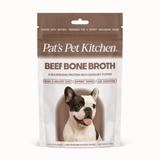
Quick Answer: Bone broth is a nutrient-dense supplement rich in collagen, gelatin, and amino acids that support your dog's gut health, joints, and hydration. Beef Bone Broth contains 40% collagen, which is significantly higher than most alternatives. It's particularly valuable for fussy eaters, dogs with sensitive stomachs, and senior dogs. Follow the serving guide on the pouch based on your dog's weight.
Your dog turns their nose up at breakfast. Again.
Or maybe they eat fine, but their coat looks flat and their digestion has been off lately. Maybe they're getting older and you want to give them something natural alongside their joint supplement.
Bone broth has been used for centuries in human nutrition. And there's a good reason it's becoming one of the most popular supplements for dogs in the UK.
Here's what you need to know before you buy.
What Is Bone Broth?
Bone broth is made by slowly simmering animal bones (typically beef, chicken, or turkey) in water for an extended period, usually 12 to 24 hours. This long cooking process extracts nutrients from the bones, marrow, and connective tissue.
The result is a nutrient-dense liquid rich in:
- Collagen and gelatin. The primary proteins in connective tissue. As bones simmer, collagen breaks down into gelatin, which further breaks into amino acids during digestion.
- Glycine and glutamine. Two amino acids critical for gut health, immune function, and tissue repair.
- Glucosamine and chondroitin. Naturally present in bone cartilage. Both support joint health.
- Minerals. Including calcium, magnesium, phosphorus, and potassium in bioavailable forms.
Not all bone broths are equal, though. The quality depends entirely on the ingredients, cooking time, and what's been added (or left out).
Why Bone Broth Is Good for Dogs
Bone broth isn't a trend. It's a genuinely useful addition to your dog's diet, and there's growing research to support it.
Gut Health
This is where bone broth really shines. The amino acids glycine and glutamine are essential for maintaining the gut lining, the barrier that controls what enters your dog's bloodstream and what stays out.
Glycine protects the intestinal mucus layer and helps regulate stomach acid. Glutamine fuels the cells that line the digestive tract, helping them regenerate and stay strong.
A study conducted by Aberystwyth University in collaboration with Biome4Pets found that bone broth supplementation increased gut bacterial diversity in the majority of participating dogs. The same study observed a significant increase in Bifidobacterium levels, a genus of beneficial bacteria linked to improved digestion and immune function.
For dogs with sensitive stomachs, food intolerances, or recovering from digestive upset, bone broth can be a gentle way to support recovery.
Joint Support
Bone broth naturally contains collagen, glucosamine, and chondroitin, all extracted from the bones and cartilage during cooking. These are the same compounds found in dedicated joint supplements.
The collagen concentration in bone broth is lower than in a pure collagen supplement, but it provides a natural, food-based source that many dogs tolerate well. For dogs already on a joint supplement like Mobility & Joints, bone broth offers complementary support.
Hydration
Many dogs don't drink enough water, particularly older dogs or those on dry kibble diets. Bone broth adds flavourful moisture to meals, encouraging better hydration.
Proper hydration supports kidney function, digestion, joint lubrication, and overall cellular health. It's a simple benefit that's often overlooked.
Appetite Stimulation
If your dog is a fussy eater, recovering from illness, or has lost their appetite due to medication, bone broth can make food irresistible. The rich, meaty aroma and flavour encourage eating when nothing else works.
This is particularly valuable for senior dogs who may be losing interest in food, or for dogs recovering from surgery who need nutrition to heal.
Liver Support
Glycine, one of the most abundant amino acids in bone broth, plays a role in the liver's detoxification processes. It helps the liver process and eliminate toxins more efficiently.
What to Look For in a Dog Bone Broth
The UK market for dog bone broth is growing fast, and not every product is worth your money. Here's what to check before you buy.
Ingredients List
The shorter, the better. A quality bone broth should contain bones, water, and possibly a small amount of apple cider vinegar (which helps extract minerals during cooking). That's it.
Avoid products containing:
- Onion or garlic. Toxic to dogs, even in small amounts. Many human bone broths contain these.
- Excessive salt. Dogs don't need added sodium.
- Artificial flavourings or preservatives. Unnecessary.
- Sugar or sweeteners. No place in a dog supplement.
Collagen Content
The whole point of bone broth is the collagen and gelatin it contains. Some products are so diluted they're essentially flavoured water.
Look for a stated collagen percentage or protein content. Beef Bone Broth from Pat's Pet Kitchen contains 40% collagen, which is significantly higher than most shop-bought alternatives.
Format
Dog bone broths come in several forms:
- Liquid (ready to serve). Convenient but bulky and heavy to ship. Check for preservatives.
- Concentrated paste or gel. Mix with warm water. More concentrated, longer shelf life.
- Powder. Lightweight, long shelf life, easy to dose. The most practical format for daily use.
Source of Bones
Bones from well-raised animals produce a better broth with a higher nutrient profile. UK or EU sourced bones are subject to stricter welfare and quality regulations.
Bone Broth vs Collagen Supplements: Do You Need Both?
This is one of the most common questions we get, and the answer depends on what you're trying to achieve.
Bone broth provides a broad spectrum of nutrients: collagen, gelatin, amino acids, minerals, and glucosamine. It's particularly strong for gut health, hydration, and appetite. Think of it as nutritional support for the whole body.
A collagen supplement like Pure Collagen (£31.99) delivers a concentrated, standardised dose of hydrolysed collagen peptides. It's targeted and measurable.
For most dogs, the ideal approach is:
- Prevention/general wellness: Bone broth daily as a food topper
- Targeted joint or skin support: Pure collagen supplement
- Comprehensive approach: Both together. The bone broth supports gut health and provides broad nutrition, whilst the collagen supplement delivers concentrated peptides for joints, skin, and connective tissue.
They're not competing products. They complement each other.
How to Feed Bone Broth to Your Dog
Dosage Guidelines
Follow the serving guide on the pouch based on your dog's weight. Start with the smaller recommended amount and increase gradually over a week to allow your dog's digestive system time to adjust.
How to Serve It
- Mixed into food. The simplest method. Stir into kibble, raw, or wet food.
- As a warm drink. Mix with warm (not hot) water. Particularly good in winter or for encouraging hydration.
- Frozen. Pour into ice cube trays and freeze for a summer treat.
- On its own. Some dogs will happily lap it up from a bowl.
When to Feed
Any time of day works. Many owners add it to the morning meal as a daily routine. For dogs recovering from illness or surgery, smaller amounts spread across the day can be easier on the stomach.
Can You Make Bone Broth at Home?
Yes, but there are some important considerations.
The Basic Method
- Place raw or cooked beef or chicken bones in a large pot
- Cover with water
- Add a tablespoon of apple cider vinegar (helps extract minerals)
- Simmer on low heat for 12 to 24 hours
- Strain, cool, and store in the fridge (up to 5 days) or freeze
What NOT to Include
- Onions, garlic, leeks, or chives (toxic to dogs)
- Cooked chicken bones that could splinter
- Salt or seasoning
- Vegetables from the nightshade family (tomatoes, peppers)
The Practical Reality
Homemade bone broth is perfectly fine for your dog, but it has some drawbacks: it takes 12 to 24 hours of simmering, the collagen content is inconsistent and unmeasured, homemade broth only lasts 5 days in the fridge, and quality bones aren't cheap.
A purpose-made bone broth powder solves all of these issues. Beef Bone Broth delivers consistent collagen content, stores easily, and takes seconds to prepare.
Who Should Use Bone Broth?
Bone broth is suitable for almost every dog, but it's particularly beneficial for:
- Senior dogs. Supporting gut health, joints, and appetite as they age.
- Fussy eaters. The rich flavour makes any meal more appealing.
- Dogs with digestive issues. Gentle, gut-supportive nutrition.
- Dogs recovering from illness or surgery. Easy to digest, encourages eating, supports healing.
- Dogs on kibble diets. Adds moisture and nutrients that dry food lacks.
- Puppies (from approximately 8 weeks). A natural source of nutrients during growth.
The only dogs who should be cautious are those with diagnosed kidney disease (due to the mineral content) or those on a strictly controlled veterinary diet. In these cases, check with your vet first.
Frequently Asked Questions
Is bone broth safe for dogs?
Yes, provided it doesn't contain onion, garlic, excessive salt, or other harmful additives. Always check the ingredients list, especially with human bone broths which frequently contain onion.
How quickly will I see results?
For digestive improvements, many owners notice changes within 1 to 2 weeks. For coat and skin benefits, expect 3 to 4 weeks. Joint support benefits develop over 6 to 12 weeks.
Can I give bone broth every day?
Yes. Daily use is ideal for consistent gut health and nutritional support. It's a food supplement, not a medication.
Is shop-bought human bone broth OK for dogs?
Often not. Most human bone broths contain onion, garlic, salt, and other seasonings that are either toxic or unsuitable for dogs. Always check the full ingredients list. If in doubt, use a product made specifically for dogs.
Can bone broth replace a joint supplement?
Not entirely. Bone broth provides natural collagen and glucosamine, but at lower concentrations than a dedicated supplement. For dogs with joint issues, combine bone broth with a targeted supplement like Mobility & Joints for the best results.
Will bone broth help my dog's bad breath?
Possibly. Bad breath in dogs often stems from gut health issues. By supporting the digestive system, bone broth can help address one of the root causes. However, persistent bad breath should be checked by your vet as it can indicate dental disease.
How should I store bone broth powder?
In a cool, dry place away from direct sunlight. Powdered bone broth has a long shelf life and doesn't need refrigeration. Once mixed with water, use within 24 hours.
Which Product for Your Dog?
- Fussy eaters, gut health, hydration, or puppies from ~8 weeks: Beef Bone Broth
- Daily collagen support for joints, skin, coat, and gut: Pure Collagen
- Existing joint stiffness, diagnosed conditions, or breeds at higher risk: Mobility & Joints
Follow the serving guide on your chosen product's pouch based on your dog's weight.
Sources and Further Reading
- Biome4Pets and Aberystwyth University. Bone broth supplementation study: gut microbiome diversity in dogs. 2023
- American Kennel Club. "Bone Broth for Dogs: A Superfood With Many Benefits." akc.org
- The Balanced Canine. "Bone Broth for Dogs: Unlocking Gut Health Benefits and Microbiome Support." thebalancedcanine.co.uk
- Li Y, et al. "Bone broth unlikely to provide reliable concentrations of collagen precursors compared with supplemental sources of collagen used in collagen research." International Journal of Sport Nutrition and Exercise Metabolism, 2019
Disclaimer: This article is for informational purposes only and should not replace professional veterinary advice. Always consult your vet before making significant changes to your dog's diet, especially if they have existing health conditions.
Last Updated: March 2026