Quick Answer: Border collies are prone to joint issues because of their extreme athleticism, repetitive herding movements, and genetic predisposition to hip dysplasia and osteochondrosis. Joint supplements containing hydrolysed collagen support cartilage health and can reduce stiffness, particularly when started early and paired with smart activity management. Watch for signs of limping, reluctance to jump, or stiffness after rest, and always consult your vet for diagnosis. Mobility & Joints is ideal for dogs with existing issues, whilst Pure Collagen works well for prevention and maintenance.
You're watching your border collie work the sheep across the field. That intense focus, the explosive acceleration, the way they change direction without breaking stride. It's what they were bred for, and it's magnificent. But lately, you've noticed something. After a heavy working day, they're stiffer the next morning. They're not quite as enthusiastic about the sudden sprints they used to love. It's subtle, but you've noticed it.
Border collies are one of the most athletic dog breeds on the planet. Their entire physiology is designed for explosive movement, sharp direction changes, and sustained intensity. They don't just exercise, they work. Whether your border collie herds sheep, competes in agility, or simply has the drive to run and think at high intensity, their joints are under constant, significant stress.
The good news is that joint problems in border collies aren't inevitable. Early intervention, targeted nutrition, and intelligent activity management can make a real difference to how your dog moves throughout their life.
Why Border Collies Are Prone to Joint Issues
Border collies are intensity incarnate. They don't understand the concept of resting. A working border collie will push themselves until they're physically unable to continue, then try again. This drive, this relentless focus, is valuable on a farm. It's less valuable for joint longevity.
Their body type amplifies the problem. Border collies are lean and muscular, built for agility rather than bulk. They're not stocky, load-bearing dogs. When they accelerate from a standstill, when they pivot sharply at speed, when they launch themselves at obstacles, the force transmitted through their joints is enormous relative to their body weight. Each working session, each training session, each enthusiastic garden dash applies significant stress to cartilage.
Beyond biomechanics, border collies carry genetic predisposition to specific joint conditions. Hip dysplasia is overrepresented in the breed. The British Veterinary Association and Kennel Club screening schemes show border collies appearing regularly in affected populations. Osteochondrosis, a cartilage condition affecting young dogs, also appears in the breed. Early-onset arthritis is common enough that many border collie owners become familiar with the disease well before their dog reaches senior age.
Age amplifies vulnerability. A working border collie at 3 years old is a different athlete than one at 8 years old. By the time they reach senior years, years of repetitive stress accumulate. Some of this is normal wear and tear. Some is preventable with early intervention.
Breed-Specific Symptoms to Watch For
Border collies don't always show obvious lameness when joint problems develop. Instead, you notice changes in their behaviour and movement.
Stiffness after rest: Your dog gets up slowly after sleeping or lying down. There's a moment of hesitation before they commit to movement. This often improves as muscles warm up with activity.
Reluctance to jump: They no longer leap easily onto the sofa or into the car. They may stand at the edge, looking at it, waiting for you to help. Or they jump down more carefully, almost gingerly.
Changes in gait: Their stride looks shorter or uneven. They might not fully extend their hind legs. They may favour one side, particularly noticeable when turning.
Less enthusiasm for work: This is the big one for border collies. Your dog used to be desperate to work, to train, to run. Now they show reluctance. They tire more easily. They ask for fewer sessions or cut sessions short.
Difficulty with stairs or slopes: They avoid stairs or climb them slowly. Sloped ground, which requires uneven weight distribution, becomes harder.
Changes in herding or working style: If your dog works stock, you might notice they're moving differently around sheep. Less explosive. More cautious. Different timing on their work.
Visible joint swelling: Occasionally you'll see puffiness around the knee or hip, particularly after activity.
Behavioural changes: Some dogs become irritable when certain legs are touched. Others seem less interested in activities they previously craved.
If you notice any of these signs, see your vet. Early diagnosis changes outcomes. A vet can rule out serious conditions like ligament tears or hip dysplasia, and can establish what's actually happening with your dog's joints. Early intervention is always more effective than waiting until the problem is advanced.
What to Look for in Joint Supplements for Border Collies
Not all joint supplements are equal. For border collies specifically, certain ingredients and doses matter.
Hydrolysed collagen peptides: Look for collagen that's been broken down into small molecules. This is essential because intact collagen is too large to absorb. Hydrolysed collagen has a molecular weight around 2,000 to 5,000 Daltons, small enough to cross the intestinal wall. This is non-negotiable for a supplement to actually work.
Type I and Type III collagen: Type I is the structural collagen in cartilage. Type III is in tendons and ligaments. For border collies, both matter because their issues involve joints, tendons, and ligaments. A blend of both types is more comprehensive than either alone.
Glucosamine: This amino sugar supports cartilage matrix production. It's particularly useful in supplements designed for dogs with existing joint issues or high movement demands.
Hyaluronic acid: This is a component of synovial fluid, the lubricant inside joints. Including it supports joint lubrication, which matters for the constant movement border collies demand.
Supporting nutrients: Vitamin C and E act as antioxidants and support collagen synthesis. Manganese is involved in bone and cartilage formation. These are useful additions to a comprehensive formula, but they're not substitutes for the primary ingredients.
Sufficient dose: A supplement needs enough active ingredient per serving to have an effect. For a high-demand dog like a border collie, 2,000mg of collagen is too low. 6,000mg is meaningful. Between 5,000mg and 6,000mg, depending on what else is in the formula, works well for most border collies.
Palatability: Border collies are usually food-focused, but consistency matters. A tasteless and odourless supplement won't interfere with their diet or cause fussiness.
How Collagen Supports Border Collie Joints
Cartilage is roughly 70 percent water and 30 percent dry matter. About 80 percent of that dry matter is collagen. Collagen provides the structure, the scaffold that gives cartilage its resilience and strength.
When joint stress is high, as it is in working border collies, cartilage breaks down faster than the body can repair it on its own. This is normal wear and tear, but in high-demand dogs with relentless intensity, the rate of breakdown outpaces the rate of rebuilding.
Hydrolysed collagen peptides, when absorbed, accumulate in cartilage tissue. Research shows that ingested collagen peptides appear in cartilage within hours of consumption and support the structural integrity of existing cartilage. For border collies showing early signs of stiffness or moving less freely than they used to, collagen supplementation provides the building blocks for ongoing repair and maintenance.
For a border collie with existing joint issues, Mobility & Joints combines collagen peptides with glucosamine, hyaluronic acid, and supporting nutrients. This blend addresses cartilage structure, cartilage matrix production, and joint lubrication simultaneously. Follow the serving guide on the pouch based on your dog's weight. Most owners see improvements in movement and mobility around week 4 to 6, though some dogs respond sooner.
Supplements support joint health. They don't cure hip dysplasia, repair structural damage, or replace veterinary treatment. But in the context of smart movement management and vet-guided care, they can meaningfully improve how your dog moves and feels.
Activity Management for Working vs Pet Border Collies
Supplements are only one part of keeping your border collie's joints healthy. How they move matters equally, and the approach differs between working dogs and pet dogs.
For working border collies: These dogs won't self-limit. A working border collie will push through pain and fatigue because the job matters more to them than their comfort. It's your responsibility to manage their workload. Alternate heavy working days with lighter days. Vary the type of work. Avoid repetitive single-direction work that stresses the same joints repeatedly. A dog that works sheep four days a week might be better off working three days a week, one light session, and one rest day. The longevity gains are significant.
For pet border collies: These dogs still have the drive and intensity, even without sheep. They need substantial mental and physical activity, but it should be varied. Intense play sessions should be balanced with recovery time. Agility training is wonderful, but alternating agility with swimming or varied terrain work spreads the stress across different joints.
Universal principles apply to both: Avoid repetitive high-impact activities on the same surface. A border collie running the same field every day is stressing the same joints in the same way repeatedly. Varying surfaces, terrain, and activity types is protective. Watch the ground -slippery floors cause joint stress. Border collies on polished wood floors work twice as hard to stay upright. Rugs and mats help. Minimise unnecessary jumping. Manage their enthusiasm. Border collies often don't know when to stop. It's your job to moderate. Shorter, more frequent sessions beat one long intense session. Keep weight stable. Excess weight multiplies stress on joints. Good nutrition and portion control are foundational. Warm up before intense activity, particularly in cold weather. A stiff, cold border collie pushing hard is injury-prone. Allow adequate recovery. Supplements work best when your dog is getting sufficient rest between high-demand sessions.
When to Start Joint Supplements: Young Dogs vs Working Adults
Young, healthy border collies (under 3 years, no symptoms): There's no harm in starting prevention supplements early. Pure Collagen provides preventive support without adding unnecessary ingredients. Early supplementation may reduce the rate at which joint problems develop later, particularly valuable for dogs with a family history of hip dysplasia or planned intensive work.
Young dogs showing early signs (stiffness after activity, reluctance to jump): Start supplementation immediately. This is the critical window. Early intervention can slow or prevent progression from mild changes to clinical arthritis. Better to address it at stiffness than wait until lameness develops.
Working adult dogs (actively herding or competing): Consider starting supplements around year 2 or 3, before obvious problems develop. The cumulative stress of working years makes prevention valuable.
Senior border collies (8+ years): Supplements still help, but prevention is more effective than trying to repair existing damage. Early supplementation throughout the dog's life works better than starting at senior age.
What Results to Expect and Timeline
Results from joint supplements aren't dramatic, and that's actually a sign they're working correctly. Cartilage changes slowly. You're looking for subtle but consistent improvements.
Week 2-3: You might notice subtle improvements in movement. Stiffness after rest might reduce slightly. Your dog might get up a fraction more easily.
Week 4-6: This is when most owners report clearer changes. Your dog moves more freely. Stiffness after rest is noticeably reduced. They show more enthusiasm for activity. They're moving more like themselves again.
Week 6-12: Continued improvement. Gait becomes more normal. Reluctance to jump might resolve. They move with more confidence and less visible discomfort.
Individual variation: Some dogs respond faster, others slower. Consistency matters more than speed. Missing doses or taking supplements sporadically won't produce results. Your dog needs continuous supplementation to maintain benefit.
What collagen cannot do: Supplements provide building blocks for repair. They cannot fix structural problems like severe hip dysplasia, repair ACL tears, or reverse established arthritis. They support ongoing health. They don't cure. They work alongside movement management and veterinary care, not instead of it. Set realistic expectations. The goal is maintaining mobility and comfort, not returning a 10-year-old dog to their 3-year-old self.
Frequently Asked Questions
At what age should I start joint supplements for my border collie? For healthy young dogs, there's no harm in starting prevention supplements from 2 to 3 years old, particularly if your dog works intensively. For dogs showing early signs of stiffness or joint stress, starting immediately is better. Once cartilage damage progresses to advanced arthritis, supplements can still help but prevention is more effective than repair.
My border collie is 1 year old and very active. Is it too early for joint supplements? At 1 year, unless your dog is showing symptoms, focus on movement management and a balanced diet. Most border collies don't benefit from supplementation this early. Starting around year 2 or 3, particularly for working dogs, is more appropriate timing.
How long before I see results from a joint supplement? Week 2 to 3 you might notice subtle improvements. Week 4 to 6 is when most owners report clearer changes, like their dog moving more freely or showing less stiffness after rest. Some dogs respond slower, others faster. Consistency matters more than speed. You need at least 4 weeks to fairly assess whether a supplement is working.
Can I give my border collie joint supplements if they're already on painkillers from the vet? Yes, supplements and veterinary pain management work alongside each other. Tell your vet what supplement you're using. There are no known interactions between collagen supplements and common pain medications, but your vet knows your dog's specific situation best.
My border collie is currently working sheep. Will joint supplements affect their performance? No. Joint supplements support comfort and mobility. They don't sedate or dull your dog. Working dogs often show improved performance as they move more freely and with less discomfort. You might notice cleaner work, better turning ability, and more enthusiasm as joint stiffness reduces.
Is it true that hip dysplasia is very common in border collies? Hip dysplasia appears in the breed. The British Veterinary Association and Kennel Club screening schemes show border collies in affected populations. Not every border collie develops it, and screening through the BVA/KC scheme can identify predisposed dogs. If you're breeding or buying a working dog, ask about hip and elbow screening history. This matters.
Can I use a human collagen supplement for my border collie? Human supplements aren't formulated for dogs and may contain ingredients or dosages inappropriate for them. Use products designed for dogs, where the ingredient profile and serving sizes are verified for canine use.
My border collie refuses to eat anything unusual. Will they eat a joint supplement? Border collies are usually enthusiastic eaters, but if yours is particular, you have options. Pure Collagen is tasteless and odourless, so it disappears into food without changing flavour. Beef Bone Broth is another option, delivering collagen and amino acids in a warm broth that most dogs find irresistible.
Which Product for Your Dog?
- Dog showing stiffness, reluctance to jump, or diagnosed joint issues: Mobility & Joints is designed for active support, combining collagen with glucosamine, hyaluronic acid, and micronutrients to address multiple aspects of joint health.
- Healthy dog for prevention and maintenance, or young border collie starting early supplementation: Pure Collagen provides a high dose of hydrolysed collagen peptides with nothing else, ideal for prevention and for dogs with sensitive digestive systems.
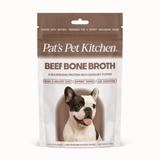
- Dog with joint issues and reduced appetite, or dog needing general nutritional support alongside joint care: Beef Bone Broth delivers 40 percent collagen content plus amino acids and trace minerals in a format most dogs find irresistible. Works well for appetite support and gut health alongside joint care.
Follow the serving guide on your chosen product's pouch based on your dog's weight. Most dogs need just one product. Stacking multiple products is rarely necessary unless your dog has both joint issues and significant appetite or digestive concerns.
Sources
- British Veterinary Association and Kennel Club. Hip and Elbow Dysplasia Screening Schemes. Information on breed predisposition, screening criteria, and screening results for border collies and other breeds.
- British Small Animal Veterinary Association. Arthritis in dogs: recognition, diagnosis and treatment. Evidence-based guidance on joint disease management.
- Canine Arthritis Management. Supporting dogs with arthritis through evidence-based care and activity modification strategies.
- The Kennel Club. Breed health information for border collies, including genetic screening recommendations and health survey data.
- Orthopedic Foundation for Animals (OFA). Breed-specific health data and screening information for inherited orthopedic conditions.
- PDSA Pet Health Information. Arthritis and joint problems in dogs: recognition, prevention, and management.
Disclaimer: This article is for educational purposes and doesn't replace veterinary advice. If your border collie shows signs of joint problems, consult your vet for proper diagnosis and treatment. Supplements support joint health alongside veterinary care but don't treat or cure joint conditions. Early intervention gives the best outcomes.
Last Updated: March 2026