Quick Answer: Dachshunds are prone to intervertebral disc disease (IVDD) and joint problems due to their long spine, short legs, and chondrodystrophic build. These characteristics create compression stress on the spine and increased load on joints. Supplements containing hydrolysed collagen support disc and joint health, reducing stiffness and mobility issues. Watch for signs of back pain, hind leg weakness, or reluctance to jump, and consult your vet immediately if these occur. Mobility & Joints is ideal for managing existing issues, whilst Pure Collagen works well for prevention and maintenance.
You're watching your dachshund move around the house. That low, slung-along-the-ground posture is part of their charm. But lately, you've noticed something. Your dog hesitates before jumping down from the sofa. They wince when you pick them up. They're less enthusiastic about stairs than they used to be. It's subtle, but something's not quite right.
Dachshunds have one of the most distinctive body shapes in the dog world. Long spine, short legs, and a muscular, low-slung frame. That shape is what makes them iconic, but it's also what makes their spine and joints vulnerable. Their body mechanics put them at significantly higher risk for intervertebral disc disease and joint problems than dogs with conventional proportions.
The good news is that early recognition and targeted support can make a real difference. Proper nutrition, activity management, and the right supplements can help your dachshund move comfortably and maintain mobility well into their senior years.
Why Dachshunds Are Prone to IVDD and Joint Issues
Dachshunds are chondrodystrophic. This technical term describes a specific type of genetic dwarfism where the legs are very short relative to the body length. It's a deliberate breeding trait, selected over centuries to create a dog that could pursue prey into burrows and tunnels.
The problem is biomechanical. A dachshund's spine contains the same number of vertebrae as most other dogs, but they're stretched over a much longer body. This creates compression. The intervertebral discs, which sit between vertebrae and absorb shock, are under constant pressure. The shape that makes them excellent badger hunters is the same shape that puts their discs under strain.
Add short legs to the equation. Their legs are relatively weak compared to their body mass. This means their back muscles and spine have to compensate harder for movement, jumping, and just the simple act of moving around. When a dachshund jumps off the sofa, the force lands on a spine designed for horizontal movement in tunnels, not vertical shock absorption.
The chondrodystrophic build also affects joint health. Their shoulders, elbows, and knees carry load unevenly because of the body shape. Arthritis can develop earlier and progress faster in dachshunds than in many other breeds.
Genetics play a role too. Some dachshunds inherit discs that are more prone to degeneration. The nucleus pulposus, the gel-like centre of the disc, can calcify or herniate. This process often happens silently. A dachshund might look fine until the moment they yelp in pain or show sudden hind leg weakness. Early intervention, through nutrition and activity management, can slow disc degeneration and reduce the severity of problems.
Signs of IVDD and Joint Problems in Dachshunds
Dachshunds show spine and joint problems differently than other breeds. Watch for these specific signs.
Back pain or sensitivity: Your dog yelps or flinches when you touch their back or sides. They arch their back like a cat. They walk stiffly or seem reluctant to move. Some dogs cry out suddenly for no apparent reason.
Reluctance to jump or climb stairs: They hesitate before jumping down from furniture. They avoid stairs or climb them slowly and carefully. This is often the first noticeable sign.
Hind leg weakness or dragging: Their back legs are less coordinated. They drag their hind feet slightly when walking. In severe cases, they may lose control of hind legs or the ability to stand on them.
Loss of bladder or bowel control: This is a medical emergency. If your dachshund has accidents they normally wouldn't have, see your vet immediately.
Reluctance to play or exercise: Your dachshund used to run and play. Now they're lethargic, less interested in activity, or tire very quickly. This can be pain-related or simply discomfort.
Changed gait or posture: Their movement looks stiff or bunny-hopping. Their hind end sits lower or seems disconnected from their front end.
Visible joint swelling: Puffiness around elbows, knees, or hips, particularly after activity.
Restlessness or difficulty settling: They can't seem to find a comfortable position. They pace or shift weight constantly.
Any of these signs warrant a vet visit. Some are mild and manageable. Others indicate urgent spinal pressure requiring immediate care. Early diagnosis is critical. The earlier disc disease or joint problems are identified, the better the outcomes with treatment and lifestyle management.
What to Look for in Joint Supplements for Dachshunds
For a breed as specifically vulnerable as dachshunds, supplement selection matters. Look for these ingredients and characteristics.
Hydrolysed collagen peptides: Collagen is the structural protein in cartilage and the fibrous outer layer of intervertebral discs. Hydrolysed collagen has small enough molecular weight to be absorbed from the digestive system. This is non-negotiable for effectiveness. Look for 2,500mg or higher per serving.
Type I and Type III collagen: Type I forms the structural matrix of cartilage and discs. Type III is in connective tissues and ligaments. Both matter for dachshunds because their problems involve both spinal discs and joints.
Glucosamine: This amino sugar supports cartilage matrix production and is particularly valuable in supplements for dogs with existing joint issues. It helps maintain the building blocks of healthy cartilage.
Hyaluronic acid: This component of synovial fluid lubricates joints and is also found in connective tissues. It supports both joint comfort and spinal tissue health.
Supporting micronutrients: Manganese supports bone and cartilage formation. Vitamin C is needed for collagen synthesis. Vitamin E provides antioxidant support. These matter in a comprehensive formula but aren't replacements for the primary active ingredients.
Easy to administer: A supplement that's tasteless, odourless, and easy to mix into food is critical for consistent use. Dachshunds can be opinionated about their diet, and a supplement they refuse to eat is useless.
Appropriate dose: A supplement needs enough active ingredient per serving to have an effect. For a dachshund, 2,500mg of collagen as part of a comprehensive formula, or 6,000mg of pure collagen, both work well.
How Collagen Supports Dachshund Spinal and Joint Health
Intervertebral discs are composed primarily of collagen (type I and II) arranged in concentric rings around a gel-like centre. Cartilage in joints is roughly 70 percent water and 30 percent dry matter, of which about 80 percent is collagen. Collagen provides the scaffold that gives these tissues their structure and resilience.
In dachshunds, the constant compression on spinal discs and uneven load on joints means that tissue breakdown happens continuously. The body naturally repairs this, but in a chondrodystrophic dog, the rate of breakdown can exceed the rate of repair. Supplementing with hydrolysed collagen peptides provides the building blocks for ongoing tissue maintenance and repair.
Research shows that ingested collagen peptides accumulate in cartilage tissue within hours of consumption. For a dachshund showing early signs of stiffness, reluctance to jump, or reduced activity, collagen supplementation supports the structural integrity of existing discs and cartilage.
For a dachshund with existing joint problems or early signs of mobility issues, Mobility & Joints combines 2,500mg hydrolysed collagen peptides with glucosamine, hyaluronic acid, and supporting micronutrients. This comprehensive blend addresses disc and joint structure, cartilage matrix production, and tissue lubrication simultaneously. Follow the serving guide on the pouch based on your dog's weight. Most owners see improvements in mobility and reduced stiffness around week 4 to 6, though some dogs respond sooner.
Supplements support spinal and joint health. They don't cure IVDD, rebuild herniated discs, or replace veterinary treatment for spinal emergencies. But in the context of good activity management and vet-guided care, they can meaningfully improve how your dachshund moves and reduce pain and stiffness.
Activity Management for Dachshund Spine and Joint Health
Supplements work best alongside smart activity management. For dachshunds, this is non-negotiable.
Minimise jumping: This is the single most important rule for dachshund spine health. A jump from a sofa to the floor compresses their discs dramatically. Use ramps or steps for furniture your dachshund accesses regularly. Carry them down stairs, at least when they're puppies. This seems small but compounds over a lifetime.
Limit repetitive high-impact movement: Short, frequent walks are better than long rambling hikes. Avoid activities that involve rapid direction changes, like playing fetch in an open field, or repeated jumping.
Watch their weight closely: Even a small weight gain matters in a dog that weighs 4 to 7kg. Extra weight multiplies stress on their spine and joints. Consistent weight management is foundational to spinal health.
Support their body when handling: Never pick up a dachshund by their legs or midline. Support their back and hindquarters equally. A dachshund not held correctly can injure their spine with a single awkward pickup.
Avoid rough play: Wrestling, rough handling, or sudden jolts can stress a vulnerable spine. Even playful jumping around with children can be problematic.
Provide good footing indoors: Slippery floors force their back muscles to work harder and create spinal stress. Use rugs and non-slip mats, particularly on stairs and in areas where they move most.
Manage cold weather exposure: Cold stiffens muscles and discs. Keep your dachshund warm in winter and limit strenuous activity in cold weather.
Encourage controlled exercise: Short, leisurely walks are ideal. Avoid extended jumping, climbing, or high-intensity play. Many dachshunds naturally self-regulate if given the choice, but some don't know when to stop.
Post-activity rest: Adequate recovery time is essential. Supplements work best when your dog is getting good sleep and rest between activity.
Frequently Asked Questions
Should I start supplements with a healthy dachshund puppy for prevention? Yes. Given their genetic predisposition to disc disease and joint problems, prevention is more effective than management. Starting a quality collagen supplement early, combined with activity management, can meaningfully reduce the severity of problems later. There's no downside to providing quality collagen and joint-supporting ingredients to a healthy young dachshund.
How long before supplements help with my dachshund's stiffness? Week 2 to 3 you might notice subtle improvements. Week 4 to 6 is when most owners report clearer changes, like reduced stiffness after rest or improved willingness to move. Some dogs respond faster, others take longer. Consistency matters more than speed. Give supplements 6 to 8 weeks for a fair assessment.
My dachshund had back surgery. Can I give joint supplements post-surgery? Check with your vet about timing, but generally yes. Collagen supplementation supports tissue healing and can be very beneficial post-surgery. Your vet will advise when it's appropriate to start. Once cleared, supplements can meaningfully support recovery and ongoing spinal health.
Can supplements replace pain medication prescribed by my vet? No. Supplements and veterinary pain management work alongside each other. Your vet's medication manages acute pain and inflammation. Supplements support ongoing tissue health and comfort. Both together work better than either alone. Always follow your vet's prescription and tell them what supplement you're using.
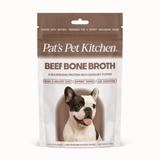
My dachshund won't eat supplements mixed into their food. What can I do? Pure Collagen is tasteless and odourless and disappears into food without changing flavour. Mobility & Joints has a slight beef flavour. If your dachshund refuses dry supplements entirely, Beef Bone Broth delivers collagen in a warm broth format that most dogs find palatable. You could also try sprinkling the powder on wet food or mixing it with a small amount of meat.
At what age do dachshunds typically develop disc problems? It varies widely. Some dachshunds show signs at 3 or 4 years old. Others stay healthy into their senior years. Age alone isn't the determining factor, activity level and genetics matter equally. Regular activity management and proactive supplementation throughout their life reduce risk regardless of when problems might appear.
Is IVDD in dachshunds ever a medical emergency? Yes. If your dachshund suddenly shows hind leg paralysis, loss of bladder or bowel control, or severe pain, this is an emergency. Seek veterinary care immediately. Early intervention for serious disc herniation can mean the difference between recovery and permanent disability. Don't wait to see if it improves on its own.
Which Product for Your Dog?
- Dachshund showing stiffness, reluctance to jump, diagnosed IVDD, or joint issues: Mobility & Joints is designed for active support, combining collagen with glucosamine, hyaluronic acid, and micronutrients to address spinal disc and joint health comprehensively.
- Healthy dachshund for prevention and maintenance, or ongoing spinal support: Pure Collagen provides a high dose of hydrolysed collagen peptides with nothing else, ideal for prevention and maintenance in dogs with no digestive sensitivities.
- Picky eater, or dog needing general nutritional and gut support alongside spinal care: Beef Bone Broth delivers 40 percent collagen content plus amino acids and trace minerals in a palatable broth format. Works well for appetite support and gut health alongside spinal care.
Follow the serving guide on your chosen product's pouch based on your dog's weight. Most dachshunds need just one product. Stacking is rarely necessary unless your dog has both spinal issues and appetite or digestive concerns.
Sources
- The Kennel Club. Dachshund breed health information, including guidance on screening and inherited health conditions.
- British Veterinary Association. Information on spinal disease in dogs and chondrodystrophic breeds.
- British Small Animal Veterinary Association. Intervertebral disc disease in dogs: diagnosis, management, and outcomes.
- Canine Arthritis Management. Evidence-based guidance on managing joint disease and spinal conditions through activity modification and nutrition.
- Orthopedic Foundation for Animals (OFA). Screening data and health information for inherited orthopedic and spinal conditions in dogs.
- Dachshund Club of Great Britain. Breed-specific health guidance and information on IVDD in dachshunds.
Disclaimer: This article is for educational purposes and doesn't replace veterinary advice. If your dachshund shows signs of back pain, hind leg weakness, or mobility issues, consult your vet for proper diagnosis and treatment. Supplements support spinal and joint health alongside veterinary care but don't treat or cure IVDD or joint conditions. If your dachshund shows sudden hind leg paralysis, loss of bladder or bowel control, or severe pain, seek emergency veterinary care immediately. Early intervention gives the best outcomes.
Last Updated: March 2026