Quick Answer: Huskies are built for endurance but prone to hip dysplasia and arthritis from intense exercise. Supplements containing collagen, glucosamine, and hyaluronic acid support joint health throughout their lives. Start before problems develop, not after. The Mobility & Joints supplement combines all three key ingredients specifically for dogs with high activity levels.
Your husky bounds down the garden path without hesitation, pulling hard on the lead. But you've started to notice something. After a long run, they're a bit stiff climbing the steps. They don't leap onto the sofa quite as easily as they used to. Nothing obvious, but enough to make you wonder if you should be doing something now, before real problems set in.
Huskies were bred to run for miles across frozen terrain. That endurance legacy is written into every cell. But here in the UK, most huskies don't get Siberian winters or the carefully managed exercise routines of their working ancestors. They get suburban gardens and enthusiastic owners who want to keep up with their boundless energy.
The problem is their joints don't care where they live. Hip dysplasia runs in the breed. Cumulative impact from high-impact activity builds up over years. By the time you notice stiffness, cartilage damage may already be underway. That's why managing joint health early isn't optional for huskies. It's preventive maintenance for a breed that literally needs to run to be happy.
Why Huskies Need Joint Support
Huskies sit in a tricky spot. They have high exercise requirements, sometimes extreme exercise requirements. Most owners understand that a bored husky is a destructive husky. So they run. They chase. They pull. They drive themselves hard because that's what the breed was created to do.
At the same time, hip dysplasia is a documented concern in huskies. It's not guaranteed, but it's a real consideration in breed health. Add arthritis risk from years of high-impact movement, and you're looking at a breed that absolutely benefits from proactive joint care.
The early signs are subtle. Slight stiffness after exercise. Hesitation on stairs. A change in how they get up from rest. By the time these become obvious, cartilage has usually been deteriorating for months. Starting supplements before problems emerge gives you the best chance of maintaining joint integrity through their active years.
What Joint Supplements Actually Do
Joint supplements work on the building blocks of healthy cartilage. Collagen is the structural protein that holds cartilage together. Glucosamine supports cartilage maintenance and can help reduce breakdown. Hyaluronic acid provides cushioning and helps joints move smoothly as a supporting ingredient inside a complete formula, alongside collagen and glucosamine. These aren't quick fixes. They're materials your dog's body uses to maintain what's already there.
Hydrolysed collagen is the key difference. Regular collagen is too large for the digestive system to use effectively. Hydrolysed collagen is broken down into peptides small enough to absorb. Once absorbed, your dog's body can direct those building blocks exactly where they're needed: into cartilage, tendons, and ligaments.
This is why timing matters. Start supplements before damage occurs, and you're supporting ongoing maintenance. Start after problems develop, and you're trying to repair existing damage. Both approaches have value, but prevention is always easier than intervention.
When to Start Supplements for Your Husky
Most owners wait for a problem before acting. Your husky seems fine, so why spend money on supplements? Here's the reality: for a breed with hip dysplasia risk and high exercise demands, "waiting for a problem" means waiting for cartilage to deteriorate. By then you're managing decline, not preventing it.
The ideal window is before problems show. For huskies, that's often around 3-4 years old. They're mature enough that you understand their activity level, but still young enough to build robust joint support before cumulative damage occurs. If your husky is older and you're just considering this, start anyway. Supporting joint health at any age beats not supporting it.
If your husky has already shown signs of stiffness or has a known hip dysplasia diagnosis, supplements are part of managing the condition alongside veterinary guidance. They won't reverse existing damage, but they can support what's left.
The Role of Exercise in Joint Health
This is where huskies create a paradox. They need exercise. Real exercise, not just a walk round the block. A husky denied appropriate outlets becomes frustrated, destructive, and anxious. But exercise is also what stresses their joints. You're not protecting their joints by keeping them sedentary. You're just creating a different set of problems.
The key is management. Consistent, moderate activity is better than boom-bust patterns. A husky that gets a proper run three times a week at a sustainable pace puts less cumulative stress on joints than one that sits around for days then gets a massive off-lead run. Variety helps too. Mix running with swimming if possible (low-impact exercise that still provides stimulation), vary terrain, and avoid repetitive high-impact surfaces like concrete when you can.
Cold weather is actually beneficial for husky joints. They were built for it. Warm weather, particularly in summer, increases inflammation risk. During hot months, exercise early or late, keep sessions shorter, and ensure they have access to cool water. Temperature management is part of joint care for this breed.
Supporting Joint Health With Collagen
The Mobility & Joints supplement contains everything a high-activity dog needs in one formula: collagen peptides for structure, glucosamine for cartilage support, hyaluronic acid for cushioning, plus manganese, vitamin C, and vitamin E. This combination addresses the multiple angles of joint maintenance, which is particularly relevant for huskies doing sustained activity.
For dogs focused on pure collagen support, Pure Collagen provides 6,000mg of hydrolysed bovine collagen peptides per serving. You'd pair it with other targeted support depending on your dog's needs.
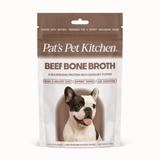
Alternatively, Beef Bone Broth delivers naturally occurring collagen alongside other joint-supporting compounds. Many owners use it as a base and add targeted supplements on top. All three products support joint health. Your choice depends on your husky's specific profile and preferences.
Follow the serving guide on the pouch based on your dog's weight. Supplements support joint health but don't replace veterinary treatment. If your husky shows signs of lameness, pain, or significant mobility changes, that's a vet conversation, not something supplements alone can address.
What Results to Expect
This is where expectations matter. Joint supplements don't work like painkillers. You won't see improvement overnight. You're providing building materials, not instantly fixing problems. Real changes take weeks to become noticeable, often 6-8 weeks before you see meaningful shifts in mobility or comfort.
What you should expect over time: fewer signs of stiffness after rest, more willingness to engage in activity, better recovery after exercise, reduced limping or hesitation on stairs. In huskies specifically, you might notice they're willing to jump or climb with more confidence. They seem less protective of a back end or shoulder.
In older huskies with existing joint issues, you're not looking for cure. You're looking for maintenance. Supporting comfort and extending the period where they can still do meaningful activity. That's a win.
Frequently Asked Questions
Can I start supplements if my husky hasn't shown any problems? Yes, absolutely. For a breed with hip dysplasia risk and high exercise demands, early supplementation is preventive. Prevention is always more effective than intervention. If your husky is over 3-4 years old and doing regular intense activity, starting supplements now is worth considering.
Are supplements enough on their own? No. Supplements support joint health but are only one piece. Appropriate exercise management, weight control, and regular vet checks matter equally. A husky that's overweight will put more stress on joints regardless of supplements. One that does repetitive high-impact activity without recovery time needs exercise management, not just supplements.
How long will I need to supplement? For a high-activity husky, potentially lifelong. Think of it like maintaining a high-performance machine. You don't service it once and assume it will run perfectly forever. You maintain it continuously. The same applies to husky joints.
Can supplements help with existing hip dysplasia? They can support joint health, but they don't reverse existing damage. If your husky has diagnosed hip dysplasia, work with your vet on a complete management plan that includes exercise modifications, weight management, and supplements as appropriate parts of that plan.
Will supplements cure arthritis? No. Arthritis is joint degeneration. Supplements support remaining joint tissue, but they don't reverse arthritis. If your husky has been diagnosed with arthritis, supplements are part of managing the condition, not replacing veterinary treatment.
Do I need to combine multiple supplements or stick with one? Most dogs do well with a single comprehensive formula like Mobility & Joints that covers multiple joint-support angles. Some owners prefer pure collagen as a base and add additional targeted support. There's no "must combine" rule. One good supplement is better than three mediocre ones.
What about cost? Is supplementing a husky worth the expense? From a pure cost perspective, preventive supplementation is far cheaper than managing serious joint disease. Hip dysplasia, severe arthritis, or conditions requiring surgery are expensive to manage. Supplementing from age 3-4 for the next 10+ years costs considerably less and helps keep your husky functional and happy.
Which Product for Your Husky?
Choose Mobility & Joints (£34.99) if: Your husky is doing regular intense activity and you want comprehensive joint support in one formula. This covers all angles of joint maintenance with collagen, glucosamine, hyaluronic acid, and supporting vitamins. It's the all-in-one option for the high-activity husky.
Choose Pure Collagen (£31.99) if: You prefer a stripped-down, pure collagen approach and want to pair it with other targeted support based on your husky's specific needs. This gives you flexibility to build your own protocol.
Choose Beef Bone Broth (£24.99) if: Your husky has a preference for whole-food options and you like the idea of naturally occurring collagen alongside other bone-derived compounds. Many owners use this as a base and add targeted supplements on top. It's also palatable for dogs that are picky about supplements mixed into food.
All three support joint health. Your choice depends on your husky's individual profile, your approach to supplementation, and whether you want comprehensive support in one formula or prefer building a customised protocol.
Sources
Orthopaedic Foundation for Animals (OFA): Hip dysplasia prevalence data in dog breeds.
Aragon, C. L., et al. (2007). "Effects of position and body mass index on abdominal fat compartments in dogs." Veterinary Radiology and Ultrasound, 48(6), 594-601.
Todhunter, R. J., et al. (1999). "Genetic structure of Purebred domestic dog." Journal of Heredity, 90(1), 54-77.
Disclaimer: This information is for educational purposes and doesn't replace veterinary advice. If your husky shows signs of stiffness, lameness, reluctance to exercise, or has a hip dysplasia diagnosis, consult your vet for proper diagnosis and treatment. Early intervention gives the best outcomes.
Last Updated: July 2026