Quick Answer: Labradoodles inherit joint vulnerabilities from both parent breeds, including hip and elbow dysplasia from Labradors and luxating patella and Legg-Calve-Perthes from Poodles. The best approach combines preventative supplementation with weight management and controlled exercise. Mobility & Joints supports all these concerns with collagen, glucosamine, and hyaluronic acid.
Your Labradoodle bounds around the garden with endless energy. Then you notice it. A slight hesitation stepping up onto the bed. A pause before jumping down from the car. Nothing serious yet, but enough to make you pause mid-throw of the tennis ball.
Labradoodles were bred to be active, confident family dogs. Loyal, clever, athletic. But they're also lottery winners and losers when it comes to genetics. Your dog could inherit the lean athleticism of a Poodle or the heavier build of a Labrador. It could sail through life without joint trouble, or it could inherit predispositions that start showing up at five or six years old.
The truth: there's no breed standard, no formal health screening scheme. No breeder checklist to guarantee your dog's hips and elbows. That means owners like you need to be proactive.
Why Labradoodles Face Specific Joint Challenges
Your Labradoodle doesn't inherit one breed's joint risks. It inherits both. From the Labrador side comes hip dysplasia and elbow dysplasia, conditions where the joint socket doesn't fit properly. From the Poodle side comes luxating patella (a kneecap that slips out of place) and Legg-Calve-Perthes disease (where the femoral head deteriorates).
Compound this with size variance. Labradoodles range from 15kg to 65kg depending on whether they inherit Miniature or Standard Poodle genes. A larger dog carrying dysplasia genes faces more joint stress from bodyweight alone. Smaller dogs with luxating patella might slip and slide with every jump.
Without health screening, you won't know what your dog carries until symptoms appear. By then, prevention becomes management.
When to Start Joint Supplementation
Don't wait for lameness. The best time to start is now, especially if your Labradoodle is still young and active. Collagen and glucosamine support joint cartilage before problems develop. Think of it like maintaining your garden before the weeds take over, not afterwards.
If your dog is already showing signs, start immediately. Early intervention makes a real difference with progressive conditions. And if your Labradoodle is middle-aged with no issues, supplements become insurance against the joint problems that might appear at seven or eight years old.
Age isn't the only trigger. Rapid growth (especially in puppies), repetitive jumping, obesity, and intense exercise all stress joints. Active Labradoodles face more risk simply because they do more.
How Collagen Supports Labradoodle Joints
Joint cartilage is made of collagen. Hydrolysed collagen peptides cross the gut barrier and provide amino acids your dog's body uses to repair and maintain cartilage structure. It's not magic, but it is foundational. Without the building blocks, cartilage can't repair itself.
Mobility & Joints adds glucosamine and hyaluronic acid alongside collagen. Glucosamine supports cartilage maintenance and lubrication. Hyaluronic acid acts as a shock absorber inside the joint. This combination targets all three issues: structural support, cartilage health, and joint cushioning.
Feed it daily. Consistency matters more than occasional doses.
Beyond Supplements: Managing Joint Health
Supplements are one tool. They're not the whole picture. Weight management is equally important. Every kilogram your dog carries puts stress on dysplastic hips and compromised knees. A Labradoodle at a healthy weight faces far less joint pressure than an overweight one, regardless of supplements.
Exercise matters, but controlled exercise. Your Labradoodle loves to chase and jump. The trick is to channel that energy into steady walks and swimming rather than endless high-impact games. Swimming supports joints without stress. Walks build muscle without trauma. Repetitive jumping, especially on hard surfaces, accelerates wear.
Consider your dog's age and size. A 60kg Standard Labradoodle jumping down from high furniture bears more impact than a 25kg Mini. Ramps or steps reduce jumping strain for larger dogs. And vet monitoring becomes essential once your dog reaches senior years or shows symptoms.
What Results Should You Expect?
Supplements support joint health, but they don't replace veterinary treatment or produce dramatic overnight changes. What you'll notice is subtle. Your dog maintains mobility longer. Stiffness after rest improves. Exercise tolerance stays higher. The progression of dysplasia or degeneration slows.
Some owners see visible improvement within four to six weeks. Others notice their dog simply ages well, without developing the limp or stiffness they watched in older relatives. Both outcomes are wins.
Be honest with yourself about what supplements can and cannot do. They support joint health but don't reverse dysplasia or eliminate arthritis once it develops. They are prevention and management combined, not cure.
Your Questions Answered
Can I give joint supplements to my puppy? Yes. Early supplementation builds strong cartilage before growth stress develops. Puppies grow rapidly and their joints are under strain. Collagen and glucosamine support this growth phase.
What if my Labradoodle is obese? Supplements help, but weight loss is the priority. No supplement overcomes the joint damage that excess weight causes. Work with your vet on a nutrition plan alongside supplementation.
How long until I see improvement? Some dogs show improvement within weeks. Others take two to three months. The timeline depends on how established the joint damage is. Early intervention produces faster results.
Are there side effects? Collagen supplements are well tolerated. Some dogs develop mild digestive changes initially. Start with the recommended dose and adjust if needed. Talk to your vet if your dog shows unusual reactions.
My vet recommended surgery for hip dysplasia. Should I still use supplements? Yes. Supplements support recovery and manage the other joint predispositions your dog carries. Ask your vet how to time supplementation around surgery.
What's the difference between Labradoodles and Goldendoodles for joint health? Goldendoodles inherit dysplasia risks from Golden Retrievers instead of Labradors. The underlying concerns are similar, but the specific predispositions differ. Both benefit from preventative supplementation.
Can I switch between products? Yes. Rotate between Mobility & Joints and Beef Bone Broth for variety. Different formulations support joints in slightly different ways.
Which Product for Your Labradoodle?
Start here: Mobility & Joints (£34.99) This is the most complete formula for Labradoodles. It combines collagen with glucosamine, hyaluronic acid, manganese, and vitamins C and E. It targets hip dysplasia, elbow dysplasia, luxating patella, and general joint wear. One product addresses all the genetic risks your dog carries. Follow the serving guide on the pouch based on your dog's weight.
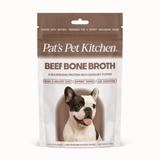
Alternative: Beef Bone Broth (£24.99) If your dog resists supplements, bone broth is palatable. It contains 40% collagen and adds nutritional value to meals. Use it alongside or instead of Mobility & Joints if budget is a concern. Still follow the serving guide on the pouch.
Additional option: Pure Collagen (£31.99) For dogs already on other joint support or owners who want to keep it simple, pure collagen delivers 6,000mg hydrolysed peptides with no added ingredients. Tasteless and odourless, it mixes into any meal. Some owners combine it with glucosamine from another source.
Whichever you choose, consistency matters more than perfection. A supplement your dog eats daily beats a more expensive one you can't afford to feed regularly.
Sources
Hydrolysed collagen peptides have been shown to cross the intestinal barrier and accumulate in cartilage (Oesser et al., 1999, Journal of Applied Physiology). Glucosamine supports cartilage matrix synthesis (McAlindon et al., 2000, Journal of the American Medical Association). Hyaluronic acid provides joint lubrication and shock absorption (Kahan et al., 2008, Journal of Rheumatology). Hip dysplasia in Labradors is well documented in breed health databases. Poodle-related joint conditions (luxating patella, Legg-Calve-Perthes) appear in veterinary literature on toy and miniature breed predispositions. The genetic lottery in Labradoodles (the lack of formal screening) reflects current breeding standards for the hybrid breed.
Disclaimer: This information is for educational purposes and doesn't replace veterinary advice. If your dog shows limping, reluctance to move, or joint pain, consult your vet for proper diagnosis and treatment. Early intervention gives the best outcomes.
Last Updated: July 2026