Quick Answer: Miniature Schnauzers are prone to joint problems including luxating patella and intervertebral disc disease despite their small size, due to their compact build and naturally active temperament. Joint supplements with collagen, glucosamine, and hyaluronic acid support cartilage health and can help manage mobility as your Schnauzer ages. At 7kg to 8kg a Miniature Schnauzer sits in the 1 to 10kg band, so the daily serving is 1 teaspoon (3g). Starting supplements early (often by age 5 or 6) is more effective than waiting for visible problems to develop.
Your Miniature Schnauzer used to scramble up onto the kitchen chair without hesitation. Now you notice them pause at the bottom step. They still want to follow you everywhere, still have that terrier fire burning, but something's changed in how they move.
It's easy to miss in a dog this small. Schnauzers pack personality and activity into a compact frame, and their wiry confidence often masks discomfort. But their size works against them when it comes to joint stress. That sturdy little body puts surprising load through knees and spines that are more fragile than they appear.
Joint problems in Miniature Schnauzers aren't inevitable, but they're common enough that understanding the risks and knowing when to support joint health can make a real difference to your dog's quality of life.
Why Miniature Schnauzers Need Joint Support
Miniature Schnauzers face several joint vulnerabilities. Luxating patella (where the kneecap slips out of place) is particularly common in the breed, especially in smaller specimens. Legg-Calve-Perthes disease, which affects the hip joint, also appears in Schnauzers. Intervertebral disc disease is another concern because their long spine relative to body length creates mechanical stress.
What makes these problems worse is temperament. Schnauzers are terriers through and through. They don't stop when their joints hurt. They chase, dig, jump, and demand walks with the same enthusiasm as a much larger dog. That fearless personality means they often push through discomfort rather than resting, potentially worsening early joint issues.
Their compact, sturdy build is part of their charm, but it concentrates body weight and impact forces into small joints designed for a lighter load. A Schnauzer weighing 6kg puts proportionally more stress through their knees and hips than a Golden Retriever of the same weight would.
When to Start Thinking About Joint Supplements
You don't need to wait for limping before considering joint support. Joint support is often worth considering from around age 5 or 6 for Schnauzers, particularly if your dog has a family history of joint problems. If you know luxating patella runs in your dog's line, even earlier consideration makes sense.
Some owners start earlier if their Schnauzer is particularly athletic or has had an injury. A dog who's torn a ligament or had a patellar luxation event definitely benefits from ongoing support to prevent faster cartilage wear in that area.
The logic is straightforward: supporting joint health before damage becomes visible is far more effective than trying to manage established arthritis. Once cartilage degrades significantly, supplements help maintain what's left, but they can't rebuild what's already gone.
How Collagen and Key Nutrients Support Joints
Collagen is the structural protein that makes up cartilage. When cartilage breaks down, the joint loses its cushioning and surfaces begin to rub together, causing pain and inflammation. Hydrolysed collagen peptides are broken down into tiny molecules that are easily absorbed, providing raw materials your dog's body uses to repair and maintain joint cartilage.
Glucosamine supports cartilage integrity and helps your dog's body maintain the gel-like substance (synovial fluid) that lubricates joints. Hyaluronic acid thickens that same fluid, reducing friction between bone surfaces. Vitamin C is required for collagen synthesis, and manganese is part of enzymes involved in cartilage formation. Together, these nutrients give your dog's body the building blocks it needs to keep joints moving smoothly.
Mobility & Joints combines all these ingredients in a single supplement designed specifically for dogs managing joint challenges. The formula includes collagen peptides plus glucosamine, hyaluronic acid, and the cofactor vitamins and minerals that make collagen synthesis possible. For Schnauzers, this comprehensive approach works better than collagen alone because it addresses lubrication, cartilage structure, and the biochemistry of joint repair simultaneously. At Miniature Schnauzer weights that is a 1 teaspoon daily serving.
The serving guide, which is the same for both Mobility & Joints and Pure Collagen:
| Dog weight | Daily serving | Pure Collagen delivered |
|---|---|---|
| 1 to 10kg | 1 teaspoon (3g) | 3,000mg |
| 11 to 20kg | 2 teaspoons (6g) | 6,000mg |
| 21 to 30kg | 3 teaspoons (9g) | 9,000mg |
| 31kg and over | 4 teaspoons (12g) | 12,000mg |
Miniature Schnauzers sit in the top row, so 1 teaspoon (3g) a day. Weigh your dog rather than estimating, and do not scale a larger dog's serving down in your head.
Managing Activity for a High-Drive Small Breed
Here's the challenge with Schnauzers: they don't regulate their own activity. A dog with early joint stress needs to move less and rest more, but Schnauzers will happily dig holes for four hours straight or chase squirrels until they collapse.
Your job becomes managing their activity, which takes discipline. Multiple short walks beat one long one when joint health is a concern. Soft surfaces like grass are easier on joints than concrete. High-impact activities like jumping, heavy play sessions, and stairs should be minimised.
Swimming or walking in shallow water is ideal for Schnauzers with joint concerns because water supports their weight while allowing movement. If your dog already shows signs of joint stress, consider whether your home setup makes things worse. Steps are hard on dogs with spine or knee issues. Ramps or lifting assistance helps more than you'd expect.
This is where temperament management matters. You're not trying to stop your Schnauzer being themselves. You're redirecting that intensity toward lower-impact activities like scent work, training games, and puzzle toys that engage their mind without hammering their joints.
What Results Look Like and How Long They Take
Supplements don't work overnight. You're supporting your dog's natural cartilage maintenance processes, which operate on a timeline of weeks, not days. Most owners notice changes between 4 and 8 weeks into supplementation, though some dogs respond faster.
Early signs of improvement are subtle. Your Schnauzer gets up from lying down more smoothly. They hesitate less at stairs. Their usual morning stiffness (common in older dogs) seems less pronounced. Over time, mobility improves noticeably. Some owners see their dog return to activities they'd abandoned months earlier.
Be realistic about what supplements can't do. They support existing joint health and slow decline, but they don't reverse advanced arthritis. If your Schnauzer already has significant cartilage damage, supplements help manage comfort and maintain function at the current level, not restore joints to their youth.
Supplements work best paired with other management strategies. Activity control, maintaining lean weight, and regular gentle movement all contribute to the overall outcome. If your dog develops acute lameness or severe pain, these are vet matters. Supplements support joint health but don't replace veterinary treatment.
Frequently Asked Questions
How much should I give my Miniature Schnauzer?
A Schnauzer of 1 to 10kg takes 1 teaspoon (3g) a day, which covers the great majority of the breed. With Pure Collagen, which is 100 per cent hydrolysed collagen peptides, that works out at 3,000mg of collagen. The larger servings in the guide above are for heavier dogs, so do not apply those figures to a Miniature Schnauzer.
Can young Schnauzers benefit from joint supplements?
Absolutely. If your young Schnauzer has a patellar luxation diagnosis, a family history of joint issues, or is particularly athletic, starting early prevents problems rather than managing them later. It's easier to maintain joint health than to rebuild it.
How do I know if my Schnauzer has joint problems?
Watch for reluctance to jump or climb stairs, limping after activity, stiffness (especially after rest), difficulty rising from lying down, or a bunny-hopping gait (particularly in the rear legs). Some Schnauzers hide pain, so subtle changes in movement are worth noting. Your vet can assess whether these signs point to joint issues requiring intervention.
Are there side effects to joint supplements?
Quality supplements are safe for most dogs. Some dogs experience mild digestive adjustments initially. Rare allergies to shellfish-derived glucosamine can occur in dogs with seafood sensitivities. Always introduce supplements gradually and mention it to your vet if you're using prescription medications, as there could be interactions.
Can supplements prevent luxating patella?
No. Patellar luxation is a structural problem present from birth, often hereditary. Supplements can't prevent it from developing. However, once your Schnauzer is diagnosed, joint support helps manage the joint damage that luxating causes and slows secondary arthritis from developing.
Is collagen better than beef bone broth?
Both support joint health. Pure collagen is concentrated and straightforward dosing. Beef bone broth delivers collagen (about 40% of the broth) alongside other nutritional benefits and is often more palatable for picky eaters. The choice depends on your Schnauzer's preferences and whether you want standalone joint support or something that supports overall nutrition.
How long do Schnauzers take to show improvement?
Most owners see subtle improvements within 4 to 8 weeks of consistent supplementation. More dramatic changes often emerge over 3 to 6 months as cartilage regeneration continues. Patience is required because supplements work with your dog's natural healing processes, not as quick fixes.
Can I give supplements while my dog is on medication?
Most supplements work alongside medication without issues, but always tell your vet what you're using. Certain medications and supplements can interact, so your vet needs the full picture of what your Schnauzer is taking.
Which Product for Your Schnauzer?
Choose Mobility & Joints (£34.99) if your Schnauzer shows signs of joint stress, has a family history of joint problems, or is over age 5. The combined formula with collagen peptides, glucosamine, hyaluronic acid, manganese and vitamins C and E addresses the full spectrum of joint needs, in a 1 teaspoon daily serving for a dog this size. This is the best choice for active Schnauzers managing patellar or spinal concerns.
Choose Pure Collagen (£31.99) if your Schnauzer is primarily a healthy adult with no current joint issues and you want preventative support. It is hydrolysed bovine collagen peptides and nothing else, so a 1 teaspoon (3g) daily serving delivers 3,000mg of collagen without the additional compounds in Mobility & Joints. Many owners use this for prevention starting around age 5.
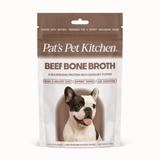
Choose Beef Bone Broth (£24.99) if your Schnauzer is a picky eater or you want to support overall nutrition alongside joint health. The 40% collagen content is meaningful, and the broth format appeals to dogs who refuse powder supplements. Excellent for adding to meals or giving as a standalone treat.
For most Schnauzers with joint concerns, Mobility & Joints delivers the most complete support. The glucosamine and hyaluronic acid address lubrication alongside collagen's structural role. For your spirited little Schnauzer, that comprehensive approach pays dividends.
Sources
McIlwraith, C.W., et al. (2012). Joint disease in the horse. Philadelphia: Saunders Elsevier. [Referenced for collagen and glucosamine mechanisms in joint cartilage]
Comblain, F., et al. (2014). "Review of the usefulness of intra-articular injections for osteoarthritis." Veterinary Surgery, 43(4), 515-525. [Referenced for supplement timing and joint disease management]
Budsberg, S.C., et al. (2006). "Evaluation of clinical efficacy and safety of an nutraceutical supplement for degenerative joint disease of the hip in dogs." Journal of the American Veterinary Medical Association, 229(7), 1113-1117. [Referenced for supplement efficacy timeline and response rates]
Disclaimer: This information is for educational purposes and doesn't replace veterinary advice. If your Schnauzer shows lameness, reluctance to move, or signs of pain, consult your vet for proper diagnosis and treatment. Early intervention gives the best outcomes.
Last Updated: August 2026