Your Rottweiler is slowing down.
They're hesitating at stairs. They struggle to get up after lying down. Their back legs look weaker than they used to.
This isn't just aging. Rottweilers are genetically prone to hip dysplasia, elbow dysplasia, and early-onset arthritis.
Here's how to protect their joints and keep them moving comfortably for years longer.
Why Rottweilers Need Joint Support
Rottweilers face a triple threat:
1. High rate of hip dysplasia
20.3% of Rottweilers have hip dysplasia (BVA/KC data 2010-2020). That's 1 in 5.
UK breed median hip score: 20 (anything over 20 is considered at-risk)
For comparison:
-
Border Collie median: 12
-
Labrador median: 12
-
German Shepherd median: 14
Translation: Rottweilers have some of the worst hip genetics of any breed.
2. Elbow dysplasia
15-20% of Rottweilers develop elbow dysplasia. This affects their front legs and causes lameness.
UK breed median elbow score: 11 (higher than most breeds)
3. Early arthritis onset
Because of hip and elbow problems, Rottweilers often develop osteoarthritis by age 5-7, significantly earlier than smaller breeds.
4. Heavy build
Adult Rottweilers weigh 35-60kg. That's a lot of weight on joints. Every extra kilogram of body weight puts 4kg of pressure on hips and elbows.
The result: Without proper joint support, most Rottweilers will experience mobility issues by middle age (6-8 years).
The 8 Signs Your Rottweiler Has Joint Problems
Watch for these early warning signs:
1. Stiffness after rest
Takes a few steps to "warm up" after lying down. More noticeable in the morning or after naps.
2. Reluctance to climb stairs
Pauses at the bottom of stairs. May avoid them entirely.
3. Difficulty getting into the car
Used to jump in easily, now hesitates or needs help.
4. Limping or favouring one leg
More obvious after exercise or in cold weather.
5. Reduced playtime
Doesn't wrestle or run like they used to. Tires quickly.
6. Sitting abnormally
Sits with one leg out to the side instead of tucked under (trying to relieve pressure on hip).
7. Loss of muscle mass in back legs
Hind leg muscles look thinner compared to front legs and shoulders.
8. Behavioural changes
Less tolerant of other dogs. Grumpy when touched in certain areas. Prefers lying down to moving.
If your Rottweiler shows 3 or more of these signs, their joints need support.
Start supplementation now. Early intervention prevents progression.
What Causes Joint Problems in Rottweilers?
It's genetic, but the environment matters too.
1. Genetics (70% of the problem)
Hip and elbow dysplasia are inherited. If both parents have poor joint scores, puppies are at very high risk.
What you can't change: Your Rottweiler's genetic predisposition.
What you CAN change: How severely those genetics express themselves.
2. Rapid growth (10-15% of risk)
Rottweiler puppies grow fast. They're born around 500g and reach 35-45kg by 12 months.
The problem: Bones grow faster than supporting muscles, ligaments, and tendons can develop. Joints become unstable.
How to prevent: Don't overfeed puppies. Keep them lean during growth phase (0-18 months).
3. Obesity (10-15% of risk)
Rottweilers love food. Many become overweight, which accelerates joint damage.
Every extra kilogram = 4kg of pressure on joints.
If your Rottie is 5kg overweight, that's 20kg of extra pressure with every step.
4. Over-exercise during development (5-10% of risk)
Jumping, running on concrete, and repetitive high-impact activities during the growth phase damage developing joints.
The rule: For Rottweiler puppies, limit exercise to 5 minutes per month of age, twice daily. So a 4-month-old puppy gets two 20-minute walks maximum.
What Actually Works: The Evidence
Not all joint supplements are equal. Here's what research proves works:
1. Hydrolysed Collagen Peptides (Most Important)
What it does: Provides the building blocks (amino acids) for cartilage, tendons, and ligaments.
The science: Studies show collagen peptides are absorbed intact from the gut and accumulate directly in cartilage tissue. They stimulate chondrocytes (cartilage-producing cells) to make new collagen.
Serving: 1 to 4 teaspoons (3g to 12g) daily depending on weight, delivering 3,000mg to 12,000mg of Pure Collagen. Follow the serving guide on the pack.
| Dog weight | Daily serving | Pure Collagen delivered |
|---|---|---|
| 1 to 10kg | 1 teaspoon (3g) | 3,000mg |
| 11 to 20kg | 2 teaspoons (6g) | 6,000mg |
| 21 to 30kg | 3 teaspoons (9g) | 9,000mg |
| 31kg and over | 4 teaspoons (12g) | 12,000mg |
The same serving guide applies to Mobility & Joints. Always follow the serving guide printed on the pack.
For a Rottweiler: adults weigh 35-60kg, which puts them in the 31kg and over band. That means 4 teaspoons (12g) daily.
Why it must be hydrolysed: Standard collagen molecules are too large to absorb. Hydrolysed collagen is broken into tiny peptides that pass through the gut wall.
Results timeline:
-
Week 4: Slight improvement in stiffness
-
Week 6-8: Noticeable improvement in mobility
-
Week 12+: Maximum benefit
Important: Look for Types I and III collagen. These support the entire joint structure (cartilage, tendons, ligaments, connective tissue). Type II collagen (often marketed for joints) only targets cartilage.
2. Glucosamine
What it does: Supports cartilage integrity and reduces breakdown.
The science: Glucosamine is a precursor to glycosaminoglycans, which are essential components of cartilage. Studies show it slows arthritis progression.
Most effective when combined with collagen (they work synergistically).
3. Hyaluronic Acid
What it does: Lubricates joints (acts like WD-40 for hips and elbows).
The science: Hyaluronic acid is a major component of synovial fluid. Supplementation increases joint lubrication and reduces friction.
Results: Reduces grinding, clicking, and pain during movement.
4. Omega-3 Fatty Acids (EPA/DHA - 1,500-2,000mg daily)
What it does: Powerful anti-inflammatory. Reduces joint inflammation and pain.
The science: EPA and DHA reduce production of inflammatory cytokines. Studies show significant reduction in lameness and NSAID use when supplemented.
Important: Must be from fish oil (not plant-based omega-3s). Look for high EPA content specifically.
5. Vitamin C (Ascorbic Acid)
What it does: Essential for collagen synthesis. Without adequate vitamin C, the body can't produce new collagen..
6. Manganese
What it does: Cofactor for enzymes involved in collagen production. Boosts the body's natural collagen synthesis.
The Best Supplements for Rottweilers
For Prevention (Healthy Rottweilers aged 2-6)
What's in it:
-
100% hydrolysed collagen peptides (Types I & III), served by weight band: 3,000mg at 1 to 10kg, 6,000mg at 11 to 20kg, 9,000mg at 21 to 30kg and 12,000mg at 31kg and over
-
An adult Rottweiler sits in the 31kg and over band, so 4 teaspoons (12g) delivering 12,000mg
-
Nothing else
-
Tasteless and odourless
Best for:
-
Young, healthy Rottweilers
-
Prevention before problems start
-
Daily foundational support
Why we recommend it: Pure formulation. No fillers. Supports joints, skin, coat, gut, and bones.
For Existing Joint Issues (Rottweilers showing signs of stiffness or diagnosed with dysplasia)
What's in it (the composition of a 6g serving, which is the 2 teaspoon serving for an 11 to 20kg dog):
-
5,000mg hydrolysed collagen peptides
-
250mg glucosamine hydrochloride
-
1.5mg hyaluronic acid
-
3mg manganese
-
12mg vitamin C
-
0.5mg vitamin E
An adult Rottweiler at 35-60kg sits in the 31kg and over band, so their daily serving is 4 teaspoons (12g), not 6g. Always follow the serving guide printed on the pack.
Why this combination works:
Collagen rebuilds cartilage, tendons, ligaments.
Glucosamine slows cartilage breakdown.
Hyaluronic acid lubricates joints.
Vitamins C & E support collagen production and reduce oxidative stress.
Manganese boosts natural collagen synthesis.
They work together, not separately. This is why combination formulas show better results than single-ingredient supplements in studies.
Best for:
-
Rottweilers with diagnosed hip or elbow dysplasia
-
Dogs showing stiffness, limping, or reduced mobility
-
Senior Rottweilers (7+ years)
-
Post-surgery joint support
Results timeline:
-
Week 4: Most owners notice improvement
-
Week 8: Significant improvement in mobility
-
Week 12: Maximum benefit achieved
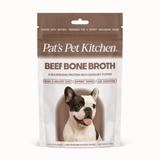
For Picky Eaters or Dogs Needing Gut Support
What's in it:
-
40% collagen content
-
Natural gelatin
-
Essential minerals (calcium, phosphorus, magnesium)
-
Glucosamine from bone matrix
Best for:
-
Rottweilers who won't eat Pure Collagen or Mobility & Joints (some are fussy)
-
Dogs with sensitive stomachs or digestive issues
-
Adding moisture to dry food
-
Creating an irresistible gravy
How to use: Mix with warm water to create a beef-flavoured gravy. Pour over kibble.
Even the fussiest Rottweilers lick the bowl clean.
Bonus: Many owners use Bone Broth alongside Pure Collagen or Mobility & Joints. Keep each product to its own serving guide.
Which Supplement Should You Choose?
Decision tree:
Healthy Rottweiler (under 6 years, no signs of joint issues): → Start with Pure Collagen for prevention
Rottweiler showing early stiffness (occasional limping, hesitation at stairs): → Use Mobility & Joints for targeted support
Rottweiler with diagnosed hip or elbow dysplasia: → Use Mobility & Joints + consider omega-3 supplement separately
Rottweiler won't eat supplements: → Try Beef Bone Broth (irresistible flavour)
Senior Rottweiler (7+ years): → Mobility & Joints is best, even if not showing symptoms yet
The Complete Rottweiler Joint Care Protocol
Daily:
-
Joint supplement with breakfast (Pure Collagen or Mobility & Joints, 4 teaspoons (12g) for a dog over 31kg)
-
Omega-3 fish oil with dinner (1,500-2,000mg EPA/DHA)
-
2-3 short walks (15-20 minutes each)
-
Gentle stretching or massage (5 minutes)
Weekly:
-
Weight check (adjust food if gaining)
-
Swimming or hydrotherapy if possible (builds muscle without joint stress)
-
Nail trim (long nails affect gait and put more stress on joints)
Monthly:
-
Full mobility assessment (Are they getting better or worse?)
-
Review exercise routine
-
Check home modifications are working
Every 3 months:
-
Vet check-up (especially if on pain medication)
-
Blood work if on NSAIDs
-
Hip/elbow X-rays if condition worsening
Beyond Supplements: What Else Helps
1. Weight Management (Critical for Rottweilers)
Target weight:
-
Males: 50-60kg
-
Females: 35-48kg
How to tell if overweight:
-
Can't easily feel ribs
-
No visible waist when viewed from above
-
Belly sags when walking
If your Rottweiler is overweight:
-
Reduce food by 10-15%
-
Switch to weight management formula
-
Increase gentle activity (swimming is ideal)
-
No table scraps
Every 1kg lost = 4kg less pressure on joints.
2. Appropriate Exercise
Good for Rottweilers with joint issues:
-
Short lead walks (15-20 minutes, 2-3 times daily)
-
Swimming (perfect zero-impact exercise)
-
Gentle play at their pace
-
Slow-paced sniff walks
Bad for Rottweilers with joint issues:
-
Running on concrete
-
Jumping
-
Playing roughly with other dogs (they'll overdo it)
-
Long hikes (over 30 minutes puts too much stress on joints)
3. Hydrotherapy
Underwater treadmill or swimming in heated pool.
Benefits:
-
Builds muscle without stressing joints
-
Water buoyancy reduces pain
-
Most Rottweilers love swimming
Cost: £30-50 per session. Usually see results after 6-8 sessions.
4. Home Modifications
Make life easier:
-
Ramps for car access (£50-80)
-
Non-slip mats on hard floors (£20)
-
Orthopaedic bed with memory foam (£40-100)
-
Raised food and water bowls (£20)
Total investment: £130-220 massively improves quality of life.
What About Pain Medication?
If supplements alone aren't enough:
Your vet may prescribe:
NSAIDs (most common):
-
Metacam (meloxicam)
-
Rimadyl (carprofen)
-
Previcox (firocoxib)
Important: NSAIDs require blood tests every 6 months to monitor liver and kidney function.
Other options:
-
Gabapentin (nerve pain)
-
Tramadol (moderate pain)
-
Amantadine (chronic pain)
The goal: Follow your vet's prescribing instructions. Many dogs can reduce or eliminate medication once supplements and weight management are optimised.
Preventing Joint Problems in Rottweiler Puppies
If you have a Rottweiler puppy (0-18 months), you can reduce their risk:
1. Choose a responsible breeder
-
Both parents hip and elbow scored
-
Scores should be below breed median (hip score under 20, elbow score under 11)
-
Ask to see certificates
2. Controlled growth
-
Feed large breed puppy food (slower growth rate)
-
Don't overfeed
-
Keep them lean (you should see ribs and waist)
3. Limit exercise during growth phase
-
5 minutes per month of age, twice daily (4-month-old = two 20-minute walks max)
-
No jumping from heights
-
No running on concrete
-
Swimming is perfect
4. Start joint supplements early
-
Begin Pure Collagen at 6 months old, following the weight bands on the pack as they grow
-
Provides building blocks for healthy joint development
5. Avoid stairs
-
Carry puppies up and down stairs until 12 months old
-
Prevents damage to developing hips
6. No jumping in/out of car
-
Use a ramp or lift them
-
Jumping puts huge stress on developing joints
When to See Your Vet
See your vet immediately if:
-
Sudden severe lameness (can't bear weight on leg)
-
Swelling around joints
-
Yelping or crying when moving
-
Complete refusal to use a limb
-
Not responding to supplements after 8 weeks
Annual check-ups should include:
-
Gait assessment
-
Hip and elbow palpation
-
Weight check
-
Blood work if on NSAIDs
-
X-rays every 2-3 years to monitor progression
Your Rottweiler Can Live Well
Joint problems are common in Rottweilers, but they don't have to steal your dog's quality of life.
With proper care:
-
Most Rottweilers with mild to moderate dysplasia live comfortably on supplements alone
-
Surgery is rarely needed
-
They can remain active well into their senior years
Start today:
-
Assess their current mobility (use the 8 signs checklist)
-
Start a proven joint supplement
-
Check their weight (and create a reduction plan if needed)
-
Make home modifications
-
Book a vet check-up if you haven't in 6 months
Your Rottweiler protected you. Now protect their joints.
Sources & Further Reading
-
British Veterinary Association Hip Scheme Statistics: https://www.bva.co.uk/canine-health-schemes/hip-scheme/hip-scheme-statistics/
-
Orthopedic Foundation for Animals - Breed Statistics: https://www.ofa.org/diseases/breed-statistics
-
Kealy RD, et al. "Effects of limited food consumption on hip dysplasia." JAVMA, 1992
-
Oesser S, Seifert J. "Stimulation of type II collagen biosynthesis." Osteoarthritis and Cartilage, 2003
-
Clegg DO, et al. "Glucosamine, chondroitin sulfate for osteoarthritis." NEJM, 2006
-
Roush JK, et al. "Effects of fish oil omega-3 fatty acids on weight bearing." JAVMA, 2010
-
German AJ. "The growing problem of obesity in dogs and cats." Journal of Nutrition, 2006
-
Kealy RD, et al. "Effects of diet restriction on life span in dogs." JAVMA, 2002
-
Canine Hydrotherapy Association: https://www.canine-hydrotherapy.org/
-
British Veterinary Association Elbow Scheme: https://www.bva.co.uk/canine-health-schemes/elbow-scheme/
Last Updated: August 2026