Quick Answer: Collagen comes in different types, each with specific roles. Type I strengthens skin and connective tissue. Type II maintains cartilage and joints. Type III supports skin elasticity and gut lining. For dogs, bovine collagen is most effective. Hydrolysed collagen (broken into small peptides) is more absorbable than unhydrolysed forms. PPK uses Types I and III bovine because they work together to support skin, joints, connective tissue, and gut health. This combination gives you broader benefits than Type II alone.
You open a supplement tin and squint at the label. Types I, II, III. Bovine, marine, chicken. Hydrolysed, unhydrolysed. Your dog needs collagen for their joints, but which one actually matters?
Most of what you find online is written for humans. Human joint supplements are different from what dogs need. The marketing muddies it further. Someone's always selling you the "most bioavailable" or "most absorbable" type, usually without evidence.
Let's cut through it. Collagen types exist for specific reasons. Your dog's body uses them in different ways. Some matter for joints. Others matter for skin and gut. And the source matters just as much as the type. Here's what's actually happening and why PPK uses the types it does.
What Is Collagen?
Collagen is the most abundant protein in your dog's body. It's the structural scaffolding that holds everything together. Think of it as the framework of a building. Without it, tissues collapse.
Collagen molecules are triple helix chains of amino acids, mostly glycine, proline, and hydroxyproline. When you feed collagen, your dog's digestive system breaks it down into these component amino acids and peptides. The body then uses them as building blocks for new collagen synthesis.
Different body tissues need different types of collagen because each type has a unique molecular structure suited to its job. Your dog's skin has one job. Cartilage has another. The gut lining another still. Nature designed specific collagen types for each.
The Five Main Collagen Types
There are actually 28 identified collagen types in mammals. But five dominate in your dog's body. Here's what each does.
Type I Collagen
This is the workhorse. About 70-80% of your dog's collagen is Type I. It's found in skin, tendons, ligaments, bones, and connective tissue throughout the body. Type I provides tensile strength and flexibility. It's what keeps skin elastic and joints stable. Deficiency shows up as weak skin, poor wound healing, and connective tissue degradation.
Type II Collagen
Type II is the joint specialist. It makes up about 50% of cartilage dry weight (the rest is water). It provides the cartilage with its shock-absorbing properties. Type II is concentrated in articular cartilage, the smooth surface coating joints. Dogs with joint problems often need Type II support specifically.
Type III Collagen
Type III is a supporting player in many tissues. It works alongside Type I in skin, providing elasticity and resilience. It's also found in the gut lining, blood vessel walls, and early stages of wound healing. Type III is sometimes called the "flexibility" collagen because it adds stretch and recoil to tissues.
Type IV and V Collagen
These are minor players in most tissues. Type IV anchors blood vessel walls and the eye's cornea. Type V supports various connective tissues. For a supplement aimed at joints and skin, you don't need these.
| Collagen type | Where it's found | Main job | Why it matters for your dog |
|---|---|---|---|
| Type I | Skin, tendons, ligaments, bones | Strength and flexibility | Around 70 to 80% of body collagen; keeps skin elastic and joints stable |
| Type II | Articular cartilage | Shock absorption | Cushions the joint surfaces; key where cartilage is worn |
| Type III | Skin, gut lining, blood vessels | Elasticity and resilience | Works with Type I for supple skin and a healthy gut lining |
Type I vs Type II vs Type III: What Your Dog Actually Needs
This is where it gets practical. The question isn't which type is "best". It's which types address your dog's specific situation.
For joint problems: Type II wins, but not alone. Type II directly supports cartilage structure. If your dog has diagnosed joint issues, arthritis, or stiffness, Type II supplementation makes sense. But Type I also matters because joints need stable ligaments and connective tissue for proper support. A joint works best when the cartilage (Type II) has strong supporting structures around it (Type I). Using Type II alone misses half the picture.
For skin and coat: Type I and III together work best. Skin strength comes from Type I. Skin elasticity and resilience come from Type III. Dogs with dull coats, dry skin, or slow wound healing benefit from a combination of both. Neither alone is complete.
For gut health: Type I and III support the lining. The gut lining is made of multiple tissue layers. Type I provides structural support. Type III helps maintain the integrity and permeability of intestinal walls. Dogs with digestive sensitivity or poor nutrient absorption benefit from both.
The takeaway: a supplement containing multiple types covers more ground than a single type alone. That's why PPK uses Types I and III in Pure Collagen, not just Type II.
Bovine vs Marine vs Chicken Collagen
Collagen source matters. Different animals provide different collagen profiles and quality.
| Source | Dominant types | Best for | Cost | Research backing |
|---|---|---|---|---|
| Bovine (cattle) | I and III | All-round joint, skin and gut support | Cost-effective | Most studied |
| Marine (fish) | I and III | Skin and gut focus | Higher | Good; similar absorption to bovine |
| Chicken | II | Cartilage-focused joint support | Usually higher | Less studied |
Bovine Collagen (from cattle)
Bovine collagen is the most abundant and most studied. Cattle have large muscles and connective tissue, making collagen extraction cost-effective. Bovine collagen is naturally high in Type I and Type III, which makes it ideal for comprehensive tissue support. It's also the most extensively researched in supplement form. Most quality collagen supplements are bovine because the supply is reliable and the data backing its use is solid. Bovine collagen works well for both joint and skin support. This is what PPK uses.
Marine Collagen (from fish)
Marine collagen comes from fish skin and scales. It's marketed as more bioavailable because fish collagen has a different amino acid profile and is naturally smaller molecules. In theory, this sounds better. In practice, hydrolysed bovine collagen is broken into similarly small peptides. The bioavailability difference is minimal. Marine collagen is also primarily Type I and Type III, not Type II. If your goal is joint support, marine collagen is a weaker choice. Fish collagen is useful if you're targeting skin and gut health exclusively, but bovine does that too and includes more Type I for structural strength.
Chicken Collagen
Chicken collagen is less common and less studied. Chicken collagen comes mainly from cartilage and connective tissue, making it naturally higher in Type II. This sounds good for joints, but most commercial chicken collagen is also hydrolysed into small peptides, losing some of its structural integrity advantage. Chicken is a viable option for joint-focused supplements, but bovine with added glycosaminoglycans (like glucosamine) often works better because you get multiple support mechanisms. Chicken collagen is also usually more expensive than bovine for no proven advantage.
PPK uses bovine collagen because it offers the best combination of cost, research backing, and efficacy. Types I and III directly address multiple tissues, and bovine sourcing is sustainable and reliable.
Hydrolysed vs Unhydrolysed Collagen
This distinction matters more than type. A hydrolysed collagen peptide and an unhydrolysed collagen protein are two different things.
Unhydrolysed Collagen (Gelatin)
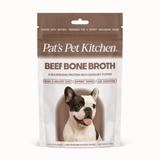
Unhydrolysed collagen is collagen that's been heated and partially broken down. It's what makes bone broth gel up when it cools. Gelatin molecules are still quite large (2,000-20,000 daltons, a unit of molecular weight). Your dog's digestive system can break them down further, but they require active digestion. They're useful for dogs that need gut health support because the larger molecules have more intact collagen structure. Gelatin is what gives Beef Bone Broth its collagen content. It's excellent for the gut but slower to absorb.
Hydrolysed Collagen (Collagen Peptides)
Hydrolysed collagen has been broken down into much smaller peptides (1,000-3,000 daltons). This is done through enzymatic hydrolysis or other processing methods. The smaller molecules are absorbed more quickly and completely. Research shows hydrolysed collagen peptides actually accumulate in cartilage tissue after oral supplementation. The body recognises them as collagen building blocks and incorporates them directly.
Hydrolysed collagen is tasteless and odourless, making it easier to add to food. It dissolves completely, which is also why a powder stirred into water makes its own liquid collagen for dogs at a higher strength than most ready-made liquids. Unhydrolysed gelatin can gel or clump.
The practical difference: If you want rapid absorption and direct collagen support for joints and skin, hydrolysed collagen peptides (like Pure Collagen) work faster. If you want to support gut health and your dog enjoys the taste and texture of bone broth, unhydrolysed collagen in Beef Bone Broth is ideal. Both have their place. Most dogs benefit from hydrolysed peptides for general supplementation and bone broth as a treat or additional support.
Collagen for Joints: What Actually Works
Your dog's joints have three main components: cartilage (made of Type II collagen), supporting ligaments and connective tissue (Type I and III), and joint fluid (which depends on hyaluronic acid). Supporting joints means addressing all three.
Type II collagen alone is incomplete joint support. You need Type I for the ligaments and capsule around the joint. You need Type III for resilience and flexibility. And you need co-factors like glucosamine, hyaluronic acid, and manganese that work alongside collagen to maintain full joint function.
This is why Mobility & Joints combines hydrolysed collagen peptides with glucosamine, hyaluronic acid, manganese, vitamin C, and vitamin E, with 5,000mg of collagen in the 2 teaspoon (6g) serving for an 11 to 20kg dog. It's not just Type II. It addresses multiple pathways. The collagen provides structure. Glucosamine maintains cartilage synthesis. Hyaluronic acid keeps joint fluid viscous. Vitamins C and E manage inflammation. Together they're more effective than collagen alone.
For prevention or early-stage joint care in healthy dogs, Pure Collagen gives you Types I and III bovine collagen and nothing else, supporting structure across multiple tissues at once. The broader type profile is what makes it useful preventatively. Follow the serving guide on the pouch based on your dog's weight.
What supplements cannot do: they provide support for joints. They don't replace veterinary diagnosis or treatment. They don't reverse structural damage. They don't cure hip dysplasia or arthritis. Collagen supports ongoing joint health alongside your vet's recommendations. That's the honest boundary.
Why PPK Uses Types I and III Bovine Collagen
Pure Collagen is hydrolysed bovine collagen peptides, specifically Types I and III, served according to your dog's weight. This choice comes from what your dog's body actually needs.
Bovine source: Cattle collagen is well-researched, cost-effective, sustainably sourced, and naturally high in the types that benefit multiple tissues. Fish collagen would mean higher cost for minimal additional benefit. Chicken collagen would give you more Type II but at the expense of Type I strength.
Types I and III together: This combination supports skin elasticity, joint connective tissue, ligament strength, gut lining integrity, and connective tissue resilience. Your dog's body uses these types for more tissues than Type II alone. If your dog has joint issues, Mobility & Joints includes additional Type II support through its comprehensive formula. If your dog is healthy, Pure Collagen gives you broader preventative coverage.
Hydrolysed format: Hydrolysed peptides are absorbed quickly and accumulated in target tissues. They're tasteless, odourless, and completely soluble. Your dog's digestive system doesn't need to work hard to break them down further.
Served by bodyweight: There's no single number that suits every dog, so Pure Collagen is dosed to size. The pouch guide runs 1 teaspoon (3g) for a dog of 1 to 10kg, 2 teaspoons (6g) for 11 to 20kg, 3 teaspoons (9g) for 21 to 30kg, and 4 teaspoons (12g) from 31kg upwards. Because Pure Collagen is 100% hydrolysed collagen peptides, that converts directly to 3,000mg, 6,000mg, 9,000mg and 12,000mg of collagen respectively. You can see exactly what your own dog is getting, which is what any brand should be telling you.
How to Choose the Right Collagen Product for Your Dog
Existing joint problems or diagnosed conditions: Start with Mobility & Joints (£34.99). Collagen is combined with glucosamine, hyaluronic acid, and co-factors that directly support joints, with 5,000mg of collagen in the 2 teaspoon (6g) serving for an 11 to 20kg dog. You get multiple mechanisms working together. This is your best choice if your dog has stiffness, diagnosed dysplasia, or arthritis.
Healthy dog, prevention focus: Pure Collagen (£31.99) is the choice. Types I and III bovine collagen support overall tissue health, skin, connective tissue, and joint prevention. For a young large breed dog, this gives you comprehensive preventative coverage. Follow the serving guide on the pouch based on your dog's weight.
Fussy eater or gut health focus: Beef Bone Broth (£24.99) contains 40% natural collagen from gelatin, plus amino acids and minerals. The taste and texture appeal to dogs that resist powders. The unhydrolysed gelatin format provides excellent gut lining support. This works well for dogs with digestive sensitivity or poor appetite.
Multiple concerns: One product covers the main need for almost every dog. Pure Collagen supports tissue broadly, and Beef Bone Broth is there when appetite or gut comfort is the issue. If you think your dog needs more than one, that's a conversation to have with your vet rather than something to work out by adding products together yourself.
Follow the serving guide on your chosen product's pouch based on your dog's weight. Most dogs show noticeable improvement around week 4-6 of consistent supplementation, though timelines vary.
What Results to Expect
Collagen works gradually. It's not like pain medication that works in hours. Your dog's body needs time to use the amino acids and peptides you're providing to build new collagen structure.
Week 2-3: Possible improvements in coat shine and skin texture. Joint comfort might start improving, but it's usually subtle at this stage.
Week 4-6: Many dogs show noticeable improvement in stiffness, especially after rest. Getting up is easier. Movement looks freer. This is when most owners notice the real difference.
Week 6-12: Continued improvement. Muscle tone around joints may improve as your dog moves more comfortably. Coat quality continues to improve. Cumulative benefits build over time.
Consistency matters more than speed. Dogs show better results when supplementation is continuous rather than sporadic. Starting and stopping means your dog's body doesn't build the steady supply of collagen it needs.
What collagen cannot do: It won't cure arthritis. It won't reverse structural damage from hip dysplasia. It won't eliminate all pain. It provides support for joint comfort and tissue health. That's different from treatment or cure. If your dog has severe pain or mobility loss, work with your vet on the full treatment plan. Collagen is part of that plan, not the whole plan.
Frequently Asked Questions
Is Type II collagen better than Type I for joints? Type II is important for cartilage, but joints need Type I too. Ligaments, joint capsule, and supporting connective tissue are all Type I. Better joint support comes from a combination approach that includes multiple collagen types plus co-factors like glucosamine and hyaluronic acid, rather than Type II alone.
Is liquid collagen a different type of collagen? No. Liquid collagen is a format, not a type. It is usually the same Type I and III peptides, just suspended in water, often with added sugar or preservatives. What matters is whether it is hydrolysed and how much collagen it actually contains. A hydrolysed powder stirred into water gives you the same thing at higher strength. See our guide to liquid collagen for dogs.
Is marine collagen more absorbable than bovine? Both hydrolysed marine and bovine collagen are absorbed similarly when broken into small peptides. The bioavailability difference is minimal. Bovine offers better research backing and is more cost-effective. Choose based on your dog's specific need, not marketing claims about absorption.
Can I give both Pure Collagen and Mobility & Joints together? Most dogs don't need both. Pure Collagen (Types I and III) is for prevention and general tissue support. Mobility & Joints (collagen plus glucosamine and joint co-factors) is for active joint issues. Choose the one that matches your dog's situation. Only stack if your vet recommends it for a specific reason.
How much do I give my dog? By weight, not by a fixed number. Both Pure Collagen and Mobility & Joints follow the same guide: 1 teaspoon (3g) for a dog of 1 to 10kg, 2 teaspoons (6g) for 11 to 20kg, 3 teaspoons (9g) for 21 to 30kg, and 4 teaspoons (12g) from 31kg upwards. Weigh your dog and use the band they fall into.
How long does a dog stay on collagen? Collagen is a maintenance supplement, not a short-term fix. Dogs benefit from consistent ongoing use. You can continue indefinitely. Some owners cycle it seasonally (heavier use in winter when stiffness is worse). Most benefit from year-round consistency for best results.
Is there a difference between human collagen supplements and dog supplements? Human joint supplements often focus heavily on Type II because humans are concerned with knee and back pain. Dogs benefit from a different profile because their joint structures and movement patterns are different. Dog-specific formulas like Mobility & Joints are formulated for canine joint needs, not just human needs adapted for dogs.
Will collagen supplements help my dog's skin allergies? Collagen supports skin barrier function and elasticity, which can help prevent irritation. But it doesn't treat underlying allergies. If your dog has food allergies or environmental sensitivities, those need to be addressed separately. Collagen works alongside allergy management, not instead of it. Consult your vet about the underlying cause.
What's the difference between collagen and bone broth? Bone broth is simmered animal bones, which creates gelatinous liquid containing unhydrolysed collagen (gelatin) plus minerals and amino acids. It's whole-food collagen. Pure Collagen is processed hydrolysed collagen peptides, more concentrated and faster-absorbing. Bone broth is a supplement and food. Pure Collagen is a concentrated supplement. Both have benefits. Bone broth is better for gut health and taste appeal. Collagen peptides are better for absorption and joint targeting.
Which Product for Your Dog?
- Dog with joint issues, stiffness, or diagnosed arthritis: Mobility & Joints (£34.99) combines collagen with glucosamine, hyaluronic acid, and joint-supporting vitamins for comprehensive joint care, with 5,000mg of collagen in the 2 teaspoon (6g) serving for an 11 to 20kg dog.
- Healthy dog, prevention or general tissue support: Pure Collagen (£31.99) provides hydrolysed Types I and III bovine collagen for broad tissue support, skin health, and joint prevention, served by your dog's weight.
- Fussy eater, gut sensitivity, or appetite support: Beef Bone Broth (£24.99) contains 40% natural collagen from gelatin, is palatable to most dogs, and supports digestive health.
Follow the serving guide on your chosen product's pouch based on your dog's weight. Consistent use over 4-6 weeks shows the best results.
Sources
- Schunck, M., et al. (2015). "Hydrolyzed Collagen Accelerates Healing of Acute Wounds in Rats." Wound Repair and Regeneration.
- Sugihara, F., et al. (2012). "Effects of Oral Collagen Tripeptide on Skin Properties: A Randomised Controlled Study." Journal of Cosmetic Dermatology.
- Lugo, J. P., et al. (2016). "Undenatured Type II Collagen (UC-II) for Joint Support: a Randomized, Double-blind, Placebo-controlled Study." Nutrition Journal.
- Zdzieblik, D., et al. (2015). "Collagen Peptide Supplementation in Combination with Resistance Training Improves Body Composition and Increases Muscle Strength in Elderly Sarcopenic Men: A Randomised Controlled Trial." British Journal of Nutrition.
- British Small Animal Veterinary Association. Canine nutrition and supplementation guidelines.
- PDSA Pet Health Information. Joint health in dogs.
Disclaimer: This article is for educational purposes and doesn't replace veterinary advice. If your dog shows signs of joint problems, limping, or mobility issues, consult your vet for proper diagnosis and treatment. Supplements support joint health alongside veterinary care but don't treat or cure underlying conditions. Always talk to your vet before starting any new supplement, especially if your dog is on medication or has existing health conditions.
Last Updated: August 2026