Quick Answer: Bone broth is an excellent supplement for recovering dogs because it's easy to digest, packed with natural collagen and amino acids that support gut healing, and helps stimulate appetite when a dog has lost interest in food. The amino acids glycine, proline and glutamine work together to repair the intestinal lining and reduce inflammation. For most recovering dogs, bone broth can be introduced as a warm liquid alongside their regular diet to provide hydration, nutrition and comfort during the healing process.
Your dog used to finish every meal without hesitation. Now they push their bowl away, taking only a few bites before wandering off. Their energy is low. You can see their ribs more clearly than before. They're recovering, but something's shifted: their appetite has vanished.
Whether your dog is bouncing back from surgery, fighting off an infection, or dealing with a gastrointestinal upset, appetite loss is one of the most frustrating parts of recovery. Your dog needs nutrition now more than ever. Yet they won't eat. It's the cruel timing of illness.
This is where bone broth steps in. It's not a replacement for veterinary care or their regular diet, but it's a practical tool that works. Warm, nourishing, and easy to digest, bone broth can help your recovering dog get the calories and healing nutrients they need when nothing else appeals to them.
Why Recovering Dogs Lose Their Appetite
When your dog is ill or recovering from surgery, their body redirects energy away from digestion and appetite. Inflammation in the gut makes eating uncomfortable. Pain, fever, and stress suppress the hunger signal. Medications often dull appetite as a side effect. The result is a vicious cycle: your dog won't eat, so they don't get the nutrients they need to heal, so recovery stalls.
But here's what happens inside their body. Even though they're not hungry, their intestines are working harder than usual. If they've had gastric upset, the lining of the gut has taken damage. If they're recovering from surgery, their muscles and connective tissues are rebuilding. Their immune system is running flat out. All of this demands protein, amino acids, and micronutrients.
What Makes Bone Broth Different During Recovery
Bone broth is nutritionally dense but doesn't feel heavy in the stomach. A warm bowl of broth is easier to swallow and digest than solid food. For a dog whose appetite has collapsed, this matters. They can consume nutrition without the effort and discomfort of chewing and processing chunks of meat or kibble.
More importantly, bone broth is almost entirely collagen and amino acids. When you simmer bone for hours, the connective tissue breaks down into gelatin and releases three amino acids that your dog's body cannot make itself: glycine, proline and glutamine. These are the building blocks your dog needs right now.
Glycine supports the integrity of the gut lining, which is often compromised during illness. Proline is essential for collagen formation, which means tissue repair throughout the body. Glutamine is the primary fuel source for the cells that line the intestines, helping them heal and seal gaps that allow harmful bacteria to enter the bloodstream.
Add to this the natural minerals in bone broth (calcium, magnesium, phosphorus) and the hydration it provides, and you've got a food that addresses several problems at once: appetite stimulation, easy digestion, targeted nutrient delivery and fluid intake.
How to Introduce Bone Broth to Your Recovering Dog
Start with small amounts. Pour a small bowl of warm broth and place it in front of your dog. Do not serve it hot from the container: let it cool to warm (roughly the temperature of their normal food or slightly warmer). Many dogs find the smell irresistible, and you may see appetite return quickly.
If your dog drinks or laps it eagerly, you can gradually increase the amount over the course of a few days. A typical serving for a recovering dog is 50-150ml per day, depending on their size, spread across two to three small servings rather than one large bowl.
Think of bone broth as a supplement to their regular diet, not a replacement. If your vet has put your dog on a specific recovery diet (bland chicken and rice, prescription gastric food, etc.), bone broth complements these rather than competing with them. You can also use it as a topper: a small amount of warm broth poured over their normal food can make it more appealing.
Temperature matters. Warm broth is more palatable and easier to digest than cold. It also more closely mimics the temperature of freshly killed prey, which triggers natural eating behaviour in dogs. If your dog won't touch cold broth from the fridge, warm it gently before serving.
When to Choose Bone Broth for Recovery
Bone broth is ideal if your dog is dealing with appetite loss, sensitive digestion, or post-operative recovery. It's particularly useful for dogs recovering from abdominal surgery, where solid food can irritate healing tissues. It's also excellent for dogs with gastroenteritis or other digestive upset, because the amino acids in the broth actively support repair of the gut lining.
If your dog is recovering from surgery, always check with your vet before introducing any food or supplement, including bone broth. Most vets will approve it as part of the recovery diet, and many recommend it specifically for gut healing. For dogs coming off antibiotics, bone broth can help restore the balance of beneficial bacteria in the gut.
However, bone broth is not enough on its own. If your dog is refusing all food, if they're vomiting, or if they're not improving after a few days, return to your vet. Appetite loss that persists beyond the immediate post-operative period can signal complications.
Collagen Content and Its Role in Tissue Repair
Beef Bone Broth contains 40 percent collagen by weight. During recovery from illness or surgery, your dog's body is working to rebuild muscle, repair wounds, restore gut integrity and strengthen joints and connective tissues. Collagen is the structural protein that holds all of these tissues together.
The collagen in bone broth is not intact protein that your dog's body uses directly. Instead, the long slow simmer breaks collagen down into amino acids and gelatin, which your dog's digestive system can absorb. These building blocks are then used to synthesise new collagen in whatever tissues need repair: the intestinal wall, wound sites, muscle tissue, and bone around surgical sites.
This is why bone broth is so effective during the early stages of recovery. While your dog may not have the appetite for the solid food their body needs, they can absorb the fundamental building blocks from broth in liquid form.
Hydration and Its Role in Recovery
Dehydration often accompanies illness. Your dog may have vomited or had diarrhoea. They may not have been drinking enough. Bone broth is mostly liquid, and because of its savoury taste, it often encourages drinking more than plain water alone.
Proper hydration is essential for recovery. It helps flush out the products of inflammation, supports organ function, maintains blood volume and temperature regulation, and assists in nutrient transport throughout the body. A dog that won't drink water might lap up warm bone broth, which serves both nutritional and hydration needs at once.
What to Expect and When Results Appear
Week 1: You may see appetite improvement within a few days of introducing bone broth. Many dogs respond immediately to the smell and taste, and this can be a breakthrough moment. If your dog drinks the broth readily, you've found a vector for getting nutrition in during a vulnerable window.
Week 2-3: As your dog's appetite stabilises and they begin eating solid food again, you can continue offering bone broth as a supplement. At this stage, the healing benefits become apparent: firmer stools (indicating better gut integrity), more energy and alertness, and faster return to normal activity levels.
Week 4+: By this point, most recovering dogs should be eating normally. If they're not, further veterinary investigation is needed. If they are, bone broth can remain part of their diet as a gut-supporting supplement, or you can phase it out as their appetite and normal function return.
Important: bone broth supports recovery. It cannot fix underlying medical problems. If your dog was recovering from an infection, bone broth provides excellent nutritional support but does not treat the infection (antibiotics do). If your dog is healing from surgery, bone broth supports tissue repair but does not replace post-operative care protocols set by your vet.
Post-Recovery Maintenance with Collagen
Once your dog has recovered and is eating normally, bone broth can be phased out or continued as a maintenance supplement. If there's been significant tissue damage (from surgery, for example) or if your dog is prone to digestive sensitivity, continuing collagen support during the weeks after initial recovery can be beneficial.
Many owners transition from bone broth to Pure Collagen during post-recovery. Whilst bone broth offers collagen plus hydration, Pure Collagen is a concentrated source of hydrolysed collagen peptides (6,000mg per serving) without the liquid component. This is useful if your dog needs ongoing collagen support without extra fluid intake, or if you prefer a cleaner supplement without broth. Follow the serving guide on the pouch based on your dog's weight.
The transition typically happens around week 4-6 of recovery, once appetite has stabilised and your dog is eating solid food again. This bridges the gap between acute recovery (where bone broth's palatability matters) and long-term maintenance (where concentrated collagen is more practical).
Frequently Asked Questions
Can I give bone broth immediately after surgery?
Check with your vet before introducing anything post-operation. Most vets approve bone broth as part of recovery, especially after abdominal surgery. The timing depends on the type of surgery and your dog's individual recovery protocol. Your vet will advise.
How much bone broth should I give?
For a recovering dog, 50-150ml per day spread across two or three servings is typical, depending on size. Start with a small amount and increase gradually. If bone broth is causing digestive upset, reduce the amount or introduce it more slowly. Every dog's tolerance is different.
What if my dog won't eat the bone broth?
Try warming it further. Some dogs need it quite warm to find it appealing. If your dog simply isn't interested, don't force it. Return to your vet for alternative strategies. Not every dog responds to broth, and there are other ways to boost appetite during recovery.
Can I use store-bought bone broth made for humans?
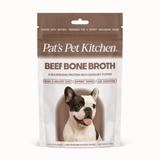
Many human bone broths contain garlic or onion, which are toxic to dogs. Check the ingredients carefully. Human broths may also be salted, which is not ideal for dogs. Purpose-made bone broth for dogs (like Beef Bone Broth from Pat's Pet Kitchen) removes these risks and is formulated with canine nutrition in mind.
How long should I give bone broth during recovery?
Typically, 2-4 weeks of bone broth is sufficient for most recovery scenarios. Once your dog is eating normally and their energy is returning, you can phase it out. If your vet recommends ongoing collagen support, you can transition to a concentrated supplement like Pure Collagen.
Is bone broth safe for all dogs?
Bone broth is generally safe, but some dogs with severe digestive issues or specific medical conditions may not tolerate it well. If your dog has pancreatitis or other fat-sensitive conditions, discuss bone broth with your vet first. Always introduce it gradually and watch for any signs of digestive upset.
Which Product for Your Recovering Dog?
Your dog is recovering from surgery or illness and has lost appetite: Beef Bone Broth. The warm, savoury liquid is often the only thing a recovering dog will consume, and the collagen and amino acids directly support gut and tissue healing.
Your dog is 2-3 weeks into recovery and appetite is returning, but you want continued collagen support for tissue repair: Pure Collagen. This concentrated source of hydrolysed collagen peptides can be mixed into food or broth for the remaining weeks of recovery without the liquid bulk of bone broth.
Your dog is fully recovered and you want to prevent future digestive issues: Either product works. Beef Bone Broth if your dog enjoys it as a weekly supplement. Pure Collagen if you prefer a concentrated, tasteless option. Follow the serving guide on your chosen product's pouch based on your dog's weight.
Sources
British Small Animal Veterinary Association (BSAVA) Nutrition Guidelines for recovering and post-operative dogs.
Moskowitz, R.W. et al. (2000). Role of collagen hydrolysate in bone and joint disease. Seminars in Arthritis and Rheumatism, 30(2), 87-99. Demonstrates collagen peptide accumulation in cartilage tissue after oral supplementation.
Ohara, H. et al. (2007). Effects of Pro-Hyp, a collagen-derived dipeptide, on rat intestinal absorption and its health benefits. Journal of Agricultural and Food Chemistry, 55(20), 8129-8136. Supports amino acid absorption from collagen-rich foods.
Canine Arthritis Management UK. Nutritional support for dogs with arthritis and post-operative recovery.
Pet Drugs Online Veterinary Guide on post-operative nutrition and appetite stimulation in dogs.
Disclaimer: This information is for educational purposes and doesn't replace veterinary advice. If your dog is recovering from surgery, illness, or has lost appetite, consult your vet for proper diagnosis and treatment. Early intervention gives the best outcomes.
Last Updated: March 2026