Quick Answer: Newfoundlands are giant breed dogs prone to hip dysplasia, elbow dysplasia, and other joint issues from their early growth stages. Joint supplements like Mobility & Joints or Pure Collagen, combined with controlled growth, weight management, and low-impact swimming, significantly reduce risk and support comfort throughout their 8-10 year lifespan. Start supplementing earlier than you would with smaller breeds, and work with your vet to monitor growth rates.
Your Newfoundland is lying on the kitchen tiles on a warm afternoon. Their back legs seem stretched further than usual. When they stand to follow you to the garden, they take a moment. Not limping exactly. Just slower. Heavier.
Giant breed dogs carry their own challenges. At 50-70kg, a Newfoundland's joints experience enormous strain from puppyhood onwards. That gentle, water-loving temperament masks a breed that is stoic about pain. By the time you notice stiffness or reluctance to move, joint changes may already be underway.
The good news: Newfoundlands respond brilliantly to early intervention. The right supplements, combined with sensible management, can make a real difference to their quality of life across their relatively short years.
Why Newfoundlands Are Particularly Prone to Joint Problems
A Newfoundland's build is both their gift and their challenge. They are swimmers and water rescue dogs, with dense muscle and heavy bone. That power comes at a cost.
Hip dysplasia and elbow dysplasia are common in the breed. So is osteochondritis dissecans (OCD), a condition affecting cartilage development in growing dogs. A Newfoundland's rapid growth rate, especially in the first 18 months, puts tremendous stress on developing joints. Growth plates are vulnerable during this window.
Unlike smaller breeds, where joint damage might not be obvious until age 6 or 7, a Newfoundland is already at risk in puppyhood. The breed's relatively short lifespan (8-10 years) means joint health is especially time-sensitive.
Their temperament works against them too. Newfoundlands are stoic. They do not complain about discomfort. A Newfoundland that is slowing down may already be managing significant joint stress.
Common Joint Conditions in Newfoundlands
Hip dysplasia: The hip joint develops abnormally, leading to arthritis over time. Newfoundlands are screened for this using the British Veterinary Association and Kennel Club Hip Dysplasia Scheme. Many Newfoundlands carry the genetic predisposition.
Elbow dysplasia: Similar to hip dysplasia but affecting the elbow joint. Equally common in the breed and equally important to monitor from puppyhood.
Osteochondritis dissecans (OCD): A condition where cartilage develops abnormally in growing dogs. It typically appears in puppies and young dogs (2-12 months old). Affected joints become painful and mobility is reduced. Early intervention with weight management and supplements can support recovery.
Cruciate ligament injuries: The anterior cruciate ligament (ACL equivalent in dogs) tears more easily in giant breeds, especially if joints are already compromised by dysplasia.
Arthritis: As a consequence of dysplasia or injury, arthritis develops. A 10-year-old Newfoundland with a history of joint stress will almost certainly have some degree of osteoarthritis.
When to Start Joint Supplements with Your Newfoundland
This is crucial: start earlier than you would with smaller breeds.
If your Newfoundland is a puppy (from 8 weeks onwards), bone broth can be introduced gently to support the gut and provide collagen in a palatable form. From 12 weeks, once growth is underway, collagen supplementation becomes valuable. This is earlier than many owners realise is necessary.
If your Newfoundland is already an adult (1 year plus) and shows no signs of joint issues, Pure Collagen supports ongoing joint health and cartilage maintenance. Prevention is always easier than trying to reverse damage.
If your Newfoundland is showing signs of stiffness, reluctance to stand after resting, or has a formal diagnosis (hip dysplasia confirmed on screening), move to Mobility & Joints immediately. Do not delay.
Talk to your vet about screening for hip and elbow dysplasia. The BVA/KC scheme can identify issues early, before symptoms appear.
How Collagen Supports Joint Health in Large Breeds
Collagen is the structural protein in cartilage, tendons, and ligaments. As a Newfoundland grows rapidly, they need significant amounts of collagen to build healthy connective tissue. Hydrolysed collagen peptides (broken down into small chains) are absorbed efficiently and accumulate in cartilage after oral supplementation.
Mobility & Joints combines collagen with glucosamine, hyaluronic acid, manganese, and vitamins C and E. For a Newfoundland with existing joint concerns, this is the primary recommendation. Glucosamine supports cartilage integrity. Hyaluronic acid maintains joint fluid (synovial fluid) that lubricates movement. The additional nutrients support the body's own repair processes.
For a Newfoundland that is healthy and aimed at prevention, Pure Collagen (6,000mg hydrolysed bovine collagen peptides per serving) provides substantial daily collagen without extra ingredients. It is tasteless and odourless, so it mixes easily into food.
Follow the serving guide on the pouch based on your dog's weight. Supplements support joint health but do not replace veterinary treatment. If your Newfoundland has a confirmed diagnosis, supplements work alongside your vet's recommendations, not instead of them.
Growth Rate and Weight Management
Control growth, and you reduce joint stress. This is one of the most powerful tools you have as a Newfoundland owner.
Do not overfeed growing Newfoundlands. Fast growth compounds joint problems. Puppies should be fed high-quality puppy food (properly formulated for large breed growth) in controlled portions, not ad-lib. Work with your vet on feeding targets. Aim for steady growth, not rapid bulk gain.
An adult Newfoundland should be lean, not overweight. Extra weight multiplies strain on joints. It also increases systemic inflammation, which worsens arthritis. A Newfoundland at healthy weight has a measurably better prognosis for joint health than one that is overweight.
Consider using scales at your vet clinic to monitor weight gain in puppies and young adults. Small changes matter.
Swimming and Low-Impact Exercise
Newfoundlands live for water. They were bred to work in it. Swimming is the ideal exercise for a dog with joint concerns: it provides cardiovascular benefit, muscle tone, and confidence without impact strain.
Swimming supports muscle development around joints, which stabilises them. A Newfoundland with good muscle tone recovers from joint stress better than a weak one. Water work also boosts confidence and keeps them engaged.
Off-lead running on hard ground, especially in puppies and young adults, compounds joint stress. Swimming, wading, and controlled leash walks on soft ground (grass, dirt paths) are gentler.
Even 20-30 minutes in water a few times per week makes a meaningful difference to joint resilience.
What Results to Expect
Collagen supplementation is not instant. Changes happen gradually as the body builds new cartilage tissue.
Week 2-3: You may notice coat improvement (shinier, fuller). Joint changes are starting but not yet visible.
Week 4-6: Reduced stiffness after rest. Your Newfoundland stands more easily. They may take the stairs more confidently. Some dogs show improved willingness to move and play.
Week 8-12: Noticeable improvement in mobility. Stiffness on cold mornings reduces. Your dog may have more energy for water work and gentle play.
Every dog is different. Some show change earlier. Others take longer. Consistency matters more than speed.
What collagen cannot do: it cannot cure hip dysplasia, reverse genetic predisposition, or eliminate arthritis that is already advanced. It supports joint health and comfort. It reduces progression of damage. That is significant, but it is not magic.
Frequently Asked Questions
Is my puppy too young for joint supplements? No. From 8 weeks, bone broth can support development. From 12 weeks, collagen supplementation is appropriate and beneficial for giant breed puppies. Early supplementation reduces risk of problems later.
My Newfoundland seems fine. Do I still need to supplement? Giant breed dogs benefit from early intervention even without symptoms. Dysplasia is often present before it causes noticeable stiffness. If your Newfoundland has been screened and is clear, collagen supports ongoing health. If they have not been screened, a vet check is the first step.
Can I give too much collagen? Follow the serving guide on the pouch. Excessive protein from supplements can theoretically contribute to faster growth in puppies, which is not ideal. Stick to recommended amounts based on your dog's weight.
How long do I give supplements? For a puppy at risk, ongoing supplementation through the growth phase (to 18 months) is ideal. For an adult with diagnosed issues, lifelong supplementation is typical. For prevention in a healthy adult, ongoing supplementation supports joint maintenance. Discuss duration with your vet based on your individual dog.
Should I stop my Newfoundland from swimming if they have joint issues? Absolutely not. Swimming is one of the best things for a dog with joint concerns. Water reduces impact while maintaining fitness. Encourage swimming as much as possible.
Does my dog's weight matter if I supplement? Yes. Weight management and supplementation work together. A heavy Newfoundland on collagen will not have the same outcome as a lean Newfoundland on the same supplement. Weight control is essential.
My vet has recommended surgery. Do supplements help after? Discuss timing with your vet. Post-surgery, collagen supplementation supports tissue healing and rehabilitation (assuming your vet approves timing). It works best when combined with controlled exercise during recovery.
Which Product for Your Newfoundland?
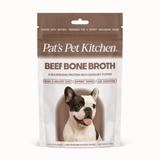
Puppy at risk (8 weeks-12 months): Beef Bone Broth for palatability and appetite support, then transition to Pure Collagen from 12 weeks.
Healthy adult for prevention: Pure Collagen
Adult or senior with diagnosed joint issues or symptoms: Mobility & Joints
Large dog with multiple concerns (joints and appetite): Beef Bone Broth as a base, paired with Mobility & Joints for targeted joint support.
Follow serving guide on your chosen product's pouch based on your dog's weight.
Sources
British Veterinary Association and The Kennel Club Hip and Elbow Dysplasia Scheme. Information on screening and breed predisposition.
Orthopedic Foundation for Animals (OFA) database of hip and elbow scores in dog breeds.
BSAVA (British Small Animal Veterinary Association) guidance on joint disease in large breed dogs.
Canine Arthritis Management UK: joint health, exercise, and management strategies.
Tomlinson, J.E., et al. (2007). Long-term follow-up of dogs treated with hyaluronic acid and corticosteroid for hip dysplasia. Journal of the American Animal Hospital Association.
Clark, K.C., et al. (2017). Cartilage oligomeric matrix protein (COMP) in dogs with osteoarthritis. American Journal of Veterinary Research.
Disclaimer: This information is for educational purposes and does not replace veterinary advice. If your Newfoundland shows signs of stiffness, reluctance to move, limping, or has a confirmed diagnosis of hip dysplasia, elbow dysplasia, or other joint conditions, consult your vet for proper diagnosis and treatment. Early intervention gives the best outcomes.
Last Updated: March 2026