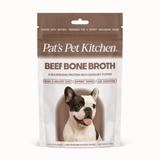
Quick Answer: Collagen is the main structural protein in cartilage. When arthritis develops, that cartilage breaks down. Hydrolysed collagen peptides provide amino acids that support ongoing cartilage health and comfort. Many owners notice reduced stiffness around week 4-6. Collagen works best alongside weight management, controlled exercise, and vet treatment. It doesn't reverse existing damage but it supports the cartilage you still have.
Your dog used to race you up the stairs. Now they pause at the bottom, watching your feet disappear. They settle into their bed carefully, shifting position twice before finding comfort. On cold mornings, there is stiffness in their rear legs. After they move around for ten minutes, they loosen up. But the struggle is there.
You have probably heard the word arthritis. You might have already been to the vet. But here is what you are actually dealing with, why it matters, and what collagen can genuinely do to help your dog move better and hurt less.
What Is Happening Inside Your Dog's Arthritic Joints
Arthritis is not one thing. It is a progressive condition where the cartilage that lines the joints degrades over time. Think of cartilage as a protective, frictionless coating on the bones inside the joint. It is smooth. It lets bones glide without grinding.
When arthritis develops, that coating wears away. Bone starts rubbing on bone. The joint capsule becomes inflamed. The synovial fluid that normally lubricates the joint loses its effectiveness. Your dog feels stiffness, discomfort, and restricted movement.
This is not something that develops overnight. It can take years. But once the damage begins, the joint never fully repairs itself. This is why early intervention matters, and why even if your dog already has arthritis, supporting the cartilage that remains is crucial.
Why Collagen Matters for Arthritic Joints
Collagen is not a trendy supplement. It is the most abundant protein in your dog's body. It is the structural foundation of cartilage, bone, skin, and tendons. In healthy joints, collagen gives cartilage its shape and strength.
Arthritis happens because collagen breaks down faster than it is replaced. The joint loses its ability to maintain itself. If you can provide your dog with extra collagen building blocks, you give that remaining cartilage the resources it needs to stay as healthy and functional as possible.
This is the key distinction. Collagen supplements do not rebuild cartilage that is already lost. They support the integrity of the cartilage that remains. That makes a real difference in comfort and mobility.
How Hydrolysed Collagen Peptides Work
Not all collagen is created equal. Raw collagen from bone broth or joint connective tissue is mostly unusable by your dog's body. The molecules are too large to absorb effectively.
Hydrolysed collagen peptides are different. They are collagen that has been broken down into tiny amino acid chains. This is what makes them absorbable. When your dog consumes hydrolysed collagen peptides, the body breaks them down further and uses those amino acids to build new collagen.
This is why the hydrolysis step matters so much. Whole collagen is largely wasted. Hydrolysed peptides are small enough to be absorbed, which means the amino acids actually become available for your dog's body to use.
The collagen used in PPK supplements is bovine collagen, primarily Types I and III. Type I is the most abundant collagen in the body and forms the bulk of bone, tendon, and ligament. Type III collagen supports skin and connective tissue. Both are relevant for joint health.
Types I and III Collagen and Joint Tissue
You will see collagen referred to as Type I, Type II, Type III, and so on. Cartilage collagen is predominantly Type II. Types I and III are the collagens that dominate bone, skin, tendon, and the connective tissue surrounding a joint, all of which carry load and matter for how a joint holds up.
Type III collagen is less abundant in cartilage but supports the overall structure and elasticity of connective tissue. Both Types I and III have roles in bone and tendon health, which matters for the entire joint structure.
The Pure Collagen product contains 6,000mg of hydrolysed bovine collagen peptides (Types I and III) per serving. This is a straightforward, clean collagen supplement. No other ingredients.
If your dog has an active joint condition and would benefit from additional joint support, the Mobility and Joints formula combines 5,000mg collagen peptides with glucosamine, hyaluronic acid, manganese, and vitamins C and E. Glucosamine supports cartilage formation. Hyaluronic acid is a supporting ingredient that does its work inside a complete formula alongside collagen and glucosamine, rather than as a standalone fix. Vitamin C is required for collagen synthesis. This is a more comprehensive approach for dogs with diagnosed joint issues.
Remember, supplements support joint health but do not replace veterinary treatment. If your dog has pain that is not controlled, your vet may recommend other interventions alongside supplementation.
When to Start Collagen Supplementation
If your dog is already showing signs of arthritis, start now. Earlier is always better, but it is never too late to support remaining cartilage. The sooner you address joint health, the sooner your dog benefits from that support.
There is also a case for starting collagen in middle-aged dogs before arthritis becomes apparent, especially if they are predisposed (large breeds, high-activity dogs, dogs with joint injuries in their history). This is prevention work. It is easier to maintain cartilage health than to manage a joint that is already breaking down.
Puppies can have collagen-rich foods like Beef Bone Broth from 6 months of age. This provides collagen and supports gut health during development. But specific collagen peptide supplementation is most relevant for dogs showing signs of joint issues or for preventative care in at-risk breeds.
Managing Your Arthritic Dog Beyond Supplements
Collagen is one piece of the picture. Joint health also depends on weight management, exercise type, and ongoing veterinary care.
Weight management. Extra weight increases stress on joints. If your dog is overweight, working with your vet on a gradual, sustainable weight loss plan will reduce joint strain more than any supplement can.
Exercise type matters. Arthritic dogs need movement, not intense activity. Low-impact exercise like swimming or controlled walking is ideal. High-impact activities like jumping or running on hard surfaces can aggravate joint issues. Avoid forcing activity, but encourage gentle movement throughout the day.
Environmental modifications. Orthopedic beds, ramps or steps to reduce jumping, keeping food and water bowls at shoulder height, and rugs on slippery floors all reduce joint strain. Small changes make a tangible difference in daily comfort.
Temperature and rest. Many arthritic dogs struggle more in cold, damp weather. Keeping your dog warm and providing a comfortable resting area is as important as any supplement.
Ongoing vet care. Regular check-ups allow your vet to monitor progression. They may recommend pain management, anti-inflammatory medication, or other treatments. Supplements work alongside vet-directed care, not instead of it.
What Results to Expect and What Collagen Cannot Do
It is important to be honest about what collagen can and cannot do. It will not reverse cartilage damage that has already occurred. It will not make arthritis disappear. But it does something valuable: it supports the cartilage you still have.
What you might see: Around week 4-6, many owners notice reduced stiffness, especially after rest periods. Your dog might be more comfortable on stairs or getting into the car. Movement may be smoother, less guarded. These improvements continue building through week 8-12. Joint comfort tends to plateau once the body has established a new baseline of support.
What you will not see: A dramatic reversal of symptoms. Your senior dog will not suddenly run like a puppy. Bone-on-bone damage does not repair. If your dog had severe pain before supplementation, collagen alone may not be enough. That is when your vet's treatment plan becomes essential.
Individual variation. Not all dogs respond at the same rate. A dog with early-stage arthritis may respond faster and more noticeably than one with severe, long-standing joint damage. Genetics, age, overall health, and weight all influence the timeline.
The realistic takeaway: collagen supplements support joint health and comfort over weeks, not days. When combined with weight management, appropriate exercise, and veterinary care, they can make a real difference in how your dog moves and feels. That is the honest promise.
Frequently Asked Questions About Collagen and Arthritis
My vet has not mentioned collagen. Should I still consider it?
Yes. Collagen supplements are not a replacement for vet treatment, but they are a supportive tool that sits alongside other care. Mention it to your vet at your next check-up so they can factor it into your dog's overall plan.
Can I give collagen if my dog is already on pain medication or other joint supplements?
Generally yes, but check with your vet first. If your dog is on other joint supplements like glucosamine or chondroitin, you want to avoid doubling up on the same ingredients. The Pure Collagen product is just collagen, so it stacks well with other treatments. The Mobility and Joints formula already includes glucosamine and other compounds, so if your dog is on those separately, the combined dose matters. Your vet can help you make the right choice.
How long does a container last?
That depends on your dog's weight. Follow the serving guide on the pouch based on your dog's weight. A typical container lasts 1-2 months depending on serving size and how frequently you use it.
Are there any side effects?
Collagen peptides are extremely well-tolerated. They are simply broken-down protein. Some dogs with very sensitive digestive systems might experience mild digestive changes when starting any new supplement, but this is uncommon. Start at the recommended dose and monitor. If you notice any digestive upset, discontinue and discuss with your vet.
My dog is a picky eater. Will they eat collagen?
Pure collagen peptides are tasteless and odourless, so they do not add flavour to food. If your dog is very fussy, the Beef Bone Broth is much more palatable and also collagen-rich. You can mix it with meals or offer it as a standalone treat. It tends to be more appealing to reluctant eaters.
Is there an age where collagen is not worth trying?
No. Even a very senior dog with established arthritis can benefit from collagen supplementation. It is never too late to support joint health. A 12-year-old dog with significant joint damage still has cartilage worth supporting, and giving their body those building blocks is a worthwhile thing to do. Do not assume age alone means supplements will not help.
Which Product for Your Dog?
Active arthritis diagnosis (stiffness, discomfort, reduced mobility): Mobility and Joints. This formula combines collagen with glucosamine, hyaluronic acid, and supportive vitamins. It is designed for dogs with existing joint conditions who need comprehensive support.
Clean collagen only (dog is already on vet joint medication or has other health sensitivities): Pure Collagen. 6,000mg of hydrolysed collagen peptides with no other ingredients. Ideal if you want collagen without adding other compounds.
Picky eaters or dogs with appetite concerns: Beef Bone Broth. 40% collagen content with excellent palatability. Mix with meals, offer as a treat, or use to entice reluctant eaters. Supports gut health as a bonus.
For any product you choose, follow the serving guide on the pouch based on your dog's weight. Most dogs thrive on one product. Only stack multiple products if your vet recommends it or if your dog has additional nutritional needs beyond joint health.
Sources
British Veterinary Association. Hip and Elbow Dysplasia Screening Scheme. Accessed 2026.
PDSA Pet Health Information. Joint Health in Dogs. Accessed 2026.
Canine Arthritis Management. Supporting Dogs with Arthritis: A Practical Guide. Accessed 2026.
Disclaimer: This information is for educational purposes and does not replace veterinary advice. If your dog is limping, showing reluctance to exercise, or displaying signs of joint discomfort, consult your vet for proper diagnosis and treatment. Early intervention gives the best outcomes.
Last Updated: July 2026