Quick Answer: Cruciate ligament injury is one of the most common orthopaedic injuries in dogs, affecting the cranial cruciate ligament (CCL), which is equivalent to the human ACL. It can develop suddenly through rupture or gradually through degeneration. Signs include sudden hind leg lameness, reluctance to bend the knee, and difficulty rising from rest. Treatment ranges from conservative management to surgical intervention like TPLO or TTA surgery. Recovery typically involves controlled exercise, weight management, and joint-supporting supplements.
Your dog was fine this morning. You took them for their usual walk around the park, nothing strenuous, and now they're limping. Really limping. One back leg barely touches the ground, and your dog yelps when they try to jump onto the sofa.
You think back over the past few days. Was there an injury you missed? A fall? Sometimes you can't pinpoint the exact moment something went wrong. Other times, you know your dog just twisted awkwardly during playtime.
Either way, the vet uses words like "cruciate ligament" and "instability," and you realise this is more serious than you thought. But you're not alone. Cruciate ligament injury is one of the most common orthopaedic problems vets see, affecting dogs of all sizes and ages.
What is the Cruciate Ligament?
Your dog's knee has two cruciate ligaments: the cranial cruciate ligament (CCL) and the caudal cruciate ligament. The CCL is the main one you'll hear about because it's the one that usually fails. Think of it as the dog equivalent of the anterior cruciate ligament (ACL) in humans.
This ligament stabilises the knee joint, preventing the tibia (shin bone) from sliding forward under the femur (thigh bone). When it tears or degenerates, the knee becomes unstable, and your dog struggles to bear weight on the affected leg.
Cruciate ligament problems can develop in two ways. Sometimes a dog tears the ligament suddenly, often during a twist or during play. Other times, the ligament degenerates gradually over months, especially as your dog gets older or if they carry extra weight.
Signs Your Dog Has a Cruciate Ligament Injury
The most obvious sign is sudden hind leg lameness. Your dog puts very little weight on the affected leg. In some cases, your dog might refuse to use it at all, hopping on three legs.
Other telltale signs include:
Sitting with the affected leg stretched out to the side instead of tucked underneath. Your dog can't quite position the knee comfortably. Difficulty rising from rest. You notice your dog struggles to stand up after lying down, especially on hard floors. They might also have difficulty climbing stairs or jumping into the car.
Some dogs develop a crouched posture at the back end, shifting weight towards their front legs to reduce stress on the injured knee. Your dog might also lick or chew at the knee area more than usual.
In early-stage degeneration, the signs are subtler. Your dog might just seem a bit stiff after rest, or slower to warm up during walks. They might hesitate on the stairs or decline to jump onto furniture they once managed easily.
Which Dogs Are at Risk?
Cruciate ligament injuries affect dogs across all breeds and sizes, but some are more commonly affected. Large and giant breeds, particularly Labradors, Rottweilers, and Bulldogs, are overrepresented. Their size puts greater stress on the knee joint, and some breeds have genetic factors that increase susceptibility to ligament degeneration.
Older dogs are at higher risk. As dogs age, the ligament degenerates naturally, making rupture more likely. Overweight dogs face significantly increased risk because excess weight stresses the knee joint constantly.
Dogs with other joint problems, such as meniscal damage or cruciate ligament disease in the opposite leg, are prone to developing bilateral injury. Anterior cruciate ligament disease in one leg actually increases injury risk in the other leg over time.
Even small breed dogs and young dogs can suffer cruciate ligament injuries, usually from trauma during play or an accident rather than degeneration.
Diagnosing Cruciate Ligament Injury
Your vet will start with a physical examination, feeling the knee joint and checking for instability. They'll perform specific tests, such as the cranial drawer test, where they gently push the tibia forward to see if it moves excessively in relation to the femur.
X-rays help rule out fractures and show any arthritic changes developing in the knee. They may also indicate the severity of the injury. Your vet might recommend further imaging, such as an ultrasound or CT scan, if the diagnosis is unclear or to assess soft tissue damage.
Early diagnosis is important because a damaged cruciate ligament tends to degenerate further over time. Once the initial injury occurs, secondary arthritis develops quite rapidly in many dogs.
Treatment Options
Treatment depends on the severity of the injury, your dog's age, weight, and activity level, and your vet's recommendation. There's no one-size-fits-all approach.
Conservative Management: For mild cases or dogs not suitable for surgery, conservative treatment focuses on rest, controlled exercise, and pain management. Your vet may prescribe anti-inflammatory medications to reduce pain and swelling. Strict rest is essential in the first few weeks. This means no off-lead running, jumping, or playing. Short, controlled walks on a lead are typically necessary until the inflammation settles. Many dogs show improvement within 8-12 weeks of conservative care, though some develop chronic instability that eventually requires surgery.
Surgical Treatment: Surgery is often recommended for younger, more active dogs or when conservative management fails. The two most common surgical techniques are TPLO (tibial plateau levelling osteotomy) and TTA (tibial tuberosity advancement). Both are evidence-based approaches recommended by veterinary orthopaedists. TPLO involves cutting and rotating the tibia to change the angle of the plateau, reducing the stress on the cruciate ligament. TTA advances the tibial tuberosity, similarly reducing strain on the ligament.
Recovery from surgery typically takes 8-12 weeks, with gradual return to normal activity. Your vet will outline a specific rehabilitation plan for your dog.
Managing Recovery and Supporting Joint Health
Whether your dog undergoes surgery or conservative management, several key factors accelerate recovery and prevent further injury.
Weight Management: If your dog is overweight, losing excess weight reduces stress on the knee joint dramatically. This is one of the most impactful changes you can make. Your vet can recommend a suitable diet.
Controlled Exercise: In the early stages, your dog needs strict rest. As recovery progresses, controlled exercise gradually returns. Short, frequent walks on a lead are better than long, uncontrolled play sessions. Avoid jumping, running off-lead, or playing with other dogs until your vet gives the all-clear.
Joint-Supporting Supplements: Collagen and glucosamine-based supplements support joint health during recovery. Mobility & Joints provides collagen peptides alongside glucosamine, hyaluronic acid, and vitamins C and E, which work together to support cartilage and joint function. Supplements provide building blocks your dog's body uses to maintain joint cartilage, but they support joint health rather than replace veterinary treatment.
Comfort Measures: Orthopedic bedding helps your dog rest comfortably without putting pressure on the affected knee. Non-slip flooring, such as mats or rugs, helps your dog move confidently without slipping during the early recovery phase.
Hydrotherapy: If available, swimming or hydrotherapy pools allow controlled, low-impact exercise that builds strength without stressing the knee joint. Many dogs benefit significantly from regular hydrotherapy sessions during recovery.
What Results Can You Expect?
Recovery timelines vary significantly depending on the treatment approach and your individual dog.
With conservative management, most dogs show improvement within the first month. Pain usually reduces substantially as inflammation settles. Some dogs recover well enough to return to relatively normal activity. Others develop ongoing instability or pain, particularly during cold weather or after heavy activity.
Surgical recovery takes longer but tends to provide more stable, long-term outcomes for active dogs. Most dogs walk normally within 6-8 weeks of surgery. Return to full activity, including running and jumping, typically takes 8-12 weeks. Your vet will provide specific milestones and timelines based on your dog's surgical approach.
Whichever treatment path you choose, arthritis will likely develop in the affected knee over time. This is a normal consequence of cruciate ligament injury. The goal of treatment is to minimise pain and maximise function while slowing the progression of arthritis.
Second ligament rupture in the opposite back leg occurs in around 40-50% of dogs within the first 2 years after the initial injury. This is why weight management and controlled exercise remain important long-term, even after recovery.
Frequently Asked Questions
Can a cruciate ligament tear heal on its own? Partial tears might improve with rest and conservative management, especially in mild cases. Complete ruptures do not heal on their own. The ligament cannot repair itself. With time, scar tissue forms, but this doesn't restore the ligament's original function. The knee remains unstable unless surgically stabilised.
Is surgery necessary for cruciate ligament injury? Not always. Many dogs manage well with conservative treatment, especially older dogs, small breeds, or those with mild injuries. However, surgery offers better long-term outcomes for younger, active dogs and cases where conservative treatment has failed. Your vet can advise based on your dog's individual circumstances.
How much does cruciate ligament surgery cost? Costs vary considerably depending on your location, the surgical technique used, and your vet's fees. TPLO and TTA surgery are typically more expensive than conservative management but may prove more cost-effective long-term if they prevent ongoing pain and disability. Discuss costs and payment options with your vet.
Can I prevent cruciate ligament injury? You cannot eliminate risk entirely, but you can reduce it. Maintain your dog at a healthy weight. Avoid jumping from heights and sudden twisting movements, particularly in predisposed breeds. Provide appropriate exercise for your dog's age and fitness level. Condition your dog gradually rather than sudden intense activity. Early treatment of other joint conditions reduces secondary injury risk.
How long does recovery take? Conservative management often shows improvement within 8-12 weeks, though some dogs take longer. Surgical recovery typically takes 8-12 weeks for basic healing, with gradual return to full activity. Individual recovery times vary based on age, overall health, and adherence to exercise restrictions.
Will my dog have chronic pain after cruciate ligament injury? Some dogs develop chronic pain and instability, whilst others manage very well. Much depends on the treatment approach, how well your dog recovers, and how consistently you manage their exercise and weight. Joint supplements and pain management can help dogs with ongoing discomfort.
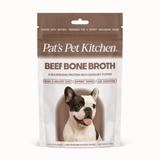
What supplements support recovery? Collagen and glucosamine provide key building blocks for cartilage health. Mobility & Joints combines collagen, glucosamine, hyaluronic acid, and supporting vitamins. Beef Bone Broth offers collagen in a palatable form many dogs enjoy. Follow the serving guide on the pouch based on your dog's weight. Supplements support joint health but work alongside, not instead of, veterinary treatment.
Which Product for Your Dog?
Three PPK products support joint health during cruciate ligament recovery. Here's how they differ.
Mobility & Joints (£34.99) is the most comprehensive option. It combines 5,000mg collagen peptides with glucosamine, hyaluronic acid, manganese, vitamin C, and vitamin E. This combination targets multiple aspects of joint health, making it ideal for dogs recovering from cruciate ligament injury who benefit from broad joint support.
Pure Collagen (£31.99) provides 6,000mg hydrolysed bovine collagen peptides (Types I and III) per serving, with nothing else added. It's perfect if your dog already takes glucosamine separately or if you prefer a single-ingredient supplement. The higher collagen content supports tissue repair and joint structure.
Beef Bone Broth (£24.99) contains around 40% collagen and comes as a palatable broth most dogs enjoy as a meal topper. It's excellent if your dog finds powders less appealing or if you prefer a whole-food approach. The broth is particularly useful for dogs with ongoing joint support needs rather than acute injury recovery.
For dogs in active recovery from cruciate ligament injury, Mobility & Joints offers the most targeted support with its comprehensive formulation. Follow the serving guide on the pouch based on your dog's weight.
Sources
British Small Animal Veterinary Association (BSAVA) Guidelines on surgical management of cruciate ligament disease.
Veterinary Information Network (VIN) resources on cranial cruciate ligament disease.
Standard veterinary orthopaedic references on TPLO and TTA surgical techniques.
Disclaimer: This information is for educational purposes and doesn't replace veterinary advice. If your dog shows signs of hind leg lameness, difficulty rising, or avoids putting weight on a back leg, consult your vet for proper diagnosis and treatment. Early intervention gives the best outcomes.
Last Updated: March 2026