Quick Answer: Bernese Mountain Dogs need joint support earlier and more aggressively than smaller breeds due to their giant size, rapid growth phase, and predisposition to hip and elbow dysplasia. A supplement combining collagen, glucosamine, and hyaluronic acid, started in puppyhood, can help support joint integrity through their critical growth years and into adulthood.
Your Bernese Mountain Dog puppy bounds down the garden path, all paws and enthusiasm, growing visibly week to week. By eighteen months, you notice something has shifted. They're hesitant on the stairs. They don't leap into the car with the same joy. Where once they'd race across fields, now they prefer to settle on the grass and watch the world go by.
This isn't laziness. This is a giant breed's skeleton struggling under the weight of rapid growth. Bernese Mountain Dogs pack a fully-grown adult frame (up to 50kg) into just two years of development. Their joints, tendons, and cartilage are under relentless stress during this window. Add in their genetic predisposition to hip dysplasia, elbow dysplasia, and osteochondritis dissecans (OCD), and you're looking at a breed that desperately needs early, consistent joint support.
Unlike smaller breeds that might develop joint issues later in life, Bernese Mountain Dogs are racing against the clock. Their average lifespan of six to eight years means joint deterioration happens faster. What you do now, in puppyhood and early adulthood, genuinely matters.
The good news? Targeted supplementation can provide real support. When you understand what Bernese Mountain Dogs need and when to start, you can help your dog move freely for as long as their breed timeline allows.
Why Bernese Mountain Dogs Are Particularly Vulnerable to Joint Problems
Giant breed growth isn't just scaled-up normal puppy development. It's accelerated and intense. A Bernese Mountain Dog's skeleton is trying to support an adult body weight before all the growth plates have closed. The cartilage, ligaments, and synovial fluid can't keep pace with this demand.
The breed has a documented predisposition to several specific joint conditions. Hip dysplasia and elbow dysplasia are genetically heritable and progress faster in large dogs. Osteochondritis dissecans (OCD) develops when cartilage fails to ossify properly during growth, often affecting the shoulder, elbow, or knee. Cruciate ligament injuries are common once the dog reaches adulthood, partly because the accelerated growth years weaken the surrounding soft tissue structure.
If you've purchased your puppy from a responsible breeder, they should have hip and elbow scores from both parents via the BVA/KC Hip and Elbow Dysplasia Schemes. Even with good scores, environmental and nutritional factors still influence how severely dysplasia develops. This is where you have genuine leverage.
The Critical Window: When to Start Joint Supplements
Start supplementing your Bernese Mountain Dog's joints from eight to twelve weeks of age, ideally at the same time you introduce solid food variety. This is not the case with smaller breeds, where supplement timing can be more flexible. Giant breeds need this early intervention.
The window of rapid bone growth lasts until approximately eighteen to twenty-four months for Bernese Mountain Dogs. During this time, joint support is most critical. Growth plate closure happens last at the distal femur and proximal tibia, usually by twenty-four months.
Many owners wait until they see lameness or limping to start supplements. This is reactive rather than preventative. By the time lameness appears, cartilage damage has usually begun. Starting early means you're supporting joint development before visible problems emerge.
What Bernese Mountain Dogs Need in a Joint Supplement
Not all joint supplements are created equal. For a giant breed with specific vulnerabilities, you need multiple active ingredients working together.
Collagen (hydrolysed): This is the building block of cartilage, tendons, and ligaments. Hydrolysed collagen is broken down into small peptides that are actually absorbed by the dog's digestive system. It provides the amino acids needed for cartilage synthesis. This is non-negotiable for a growing Bernese Mountain Dog.
Glucosamine: Supports cartilage matrix formation and helps maintain the structural integrity of joint cartilage. It's particularly valuable in a breed predisposed to dysplasia.
Hyaluronic acid: A component of synovial fluid (the lubricant inside joints). Supporting synovial fluid quality directly improves joint function and reduces friction during movement.
Supporting minerals: Manganese is a cofactor for cartilage matrix synthesis. Vitamin C supports collagen cross-linking (the process that makes collagen stronger). Vitamin E provides antioxidant support.
A comprehensive supplement containing all these elements supports your dog's joints from multiple angles simultaneously. This is more effective than relying on a single ingredient.
Recommended: Mobility & Joints (34.99) contains 5,000mg collagen peptides plus glucosamine, hyaluronic acid, manganese, vitamin C, and vitamin E. This combination specifically targets the needs of giant breeds. Follow the serving guide on the pouch based on your dog's weight.
Managing Activity in a Dog Built for Work
Bernese Mountain Dogs were bred to herd cattle and pull carts through Alpine meadows. They have genuine working drives and love outdoor activity. This creates a management challenge during their growth years.
You cannot keep a young Bernese Mountain Dog sedentary. They need regular exercise for muscle development, mental stimulation, and genuine wellbeing. But uncontrolled, high-impact activity during the growth phase accelerates joint damage.
The solution is structured, moderate exercise. Multiple short walks throughout the day are better than one long run. Allow free play and exploration, but avoid forced repetitive jumping, sprinting, or rough play during the first eighteen months. This includes agility training, which many owners attempt too early.
Swimming is genuinely excellent for growing Bernese Mountain Dogs. It builds muscle without the joint impact of running. Walking on soft surfaces (grass, sand) is preferable to hard pavement. Avoid hills during the rapid growth phase when possible.
Once they've reached skeletal maturity (around twenty-four months), you can gradually introduce more intense activity. But even adult Bernese Mountain Dogs benefit from movement that respects their joint structure, particularly as they age.
Nutrition and Weight: The Overlooked Factors
Joint supplements work best when paired with proper nutrition and weight management. A Bernese Mountain Dog carrying excess weight is subjecting their developing joints to unnecessary additional stress.
Feeding for controlled growth is essential. A large breed puppy food (formulated for dogs that will weigh more than 25kg as adults) has lower calcium and phosphorus levels than small breed foods. This prevents accelerated growth that outpaces skeletal development. Avoid adult "large breed" formulas during puppyhood, and absolutely avoid adding calcium or bone meal supplements unless specifically recommended by your vet.
Once your dog reaches adulthood, maintaining a lean body condition is one of the most significant factors in long-term joint health. Excess weight accelerates cartilage wear. A lean Bernese Mountain Dog is a more mobile Bernese Mountain Dog.
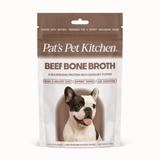
Bone broth contains naturally-occurring collagen. If you're feeding fresh or raw, Beef Bone Broth (24.99) with 40% collagen content is a complementary option to add to meals. It works alongside targeted supplements to support joint health from multiple nutritional angles.
What Results to Expect
Supplements support joint health. They don't reverse dysplasia, eliminate pain, or cure existing damage. Realistic expectations matter.
In a young, growing Bernese Mountain Dog, you're supporting the development of healthy cartilage and synovial fluid during the critical growth window. You're providing building blocks for the body to construct stronger joints. This is measurable as fewer signs of stress, better mobility as they mature, and potentially slower progression if dysplasia does develop.
You may notice your growing puppy moving more confidently. Climbing stairs becomes easier. They bound rather than hobble. These are signs that joint support is working.
If dysplasia is already present, supplements can slow progression and support long-term mobility, but they won't eliminate the underlying structural issue. This is why early intervention during the growth phase is so much more valuable than starting supplements after damage has begun.
Results take time. Joint tissue turns over slowly. Consistent supplementation for at least three to four months is needed before you'll see meaningful changes in mobility or gait.
Frequently Asked Questions
Should I test my puppy for hip dysplasia early? Your vet can discuss early screening options like PennHIP or OFA scoring. Many owners wait until sixteen weeks for initial assessment. Early knowledge helps you adjust management and supplementation strategy accordingly. If your breeder has provided BVA/KC scores for both parents, you have baseline genetic information.
Can supplements prevent dysplasia if my dog is genetically predisposed? No. Dysplasia is heritable and will express regardless of supplementation. What supplements do is support the body's best possible development and potentially slow progression. This is why breeder selection matters alongside supplementation.
Is collagen safe for puppies? Yes. Hydrolysed collagen peptides are simply amino acids. They're among the safest supplements to give young dogs. There are no dosing concerns or toxicity risks.
Can I give my Bernese Mountain Dog too much joint supplement? No. Collagen, glucosamine, and hyaluronic acid are not toxic at any dose. However, follow the serving guide on the pouch based on your dog's weight. More isn't more effective and wastes money.
When can I stop supplementing my adult Bernese Mountain Dog? Many owners continue indefinitely. Given the breed's predisposition to joint problems and shortened lifespan, ongoing support is reasonable. Your vet can advise based on your individual dog's health status.
Is Pure Collagen (31.99) enough on its own? Pure Collagen provides high-dose collagen peptides but lacks glucosamine and hyaluronic acid. For a giant breed with multiple joint vulnerabilities, a more comprehensive supplement is preferable. Pure Collagen is excellent if you're already supporting joints through diet and want to add extra collagen specifically.
What if my dog has a food allergy or sensitive digestion? All PPK supplements are single-ingredient or minimally-processed. If your dog has specific intolerances, discuss individual ingredients with your vet. Most dogs tolerate collagen well regardless of dietary sensitivities.
Which Product for Your Bernese Mountain Dog?
Mobility & Joints (34.99) is the primary recommendation for Bernese Mountain Dogs at any age. The combination of collagen, glucosamine, hyaluronic acid, and supporting micronutrients targets all the specific vulnerabilities of giant breed joint health. This is your core supplement.
Pure Collagen (31.99) works well as a secondary supplement if you want to boost collagen intake further, or as a replacement if your dog requires a simpler supplement without additional ingredients. The high dose of hydrolysed bovine collagen peptides provides concentrated cartilage support.
Beef Bone Broth (24.99) complements either supplement. With 40% collagen content, it adds natural joint-supporting nutrients to meals. Many owners use this as a meal topper alongside dedicated supplements, or as the primary joint support option if their dog prefers it.
Supplements support joint health but don't replace veterinary treatment. If your Bernese Mountain Dog shows lameness, pain, or joint-related concerns, consult your vet for proper assessment and management.
Disclaimer: This information is for educational purposes and doesn't replace veterinary advice. If your dog shows signs of joint problems, lameness, or pain, consult your vet for proper diagnosis and treatment. Early intervention gives the best outcomes.
Last Updated: March 2026