Quick Answer: Dogs recovering from joint surgery benefit from collagen supplementation once initial healing allows (typically 2-4 weeks post-op, with vet approval). Hydrolysed collagen peptides provide building blocks for tissue repair, supporting tendons, ligaments, and connective tissue regeneration. Always consult your vet before starting any supplement after surgery.
Your dog just had joint surgery.
The operation went well. Now comes the harder part: recovery.
What you do in the weeks and months after surgery determines how well your dog heals and whether they regain full mobility.
Here's how to support their recovery.
Why Post-Surgery Nutrition Matters
Surgery is trauma. Even successful orthopaedic procedures involve cutting through skin, muscle, and connective tissue to repair or replace joint structures.
Your dog's body now faces a massive repair job. It needs to:
- Close surgical wounds
- Repair damaged muscle tissue
- Rebuild or strengthen ligaments and tendons
- Regenerate cartilage where possible
- Reduce inflammation without compromising healing
This requires raw materials. Specifically, the amino acids and proteins that form connective tissue.
The most important of these is collagen.
How Collagen Supports Surgical Recovery
Collagen makes up approximately 30% of your dog's total protein. It's the primary structural component of:
- Tendons and ligaments (what often gets repaired in joint surgery)
- Skin (surgical incision site)
- Cartilage (joint surfaces)
- Bone matrix (if bone was involved)
When you provide hydrolysed collagen peptides during recovery, you're giving your dog's body the specific building blocks it needs for repair.
What the research shows:
Studies indicate that collagen peptides are absorbed from the gut, travel through the bloodstream, and accumulate in connective tissues. They serve two functions: providing raw materials for new collagen synthesis, and potentially signalling the body to increase its own collagen production.
This is particularly relevant after surgery, when the body's demand for collagen far exceeds normal levels.
Common Joint Surgeries in Dogs
Cruciate ligament repair (TPLO, TTA, lateral suture)
The most common orthopaedic surgery in dogs. The cranial cruciate ligament (similar to the human ACL) ruptures, requiring surgical stabilisation.
Recovery involves rebuilding strength in the ligaments, tendons, and muscles surrounding the stifle (knee) joint.
Hip replacement
The damaged hip joint is replaced with artificial components. Recovery focuses on the soft tissue healing around the new joint.
Femoral head ostectomy (FHO)
The head of the femur is removed, allowing scar tissue to form a "false joint." Collagen is essential for this scar tissue formation.
Patellar luxation surgery
The groove where the kneecap sits is deepened and soft tissues are tightened. Recovery depends on ligament and tendon healing.
Arthroscopy
Minimally invasive joint surgery. While less traumatic, the joint still requires recovery support.
When to Start Collagen After Surgery
The critical question: timing.
You need your vet's approval before starting any supplement post-surgery. General guidelines:
Week 1-2 post-op: Focus on prescribed medications, rest, and wound care. Most vets prefer no additional supplements during immediate recovery.
Week 2-4 post-op: Once initial healing is established and your vet approves, collagen supplementation can begin. The body is now in active repair mode and can use the additional building blocks.
Week 4 onwards: Continue supplementation throughout the recovery period (typically 8-16 weeks depending on surgery type) and beyond for ongoing joint support.
Always ask your vet: "When can I start a collagen supplement to support recovery?" They know your dog's specific situation.
Which Product for Post-Surgery Recovery
For most post-surgery dogs: Mobility & Joints
The 6-in-1 formula combines hydrolysed collagen peptides with glucosamine, hyaluronic acid, and vitamins C and E. This comprehensive approach supports multiple aspects of joint recovery.
Vitamin C is particularly relevant as it's essential for collagen synthesis. Your dog's body cannot produce collagen without adequate vitamin C.
For dogs with sensitive stomachs post-surgery: Pure Collagen
100% hydrolysed collagen peptides with nothing else. The simplest formula, least likely to cause any digestive upset during recovery.
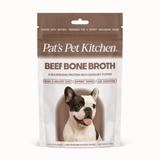
For dogs who've lost appetite after surgery: Beef Bone Broth
Many dogs are reluctant to eat after surgery. Bone broth creates an irresistible gravy that encourages eating while providing 40% collagen content plus hydration support.
Follow the serving guide on your chosen product's pouch based on your dog's weight.
Supporting Recovery Beyond Supplements
Collagen supplementation is one part of a comprehensive recovery plan:
Follow your vet's exercise restrictions
This is crucial. Too much activity too soon can undo surgical repairs. Most joint surgeries require 8-12 weeks of restricted activity, gradually increasing.
Physiotherapy
Many vets recommend canine physiotherapy or hydrotherapy post-surgery. These controlled exercises rebuild strength without stressing the healing joint.
Weight management
If your dog is overweight, recovery is harder. Extra weight stresses healing joints. Work with your vet on a safe weight loss plan if needed.
Pain management
Take prescribed pain medications as directed. Dogs in pain don't move well, and appropriate movement is essential for recovery.
Prevent slipping
Put down rugs on hard floors. Slipping can damage healing joints. Block access to stairs if recommended.
What Results to Expect
Recovery timeline with collagen support:
- Week 2-4: Surgical site healing, reduced swelling
- Week 4-8: Gradual increase in mobility, muscle rebuilding begins
- Week 8-12: Significant improvement in function, confidence returning
- Week 12-16: Approaching full recovery for most surgeries
- Ongoing: Continued supplementation supports long-term joint health
What collagen can and cannot do:
- Can: Provide building blocks for tissue repair, support ligament and tendon healing, improve long-term joint function
- Cannot: Speed up bone healing (different process), replace proper rest and rehabilitation, fix complications from surgery
Frequently Asked Questions
Can I give collagen immediately after surgery?
Wait until your vet approves, typically 2-4 weeks post-op. The immediate post-surgical period focuses on wound healing and prescribed medications.
Will collagen interfere with my dog's pain medication?
Collagen is a protein supplement, not a medication. It doesn't typically interact with pain medications or anti-inflammatories. However, always inform your vet of any supplements you're giving.
How long should I continue collagen after surgery?
Most owners continue throughout the recovery period (3-4 months) and then maintain ongoing supplementation for long-term joint support. Dogs who've had joint surgery remain at higher risk for future issues.
My dog won't eat after surgery. How do I give collagen?
Try Beef Bone Broth. Mix with warm water to create an appealing gravy. The flavour often tempts dogs who've lost their appetite, while providing collagen and hydration.
Is collagen safe with antibiotics?
Generally yes, as collagen is a food protein. But confirm with your vet, especially if your dog is on multiple medications post-surgery.
The Bottom Line
Joint surgery gives your dog a second chance at comfortable mobility. Don't waste it with inadequate recovery support.
Collagen supplementation, started at the right time with vet approval, provides the building blocks your dog's body needs to heal properly.
Combined with proper rest, controlled exercise, and good nutrition, it gives your dog the best chance of returning to an active, comfortable life.
Sources
- Oesser S, Seifert J. Stimulation of type II collagen biosynthesis and secretion in bovine chondrocytes cultured with degraded collagen. Cell and Tissue Research, 2003
- Aragon CL, Hofmeister EH, Budsberg SC. Systematic review of clinical trials of treatments for osteoarthritis in dogs. JAVMA, 2007
- British Small Animal Veterinary Association surgical recovery guidelines
- Canine Arthritis Management UK
Important: This information is for educational purposes and doesn't replace veterinary advice. Always consult your vet before starting any supplement after surgery. Your vet knows your dog's specific situation and can advise on timing and suitability. Recovery protocols vary based on surgery type and individual factors.
Last Updated: January 2026