Your Bulldog struggles getting up.
They bunny hop when they run. They're reluctant to jump. Maybe they've developed that characteristic "Speedo swimming suit" shape, skinny hips, puffed shoulders because they're shifting weight forward to avoid hip pain.
You thought it was just their breed. "Bulldogs move like that."
Here's the reality: Bulldogs; both French and English have the highest rates of joint problems in the UK. Not just high. The highest.
This isn't normal. It's preventable and treatable.
This guide covers everything Bulldog owners need to know about joint health, which supplements actually work, and how to keep your Bulldog moving comfortably despite their genetic challenges.
The Joint Crisis in Bulldogs: What the Data Shows
English Bulldogs: The Worst Hip Dysplasia Statistics
A 2020 study examining 28 English Bulldogs found devastating results:
55.4% had severe hip dysplasia (Grade E—the worst possible grade).
Only ONE dog had healthy hips (Grade B). Every other dog had Grade C, D, or E dysplasia.
The Orthopedic Foundation for Animals confirms this: English Bulldogs and Pugs have the highest percentage of hip dysplasia among all breeds, exceeding 50%.
Additional findings:
-
48.2% had elbow dysplasia
-
33% had patellar luxation (kneecap dislocation)
-
53.6% had osteoarthritic changes in their stifles (knees)
-
English Bulldogs carried 67.3% of their body weight on front limbs (normal is ~60%)
This weight shifting happens because their hips hurt. They're compensating.
French Bulldogs: High Risk, Lower Severity
French Bulldogs have better statistics than English, but they're still alarming.
UK veterinary database findings (2010-2020):
-
Ranked #11 for patellar luxation surgery (knee surgery)
-
Only 2 French Bulldogs required hip replacements in a decade (compared to 58 Cocker Spaniels)
The takeaway: French Bulldogs have hip dysplasia frequently, but it rarely becomes severe enough to need surgery.
However, they DO have significant issues with:
-
Patellar luxation (kneecap problems)
-
Elbow dysplasia
-
Humeral intracondylar fissure (HIF)—a UK-specific problem causing severe intermittent forelimb lameness
Why Bulldogs Have Such Extreme Joint Issues
1. Breed Morphology
Bulldogs are bred for an unnatural body structure:
-
Heavy, barrel-shaped torso
-
Short legs
-
Wide skull
-
Compressed spine
This creates disproportionate weight distribution. The skeleton simply can't support the body correctly.
2. Abnormal Collagen Development
Research has identified two physiological problems in Bulldogs:
-
Abnormal collagen and fibre development in the joint capsule and ligament of the femoral head (hip)
-
Abnormal endochondral ossification (bone formation from cartilage) in the acetabulum (hip socket)
In plain English: Their joint structures don't form correctly at the cellular level, even before birth.
3. Genetic Predisposition
Hip dysplasia in Bulldogs is polygenic (controlled by multiple genes). Breeding for extreme physical traits has inadvertently selected for joint problems.
The "threshold characteristics" mean severity depends on how many risk genes are inherited from each parent.
The 4 Joint Problems Bulldogs Face
1. Hip Dysplasia
The ball-and-socket hip joint develops abnormally. The femoral head (ball) doesn't fit snugly into the acetabulum (socket).
Instead of smooth rotation, you get:
-
Hip laxity (looseness)
-
Subluxation (partial dislocation)
-
Bone grinding on bone
-
Inflammation and arthritis
Important: Many Bulldogs with hip dysplasia show no obvious symptoms. They adapt. But the damage is still progressing.
What to watch for:
-
"Speedo swimming suit" appearance (skinny hips, muscular shoulders)
-
Decreased range of motion
-
Lameness or limping during exercise
-
Bunny hopping
-
Reluctance to jump or climb stairs
2. Elbow Dysplasia
Nearly half of English Bulldogs have elbow dysplasia.
The elbow joint doesn't develop correctly, causing:
-
Chronic forelimb lameness
-
Arthritis that worsens with age
-
Pain on palpation
In the UK, humeral intracondylar fissure (HIF) is particularly common. Left untreated, it causes catastrophic humeral fractures.
Symptoms:
-
Intermittent severe forelimb lameness
-
Improves with rest, returns with activity
-
Stiffness in front legs
-
Reluctance to walk on hard surfaces
3. Patellar Luxation (Kneecap Dislocation)
The kneecap slides out of its groove.
French Bulldogs ranked #11 for patellar luxation surgery in the UK. English Bulldogs are affected at similar rates.
Grades:
-
Grade 1-2: Kneecap pops out, then back in (mild)
-
Grade 3-4: Kneecap stays dislocated permanently (severe, requires surgery)
Symptoms:
-
Intermittent skipping or hopping
-
Holding one back leg up briefly
-
Sudden yelping during play
-
Stiffness after rest
Critical point: Dogs with patellar luxation often develop cruciate ligament injuries later. The two conditions are linked.
4. Spinal Issues
Bulldogs have compressed spines and are prone to:
-
Hemivertebrae (malformed vertebrae)
-
Intervertebral disc disease (IVDD)
-
Spinal cord compression
While not technically "joint" issues, spinal problems cause mobility loss, weakness, and pain that look similar to hip/knee problems.
When Joint Problems Appear in Bulldogs
Puppyhood (3-12 Months)
Hip and elbow dysplasia are present from birth but become noticeable as puppies grow rapidly.
Critical period: 4-9 months. Rapid growth, heavy body weight, and developing joints are a dangerous combination.
Warning signs:
-
Not as playful as other puppies
-
Sitting abnormally (legs to one side)
-
Difficulty on stairs
-
Stiffness after naps
Veterinary note: Hip dysplasia can be diagnosed as early as 10 weeks via joint laxity tests. Early detection allows for preventive surgery (JPS—Juvenile Pubic Symphysiodesis) in puppies under 6 months.
Young Adults (1-3 Years)
Patellar luxation typically becomes apparent during this period.
Mild dysplasia that caused no symptoms in puppyhood starts producing stiffness and discomfort as the dog reaches full weight.
Middle Age (3-7 Years)
Osteoarthritis accelerates. Even dogs with no symptoms before will start showing:
-
Slower getting up
-
Reluctance to walk as far
-
Weight gain (which worsens joint stress)
Senior Years (7+ Years)
Severe arthritis is common. Many English Bulldogs become significantly mobility-impaired by age 8-9.
In 20 years of practice, one veterinary specialist noted: Out of thousands of Bulldogs with hind leg limps, only a few were directly related to dysplasia alone. Most had multiple overlapping conditions (patellar luxation, cruciate ligament damage, spinal issues).
Translation: Bulldogs rarely have just ONE problem. They usually have several.
Why Joint Supplements Are Critical for Bulldogs
You can't change your Bulldog's genetics or skeleton. But you CAN support the structures they have.
What Supplements Do
1. Provide building blocks for cartilage, tendons, and ligaments
Collagen peptides supply amino acids (glycine, proline, hydroxyproline) that make up joint structures.
2. Reduce inflammation
Chronic inflammation accelerates cartilage breakdown. Natural anti-inflammatories slow this process.
3. Support joint lubrication
Hyaluronic acid increases synovial fluid production, reducing friction.
4. Slow deterioration
You can't reverse dysplasia. But you can slow the progression from mild to severe.
The Bulldog-Specific Problem: Abnormal Collagen Development
Remember: Research shows Bulldogs have abnormal collagen and fibre development in their joints from birth.
By supplementing with high-quality collagen peptides, you're providing the raw materials their bodies struggle to produce correctly.
Think of it like this: If your body makes faulty bricks, bringing in high-quality bricks from outside helps.
The Best Joint Supplements for Bulldogs
For Prevention (Puppies & Young Bulldogs)
100% hydrolysed collagen peptides (Types I & III). Maximum absorption.
Why this works for Bulldogs:
-
Supports development of joint structures during growth
-
Strengthens tendons and ligaments
-
6,000mg per serving (one of the highest concentrations available)
-
Tasteless and odourless
When to start: From 6 months onwards for English Bulldogs (earlier for breeds with known parental hip issues). From 12 months for French Bulldogs.
Serving:
-
French Bulldogs (10-14kg): 1 to 2 level teaspoons (3g to 6g) daily, depending on weight
-
English Bulldogs (20-25kg): 2 to 3 level teaspoons (6g to 9g) daily, depending on weight
Serving guide by weight: 1 to 10kg = 1 teaspoon (3g), 11 to 20kg = 2 teaspoons (6g), 21 to 30kg = 3 teaspoons (9g), 31kg and over = 4 teaspoons (12g).
Why start early: Prevention is easier than treatment. Starting collagen supplementation during growth and young adulthood gives them the best chance of maintaining joint health longer.
For Existing Joint Issues (Diagnosed Dysplasia, Limping, Arthritis)
Advanced 6-in-1 formula targeting joint problems comprehensively.
What's in it:
-
Collagen peptides (5,000mg): Structural support
-
Glucosamine hydrochloride: Cartilage production
-
Hyaluronic acid: Joint lubrication
-
Manganese: Boosts collagen synthesis
-
Vitamin C: Antioxidant, supports collagen formation
-
Vitamin E: Reduces oxidative stress, controls inflammation
Why Bulldogs need this:
Each ingredient addresses a different aspect of joint deterioration. Together, they slow progression, reduce pain, and improve comfort.
Serving:
-
French Bulldogs (10-14kg): 1 to 2 level teaspoons (3g to 6g) daily, depending on weight
-
English Bulldogs (20-25kg): 2 to 3 level teaspoons (6g to 9g) daily, depending on weight
Serving guide by weight: 1 to 10kg = 1 teaspoon (3g), 11 to 20kg = 2 teaspoons (6g), 21 to 30kg = 3 teaspoons (9g), 31kg and over = 4 teaspoons (12g).
When to use: If your Bulldog is limping, diagnosed with dysplasia, showing stiffness after rest, or over age 3 (English) or age 5 (French).
Most owners notice improvement around week 4. Give it 8 weeks minimum before deciding effectiveness.
Important for Bulldogs: This formula includes Vitamin C, which is essential for collagen synthesis. Since Bulldogs have abnormal collagen development genetically, ensuring adequate Vitamin C is crucial.
For Gut Health, Picky Eaters & Extra Support
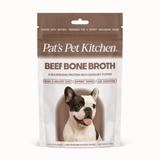
Slow-simmered bone broth powder with 40% collagen content plus natural gelatin.
Why Bulldogs benefit:
French Bulldogs especially are prone to sensitive stomachs and food allergies. The amino acids in bone broth (particularly glycine) support gut lining health.
Natural glucosamine from cartilage provides additional joint support.
And Bulldogs LOVE the taste. This solves the "won't eat their food" problem many Bulldog owners face.
How to use:
-
Mix with warm water to create gravy
-
Pour over dry food
-
Sprinkle dry as a flavour enhancer
Bonus: Helps with hydration. Bulldogs with breathing issues often don't drink enough water. Bone broth gravy encourages fluid intake.
Which Supplement Should Your Bulldog Use?
If Your Bulldog Is:
Under 2 years, healthy, no symptoms (French Bulldog): Pure Collagen for prevention. Start building healthy joint tissue now.
Under 2 years, healthy, no symptoms (English Bulldog): Mobility & Joints. English Bulldogs have such high dysplasia rates that proactive comprehensive support is smarter than basic prevention.
2-5 years, showing early signs (stiffness, occasional limping): Mobility & Joints. Catch problems before they become severe.
5+ years or diagnosed with dysplasia/arthritis: Mobility & Joints for targeted support. Add Bone Broth for extra collagen and gut health.
Fussy eater, sensitive stomach: Beef Bone Broth. The flavour solves the "won't eat supplements" problem.
Severe dysplasia or post-surgery: Both Mobility & Joints AND Pure Collagen. Maximum support during recovery.
How to Give Joint Supplements to Your Bulldog
The Easy Way
Sprinkle over their regular food. Mix it in thoroughly (especially for fussy eaters).
Pure Collagen and Mobility & Joints are tasteless. Most Bulldogs don't notice them.
For Bone Broth: Add warm water to create a savoury gravy. Pour over dry food. Bulldogs inhale it.
If Your Bulldog Won't Eat It
Bulldogs can be stubborn about food changes.
Strategies:
-
Start with 1/4 dose mixed thoroughly into wet food
-
Gradually increase over a week
-
Switch to Bone Broth (the beef flavour overrides resistance)
-
Mix with a small amount of plain Greek yogurt or pumpkin puree (most Bulldogs love this)
Timing
Morning or evening doesn't matter. With food is best for absorption.
The key is DAILY consistency. Skipping days reduces effectiveness significantly.
What to Expect (Week by Week)
Week 1-2: Behind the Scenes
Collagen peptides are absorbed, distributed through the bloodstream, and accumulating in joint tissues.
You won't see anything yet. Trust the process.
Week 3-4: First Subtle Changes
Most owners notice:
-
Slightly easier getting up from lying down
-
Less stiffness first thing in the morning
-
Marginally more enthusiasm for short walks
Week 4-6: Clear Improvement
-
Noticeably more comfortable movement
-
Willing to play again (even briefly)
-
Climbing stairs with less hesitation
-
Better energy levels
This is the breakthrough period.
Week 6-8: Sustained Benefits
Joint comfort stabilises. Your Bulldog moves more like they did months or years ago.
Many owners report their senior Bulldogs acting years younger.
Long-Term (3+ Months)
Continued daily use maintains improvements and slows further deterioration.
Critical: Don't stop supplementing once you see improvement. Joint support is lifelong maintenance, not a short-term fix.
Beyond Supplements: Complete Joint Care for Bulldogs
Weight Management (THE Most Important Factor)
Every extra kilogram puts 4kg of pressure on joints.
Bulldogs are prone to obesity. Their breathing issues make exercise difficult. Their food motivation is extreme.
This is the single biggest threat to their joint health.
Action steps:
-
Keep them lean (you should easily feel ribs, see a waist from above)
-
Measure food carefully (no free feeding)
-
Limit treats to 10% of daily calories
-
Weigh monthly
Exercise: The Right Amount
Good: Short, frequent walks (2-3 times daily, 10-15 minutes each), swimming, gentle play Bad: Long walks in heat, jumping from heights, running on hard surfaces, ball throwing
Swimming is exceptional for Bulldogs with joint problems. It builds muscle without impact stress, and helps with breathing.
Breathing consideration: English Bulldogs especially can't regulate temperature well. Exercise in cool parts of the day only.
Joint-Friendly Home Setup
Hard floors are torture for Bulldogs with dysplasia.
-
Provide rugs or yoga mats on slippery floors
-
Use ramps instead of stairs when possible
-
Elevate food and water bowls (reduces strain on front legs)
-
Orthopedic dog bed (essential for senior Bulldogs)
Physical Therapy & Massage
Bulldogs benefit enormously from:
-
Gentle range-of-motion exercises
-
Muscle massage (especially rear legs and hips)
-
Hydrotherapy at specialised canine facilities
Your vet can teach you basic techniques to do at home.
Regular Veterinary Monitoring
Annual hip and elbow X-rays catch progression early.
If your Bulldog limps for more than 2-3 days, get them examined. Early intervention prevents permanent damage.
For English Bulldogs: Consider hip scoring at 12-16 months. If severe dysplasia is caught early, surgical options exist (JPS for puppies under 6 months, TPO for dogs under 1 year).
What Makes Our Supplements Different
Only Hydrolysed Collagen Peptides
Standard collagen molecules are too large for absorption. They pass through undigested.
Hydrolysed peptides are broken down into tiny pieces that actually enter the bloodstream and accumulate in joints.
Studies prove this works. Non-hydrolysed collagen doesn't.
High Concentrations
Our Pure Collagen provides 6,000mg per serving. Many competitors offer 1,000-2,000mg.
More collagen = faster tissue accumulation = quicker results.
No Fillers, No Artificial Ingredients
Every ingredient has a purpose backed by research.
No bulking agents. No artificial flavours. No unnecessary additives.
Vet-Backed Formulas
Our formulas are developed with veterinary input. Dosages are based on clinical evidence, not marketing.
Abi, our Veterinary Nurse, says: "I've seen firsthand how these ingredients help dogs move comfortably and live more active lives."
Made in England
Sourced and manufactured in the UK. Same quality standards we'd demand for ourselves.
Your Questions Answered
At what age should I start my Bulldog on joint supplements?
English Bulldogs: From 6-12 months. Earlier if from lines with severe dysplasia.
French Bulldogs: From 12 months onwards.
Given the statistics (55% of English Bulldogs have severe hip dysplasia), early prevention is essential.
Can puppies take collagen?
Yes, generally safe from 6 months onwards. Consult your vet first, especially if your puppy is growing rapidly.
Focus on proper nutrition and controlled growth during the first 6 months.
How long do they need to take it?
Lifelong. This isn't a cure. It's ongoing support for a chronic structural problem.
Think of it like brushing teeth. Daily maintenance prevents worse problems.
What if they're already on medication (NSAIDs, pain relief)?
Supplements work alongside medications without interaction issues.
Many vets recommend them specifically to reduce reliance on NSAIDs long-term (which have side effects with prolonged use).
Always inform your vet about supplements you're using.
Will this cure hip dysplasia?
No. Nothing cures structural malformation.
But supplements can:
-
Significantly improve comfort
-
Reduce pain
-
Slow progression from mild to severe
-
Delay or prevent need for surgery
Many Bulldogs with mild-to-moderate dysplasia live comfortable lives with proper management.
My Bulldog is already overweight. Should I wait until they lose weight to start supplements?
No. Start both simultaneously.
Supplements support joints while you work on weight loss. The two approaches work together.
Are there side effects?
Collagen is a natural protein. Side effects are extremely rare.
If your Bulldog has a sensitive stomach (common in French Bulldogs), start with half the dose for the first week, then increase gradually.
Why powder instead of chews?
Practical reasons:
-
Accurate dosing
-
Better absorption
-
Works for Bulldogs with dental issues (common in the breed)
-
No additives needed to hold a chew together
-
Can mix into food for fussy eaters
Many Bulldogs leave chews uneaten. Powder mixed into food ensures they get the full dose.
The Bottom Line for Bulldog Owners
Your Bulldog whether French or English has the highest joint problem rates in the UK.
55% of English Bulldogs have severe hip dysplasia. French Bulldogs ranked #11 for knee surgery.
This isn't "just how Bulldogs are." It's preventable and treatable.
Start now.
Pure Collagen for young, healthy Bulldogs building a strong foundation.
Mobility & Joints for Bulldogs with existing issues or as proactive comprehensive support for English Bulldogs (given their extreme risk).
Beef Bone Broth for gut health, fussy eaters, and extra joint support.
Give them 8 weeks. Most Bulldog owners see changes around week 4.
Your Bulldog will move more comfortably, play more enthusiastically, and have a better quality of life.
They deserve that.
Sources:
-
VetLessons UK Veterinary Database (2010-2020) - French Bulldogs
-
British Veterinary Association/Kennel Club Hip Dysplasia Scheme
Last Updated: August 2026