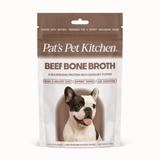
Quick Answer: Dobermans benefit most from supplements containing collagen, glucosamine, and hyaluronic acid to support their hardworking joints. Their athletic build, fast growth rate, and susceptibility to conditions like hip dysplasia and cervical spondylomyelopathy make joint support especially important. Starting supplements early, especially during the growth phase, can help set them up for better joint health throughout their lives. The Mobility & Joints supplement combines multiple joint-supporting ingredients in one product, or you can tailor a routine with Pure Collagen and Beef Bone Broth for added flexibility.
Your Doberman sprints across the garden with that characteristic explosive power, muscles rippling under a sleek coat. Effortless. Unstoppable. But later that evening, you notice something: he takes a moment before jumping up onto his favourite chair. Just a moment. Nothing obvious, but you notice. As a breed built for athleticism and work, Dobermans carry more stress through their joints than many other dogs their size. That powerful frame demands a lot from every ligament, cartilage, and bone. And unlike some other athletic breeds, Dobermans face some specific joint and bone challenges you need to understand.
The good news? Joint support doesn't have to be complicated. It starts with understanding what your Doberman's body needs, when to start supporting those joints, and how the right supplements fit into their overall care. By getting ahead of potential issues, you're not treating a problem. You're building a stronger foundation.
Why Dobermans Need Extra Joint Support
Dobermans are among the most athletically demanding breeds you can own. They were originally bred as protection dogs, built with explosive power and a lean, muscular frame designed to respond instantly to command. This means their joints experience significant cumulative stress, especially through the shoulders, hips, and spine. It's not a question of whether your dog is working hard. Even a pet Doberman living a "normal" life puts considerable strain on joints because of how they're built.
Beyond the basic stress of their athletic nature, Dobermans carry a genetic predisposition toward specific joint and bone conditions. Hip dysplasia remains common in the breed, affecting the hip joint's development and function. More concerning for many Doberman owners is cervical spondylomyelopathy, often called Wobbler syndrome. This condition affects the cervical spine (neck area) and can cause progressive weakness and neurological issues. Osteosarcoma, a bone cancer that often affects the limbs, also appears in Dobermans at higher rates than many other breeds.
Their fast growth rate during puppyhood compounds these risks. Doberman puppies grow remarkably quickly, and that rapid development places strain on developing joints and bones. What you do during this critical growth phase can genuinely influence your dog's long-term joint health. This is where early supplementation becomes valuable, not just for managing existing issues, but for supporting healthy development from the start.
If you're considering breeding from your Doberman, checking the BVA/KC screening schemes (which include hip and elbow evaluations) is essential. Even if you're not breeding, understanding these screening options means you can work with a vet who takes joint health seriously.
Understanding Collagen and Other Joint-Supporting Ingredients
Collagen is the structural protein that makes up cartilage, ligaments, and tendons. It's not just padding between joints. It's the framework that holds everything together. As dogs age, collagen production naturally declines, and the existing collagen degrades. This is why you see that moment of hesitation before jumping, or a slightly stiffer morning walk.
Hydrolysed collagen (the form used in quality supplements) is broken down into smaller peptides that your dog's digestive system can absorb and utilise. Rather than a generic joint supplement, collagen provides the actual building blocks that support joint integrity and flexibility. Consistent collagen intake supports cartilage resilience and joint function.
Glucosamine works alongside collagen by supporting cartilage production and helping maintain that crucial cushioning between bones. Hyaluronic acid retains water in joint fluid, which acts as a shock absorber and lubricant. These ingredients work together. Collagen provides structure. Glucosamine supports cartilage health. Hyaluronic acid keeps joints moving smoothly. Adding supporting nutrients like manganese and vitamin C helps your dog's body utilise these ingredients effectively.
For Dobermans specifically, this combination matters because you're not just addressing wear and tear from age. You're supporting the foundational health of joints that are working harder than average, especially during growth and through an active life. Starting these supplements before problems develop means you're supporting healthy development and function, not chasing a problem.
When to Start: Puppyhood Through Adulthood
The timing of supplementation often surprises owners. Many assume joint supplements are for older dogs showing signs of stiffness. With Dobermans, starting during the growth phase (typically from 6-8 weeks through 12-18 months, depending on individual development) is genuinely valuable. Fast-growing breeds benefit from nutritional support that helps bones and cartilage develop optimally. It's not treating a disease. It's supporting healthy development.
You don't need to wait for signs of joint trouble. In fact, by the time your young Doberman shows visible stiffness or reluctance to jump, underlying cartilage changes have often already begun. Supporting joints proactively means you're working with your dog's natural development rather than catching problems after they've started.
For adult Dobermans, particularly those with high activity levels or those in working roles, maintaining consistent joint support helps manage the daily wear and tear of their athletic lifestyle. If you've already seen signs of joint stiffness or had joint screening that raised concerns (like hip dysplasia scores), consistent supplementation becomes even more important as part of your broader joint management strategy.
The Mobility & Joints supplement works for Dobermans from adulthood through their senior years, providing the range of ingredients that address multiple aspects of joint health. Follow the serving guide on the pouch based on your dog's weight. For puppies, you might consider collagen-focused options like Pure Collagen or Beef Bone Broth as foundational support during rapid growth. Whichever you choose, consistency matters more than product switching. Your dog's joints benefit from steady nutritional support, not sporadic supplementation.
Managing Activity for Joint Health
Supplements support joint health but don't replace veterinary treatment. They work best alongside smart activity management. Dobermans need regular movement and exercise. Their athletic nature demands it, and restricting exercise entirely actually weakens joints. The key is smart management.
Young growing Dobermans especially need controlled exercise rather than unlimited free running. Repetitive high-impact activities like endless fetch or jumping, done multiple times daily in a growing dog, can stress developing cartilage. Swimming and walking are excellent low-impact options that build fitness without pounding joints. As your Doberman matures and joints are more fully developed, you can gradually increase intensity.
For adult and senior Dobermans, consistent daily exercise (appropriate to their age and fitness level) supports joint health far better than sporadic intense activity. It keeps supporting muscles strong, maintains good weight (crucial for reducing joint stress), and keeps circulation good throughout joints. This is where your Doberman's own activity preferences guide you. A dog that loves hiking can hike. A dog that prefers steady walks benefits from consistent daily movement. Either way, warmth and gentle activity support joint function.
Environmental factors matter too. Hard concrete and tiles put more stress on joints than softer surfaces. Rugs and mats in areas where your dog commonly rests reduce impact. In colder months, you might notice your Doberman moves slightly stiffer first thing in the morning. This is normal as joints warm up, but consistent joint support makes this transition smoother. Winter exercise, when done thoughtfully, still supports joint health.
What Results to Expect
Realistic expectations matter. Joint supplements support health and function. They don't produce overnight transformations or pain-free movement that masks underlying issues. With consistent use over several weeks, you'll notice improvements in movement quality. That moment of hesitation before jumping often reduces. Stairs become easier. Morning stiffness decreases. These are the results that actually matter to your dog's quality of life.
Different Dobermans respond at different rates. A young dog starting supplementation during growth might show the most dramatic difference by having no stiffness develop in the first place. An adult dog with early cartilage changes might show noticeable improvement in movement within 4-6 weeks. A senior Doberman might show more modest improvements but important ones: better movement, more willingness to play, less obvious stiffness after rest.
Consistency is crucial. Occasional supplementation doesn't work. Your dog's joints need steady nutritional support. This means selecting a supplement you can sustain long-term and fitting it into your regular routine. It's not an intense intervention. It's nutritional support as part of everyday care, like feeding quality food or providing fresh water.
If your Doberman has been diagnosed with a specific condition (hip dysplasia, Wobbler syndrome, or others), supplements are one part of a broader management strategy that includes veterinary supervision, appropriate activity management, and sometimes medications or other treatments. Work with your vet on that full picture. Supplements support the foundation, but they don't replace proper diagnosis and treatment.
Frequently Asked Questions
At what age should I start giving my Doberman joint supplements? You can start during puppyhood (from around 6-8 weeks) to support optimal development during the fast-growth phase. Starting early is particularly valuable for large, athletic breeds like Dobermans. If you have an adult dog, starting now is still beneficial.
How long does it take to see results? Most dogs show noticeable improvements in movement and flexibility within 4-6 weeks of consistent supplementation. Younger dogs often respond faster. Give supplements at least 6-8 weeks before deciding whether they're working for your dog.
Can supplements prevent hip dysplasia or Wobbler syndrome? Supplements support joint health and development, but they can't prevent genetic conditions. However, supporting optimal joint development and health during growth, combined with responsible breeding practices, contributes to better outcomes. If your Doberman carries genetic risk, supplementation becomes even more important as part of comprehensive management.
Is it safe to give supplements alongside other medications? Generally, yes, but always discuss with your vet. If your Doberman is on specific medications for joint conditions or other health issues, your vet can advise on the best combination. Some ingredients might interact with certain medications, though this is rare with quality supplements.
Can I switch between different supplements? You can, but consistency matters more than product variety. Pick a supplement that fits your routine and budget, then stick with it. If you want to change products, transition gradually to ensure your dog tolerates the new option well.
What's the difference between Pure Collagen and Mobility & Joints? Pure Collagen focuses on hydrolysed bovine collagen peptides (the structural building block). Mobility & Joints combines collagen with glucosamine, hyaluronic acid, and supporting nutrients. Both work well for Dobermans. Pure Collagen is simpler and often more economical. Mobility & Joints offers a complete joint-support formula in one product.
Should I use supplements if my Doberman shows no signs of joint trouble? For Dobermans, proactive supplementation during growth and throughout an active life genuinely makes sense given the breed's joint susceptibility and high activity demands. Starting before problems develop is more effective than starting after stiffness appears. Think of it as support for the natural demands of being a Doberman, not treatment for existing problems.
Which Product for Your Dog?
Choosing between our three products depends on your Doberman's age, current joint status, and what you're trying to achieve.
For puppies and young dogs during the growth phase: Start with Pure Collagen (£31.99) or Beef Bone Broth (£24.99). Both provide foundational collagen support during rapid development. Beef Bone Broth also works as a flavourful addition to meals for picky eaters or those who need extra encouragement. Both are economical and simple.
For adult Dobermans with no current joint concerns: Mobility & Joints (£34.99) provides comprehensive support with collagen, glucosamine, hyaluronic acid, and supporting nutrients in a single convenient formula. This saves you combining multiple products and ensures your dog gets a full range of joint-supporting ingredients.
For adult Dobermans showing early signs of stiffness or with joint concerns: Mobility & Joints is the most complete option, addressing multiple aspects of joint health. If you prefer a stronger emphasis on collagen, you could use Pure Collagen as your primary supplement alongside other ingredients your vet recommends.
For senior Dobermans: Mobility & Joints provides the full spectrum of support that older joints benefit from. Consistency becomes even more important at this stage. If cost is a concern, Beef Bone Broth is an economical option that many dogs find delicious and benefit from.
If you want to combine products: Pure Collagen combines well with other focused supplements. Beef Bone Broth works as a flavourful addition to meals on top of another supplement. Just follow the serving guide on each pouch based on your dog's weight.
Key Takeaways
Dobermans are high-impact athletes whose joints face real demands from puppyhood onwards. Their predisposition to hip dysplasia, cervical spondylomyelopathy, and other joint issues makes proactive support genuinely worthwhile. Starting supplements early, during the growth phase, sets your dog up for better long-term joint health.
Collagen, glucosamine, and hyaluronic acid work together to support joint structure and function. Consistent supplementation, combined with smart activity management and appropriate body weight, creates the best possible foundation for joint health throughout your dog's life.
Your Doberman's early moment of hesitation before jumping isn't something to ignore. It's a signal that joint support matters. Whether you choose the simplicity of Pure Collagen, the convenience of Mobility & Joints, or the palatability of Beef Bone Broth, consistent support makes a real difference in how your Doberman moves and feels.
Sources
British Veterinary Association (BVA) and Kennel Club (KC) Hip and Elbow Dysplasia Screening Schemes: https://www.bva.co.uk/breeding-from-your-dog/health-schemes-and-testing/hip-dysplasia-scheme/
Orthopedic Foundation for Animals (OFA) Breed Statistics: https://www.ofa.org/
McGowan, C., Hart, R., Pinchbeck, G., & Waterman-Pearson, A. (2012). Online survey of dog owners using canine joint supplements. Veterinary Record, 171(7), 173.
Comblain, F., Serisier, S., Barthelemy, N., Balligand, M., & Henrotin, Y. (2016). Review of dietary supplements for the management of osteoarthritis in dogs. Veterinary Record, 179(3), 72.
AAFCO (Association of American Feed Control Officials) Standards for Pet Food and Supplement Safety: https://www.aafco.org/
Disclaimer: This information is for educational purposes and doesn't replace veterinary advice. If your Doberman shows signs of joint stiffness, limping, reluctance to jump or climb stairs, or if joint screening has identified dysplasia or other concerns, consult your vet for proper diagnosis and treatment. Early intervention gives the best outcomes.
Last Updated: March 2026