Quick Answer: Large breed dogs need joint support more than smaller breeds because their rapid growth and heavier bodies put greater stress on developing cartilage. Starting supplements between 4-6 years old (sooner if your dog shows stiffness) and choosing products with collagen, glucosamine, and hyaluronic acid can help prevent or slow joint decline. Serve by weight: a 21 to 30kg dog takes 3 teaspoons (9g) daily and a dog of 31kg and over takes 4 teaspoons (12g) daily. Look for hydrolysed collagen for better absorption, avoid unnecessary fillers, and combine supplementation with weight management and appropriate exercise for the best results.
Your large breed dog bounds down the garden path like they own the world. Three years ago, two years ago, six months ago, they did it exactly the same way. But this morning you notice something different. They paused at the bottom of the stairs before climbing up. Just a second. Just a hesitation. It might not mean anything. It might be the first sign that their joints need support.
Large dogs carry a lot more weight on their frames than small breeds, and every kilogram of it has to be absorbed by the same cartilage, ligaments, and bone with every step they take. Add in the fact that larger breeds grow faster in their first year and you have a recipe for accelerated joint wear. It is not inevitable. But without the right support, it happens.
The good news is that joint supplements work best as prevention. If you start them early, you can slow or even prevent the stiffness that catches many large breed owners off guard. This guide explains what your dog needs, when to start, how to choose between products, and what realistic results look like.
Why Large Breeds Need Joint Support Sooner
Size matters when it comes to joints. The larger your dog, the greater the load passing through their cartilage, bones, and ligaments with every step. A Labrador carrying an extra 5kg of weight is not just carrying 5kg. They are multiplying the force through each joint with every movement they make. Over years, that compounds.
Large breeds also grow faster than small breeds, putting on a great deal of frame in a short space of time. That rapid growth puts stress on developing cartilage that is still calcifying. If cartilage is damaged during this growth phase, it often never fully recovers. This is why some large breeds show joint problems as early as age 5, whilst small breeds can sail through to age 10 with no issues.
There is also a biomechanics factor. Larger dogs have longer leg bones relative to their muscle mass, which means their joints work at more extreme angles during normal movement. This extra range of motion, combined with weight, increases wear over time.
Understanding Joint Deterioration in Large Dogs
Joint health depends on cartilage. Cartilage is the smooth, rubbery coating on the ends of bones that allows them to slide against each other without friction. When cartilage is healthy, your dog moves smoothly. When it wears down, bone rubs against bone. That is when stiffness, pain, and arthritis start.
Cartilage is made primarily of collagen (a structural protein), water, and proteoglycans (molecules that hold water in cartilage). As dogs age, collagen breaks down faster than the body can replace it. Large dogs experience this breakdown faster than small dogs because they carry more load.
Once cartilage is significantly damaged, supplements cannot rebuild it. This is why prevention is so much more effective than treatment. Starting joint support before damage occurs lets you preserve the cartilage your dog has.
When to Start Joint Supplements for Large Breed Dogs
Preventive approach (no symptoms yet): Start between age 4-6 years. If your large breed sits in the 21 to 30kg or 31kg and over band and has no joint issues, beginning supplementation in this window can slow the cartilage breakdown that often starts in the 6-8 year range.
If you notice early signs: Hesitation on stairs, reluctance to jump into the car, stiffness after rest that improves with movement, or a slight limp that comes and goes. Start immediately, but also see your vet to rule out injury or more serious conditions.
If your dog has a diagnosed condition: Hip dysplasia, elbow dysplasia, or osteoarthritis. Start as soon as you have the diagnosis, alongside your vet's treatment plan. Supplements support joint health but do not replace veterinary treatment.
For puppies: You do not need joint supplements for healthy large breed puppies under age 4. Growing puppies need proper nutrition and controlled exercise, not supplements. Once they reach 4-6 years old, reassess.
The earlier you start prevention, the longer you can delay or reduce the severity of joint issues. If your dog is already showing signs of stiffness, starting sooner rather than later makes a real difference.
What to Look for in a Joint Supplement
Hydrolysed Collagen: This is the most important ingredient. Hydrolysed means the collagen molecules have been broken down into smaller peptides that your dog's digestive system can actually absorb. Non-hydrolysed collagen just passes through. Look for products specifying "hydrolysed bovine collagen peptides", stating the exact amount per serving, and naming the weight band that serving belongs to.
Glucosamine: Glucosamine is a precursor to glycosaminoglycans, which are key components of cartilage. It supports cartilage maintenance and may reduce cartilage breakdown. It works best alongside collagen, not as a standalone ingredient.
Hyaluronic Acid: Hyaluronic acid holds water in cartilage, keeping it plump and flexible. As dogs age, hyaluronic acid levels drop. It is a supporting ingredient rather than a standalone fix, and it does its work inside a complete formula alongside collagen and glucosamine. Judge it as part of the whole formula rather than on its own.
Vitamin C and E: These are antioxidants that protect joint tissues from oxidative stress. Vitamin C also supports collagen synthesis. If your supplement includes both, that is a bonus.
Manganese: Supports bone health and collagen formation. Not essential but helpful as part of a multi-ingredient formula.
What to avoid: Products with excessive fillers, cheap binding agents, or vague ingredient lists that do not specify amounts or the weight band they apply to. Avoid products making cure claims ("eliminates arthritis", "pain-free movement") because supplements do not work that way. Also be wary of products with added sugars or artificial flavours aimed at fussy eaters. These often mask low-quality collagen.
Prevention vs Treatment Supplementation
These are two different approaches with different product needs.
Prevention (healthy dog, no symptoms): Use a pure collagen product. Your goal is to provide the building blocks for cartilage maintenance before any damage occurs. Pure collagen is cost-effective because you are not paying for added ingredients your healthy dog does not need yet.
Treatment (dog showing stiffness or diagnosed with joint issues): Use a multi-ingredient formula with collagen, glucosamine, hyaluronic acid, and antioxidants. Your dog needs more comprehensive support because cartilage is already starting to break down. The combination of ingredients works synergistically to slow further damage and support comfort.
Many owners start with prevention and move to a multi-ingredient formula if their dog begins showing symptoms. This is a smart approach and is more cost-effective than buying the premium formula from day one if your dog never needs it.
The Serving Guide by Weight
Both Pure Collagen and Mobility & Joints follow the same four weight bands. Most large breeds sit in the bottom two rows of this table.
| Dog weight | Daily serving | Pure Collagen delivered |
|---|---|---|
| 1 to 10kg | 1 teaspoon (3g) | 3,000mg |
| 11 to 20kg | 2 teaspoons (6g) | 6,000mg |
| 21 to 30kg | 3 teaspoons (9g) | 9,000mg |
| 31kg and over | 4 teaspoons (12g) | 12,000mg |
The same serving guide applies to Mobility & Joints. Always follow the serving guide printed on the pack.
The Right Product for Prevention vs Treatment
For preventive supplementation in healthy large breeds, Pure Collagen is 100% hydrolysed bovine collagen peptides with no fillers or unnecessary additions. Because it is pure collagen, the grams convert straight across: a 21 to 30kg dog on 3 teaspoons (9g) receives 9,000mg, and a dog of 31kg and over on 4 teaspoons (12g) receives 12,000mg. It is tasteless and odourless, making it easy to mix into food without affecting your dog's diet. Follow the serving guide on the pouch based on your dog's weight.
For dogs showing joint issues or stiffness, Mobility & Joints combines collagen peptides with glucosamine, hyaluronic acid, manganese, vitamin C, and vitamin E. A 6g serving, which is the 2 teaspoon serving for an 11 to 20kg dog, contains 5,000mg of collagen peptides. Larger dogs take a larger serving from the same table above. This multi-ingredient approach addresses multiple aspects of joint health when cartilage is already being challenged.
These supplements support joint health but do not replace veterinary treatment. If your dog has been diagnosed with hip dysplasia, elbow dysplasia, or osteoarthritis, continue following your vet's recommendations whilst adding supplementation for additional support.
Managing Exercise for Large Breed Joint Health
Exercise is crucial for joint health but must be appropriate for your dog's age and condition. Too much impact loading can accelerate wear. Too little exercise causes muscles to atrophy, which provides less support for joints.
For young, healthy large breeds (under age 5): Regular, varied exercise is ideal. Long walks, swimming, playing with other dogs, and moderate running all help build muscle that supports joints. Avoid repetitive jumping or sudden directional changes on hard surfaces.
For large breeds starting supplementation (age 4-6): Maintain regular daily walks but ease back on high-impact activities. Swimming is excellent for large breeds because water supports their weight whilst still engaging muscles. Two to three 30-minute walks daily is better than one intense 60-minute session.
For large breeds showing stiffness: Keep them moving but in low-impact ways. Short, frequent walks work better than long walks. Avoid hills, slippery floors, and jumping in and out of vehicles. Provide ramps or steps for access to furniture and vehicles.
Weight management is non-negotiable. Every extra kilogram your dog carries is extra load their joints have to absorb with every step. If your large breed is overweight, reducing weight reduces stress on joints more effectively than any supplement can. Work with your vet on a weight management plan alongside supplementation. Remember to re-check the serving guide if your dog's weight changes enough to move them into a different band.
What Results to Expect and When
Collagen and joint supplements do not work overnight. They work by providing raw materials that support cartilage maintenance and repair at the cellular level. Here is a realistic timeline.
Weeks 1-3: You will not notice much. The supplement is being digested and the collagen peptides are circulating. Some owners report coat improvement, but joint changes are not visible yet.
Weeks 4-6: This is when many owners see the first changes. You might notice your dog is slightly quicker getting up from rest, fewer groans when standing, or stepping up stairs with more confidence. Not dramatic. Just noticeable improvement in mobility.
Weeks 8-12: By this point, many dogs show noticeable improvement in stiffness and comfort. This is when you know the supplement is working. If you see no change by week 12, check that you have been serving the right amount for your dog's weight band, or it may not be the right product for your dog.
Ongoing: Once you see improvement, keep using the supplement. Results decline if you stop. Supplementation is ongoing maintenance, not a one-time treatment.
What collagen cannot do: Supplements support joint health and comfort. They cannot fix structural problems like severe hip dysplasia, repair ligament tears, or cure arthritis. If your dog has a serious orthopaedic condition, supplements play a supporting role alongside veterinary treatment, not a replacement for it.
Frequently Asked Questions
Which weight band is my large breed in? The serving guide runs 1 to 10kg, 11 to 20kg, 21 to 30kg, and 31kg and over. Most large breeds sit in the top two bands. A 21 to 30kg dog takes 3 teaspoons (9g) daily. A dog of 31kg and over takes 4 teaspoons (12g) daily. Weigh your dog rather than estimating, because a couple of kilograms either side of 30kg changes the serving.
Can I give supplements to a large breed puppy for prevention? Not necessary. Healthy puppies do not need supplements. Instead, ensure proper nutrition, controlled exercise, and avoid repetitive jumping and hard impacts during growth phase. Start supplements once your dog reaches 4-6 years old.
My large breed has been limping for weeks. Should I start supplements or see a vet first? See your vet first. Limping can indicate injury, ligament damage, bone fracture, or other issues that require diagnosis. Once your vet has ruled out acute injury, supplements can support ongoing joint health alongside any prescribed treatment.
Do I need to use expensive "premium" supplements or will standard formulas work? A supplement with hydrolysed collagen, glucosamine, and hyaluronic acid works. You do not need exotic ingredients or overstated marketing. Check the stated amount per serving and which weight band that serving is for, then choose based on that, not brand hype.
How long should I give supplements before deciding they are not working? Give any supplement at least 12 weeks at the correct serving for your dog's weight before deciding it is not working. Some dogs respond faster (by week 6) and some need the full 12 weeks. If you see no change by week 12, reassess with your vet or try a different formula.
Can I combine supplements with my dog's prescribed medication? Ask your vet. They know exactly what your dog has been prescribed and are the right person to tell you whether adding a supplement is appropriate and how to fit it around their treatment. Always tell your vet about everything your dog is taking, supplements included, before you start.
Will my large breed eventually develop joint problems no matter what I do? Not necessarily. Many large breeds can reach senior age with minimal joint issues if supported well from middle age. Early supplementation, weight management, appropriate exercise, and preventive care extend quality of life significantly. It is not about avoiding problems entirely. It is about delaying them as long as possible.
Which Product for Your Dog?
Use this guide to choose:
Healthy large breed, no joint issues, want to start prevention: Pure Collagen
Large breed showing stiffness, reluctance on stairs, or diagnosed with joint condition: Mobility & Joints
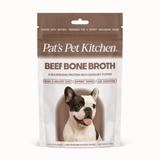
Large breed with poor appetite, recovering from surgery, or fussy eater: Beef Bone Broth provides collagen with natural appeal. The 40% collagen content makes it genuinely useful for joint support whilst also delivering hydration and gut-supportive amino acids.
Choose one joint supplement and follow the serving guide on that product's pouch based on your dog's weight. If you are unsure which product suits your dog, or your dog is already under veterinary treatment, ask your vet.
Sources
British Veterinary Association and The Kennel Club. Hip and Elbow Dysplasia Schemes.
British Small Animal Veterinary Association. Canine orthopaedic guidelines.
Canine Arthritis Management, UK. Joint health and supplement guidance for dog owners.
McIlwraith, C. W., et al. (2012). "Equine and Canine Joint Disease: A Review of Current Therapeutic Trends." Journal of Equine Veterinary Science, 32(S1), 1-3.
Comblain, F., et al. (2016). "Review of the scientific evidence for the use of hydrolysed collagen in joint care." Cartilage, 7(4), 313-326.
Disclaimer: This information is for educational purposes and does not replace veterinary advice. If your dog is showing signs of joint stiffness, limping, reluctance to move, or has been diagnosed with a joint condition, consult your vet for proper diagnosis and treatment. Early intervention gives the best outcomes.
Last Updated: August 2026